

5 Of The Most Common Nintendo Wii Problems And Fixes
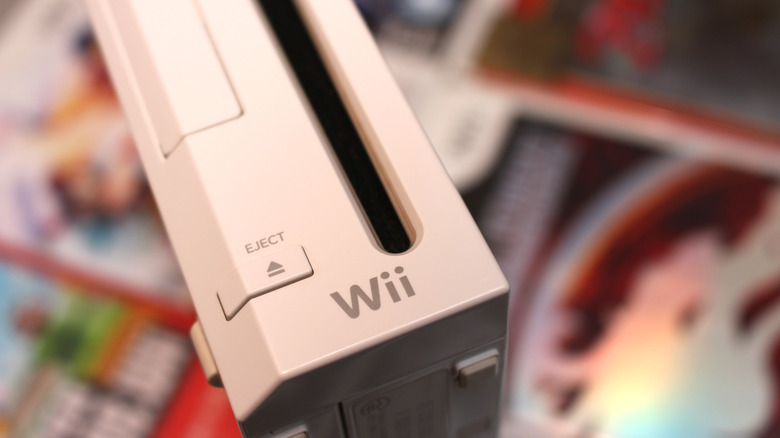
Turning back time and plugging in older consoles is a great way to prevent your hardware from going to a landfill, discover or re-experience titles that never quite made it to modern machines, or save a little money while still engaging in your hobbies (depending on the system). In comparison to some other older consoles like the GameCube, the Nintendo Wii provides a relatively more affordable option for indulging in a little retro gaming — even though you may have to sift through a lot of shovelware.
Whether you've just dug your old Wii out of the back of your closet, or picked up a steal from a garage sale, there's a good chance that old console won't be in as good shape as it was two decades ago. Like any piece of older technology, the Wii isn't immune to the passage of time, and can face all kinds of different breakdowns and faults. Some common problems you might run into on your trip down memory lane include faulty disc drives, problems with the power supply, and connectivity issues, just to name a few.
Thankfully, most of these problems aren't all that hard to fix. Some might require a trip to a games hardware professional, but others can be amended at home with a little know-how. In other cases, you might even be able to get away with picking up the right adapter. There are also a few steps you can take to try resetting various problematic parts of your Wii to see if that helps before turning to replacement parts or repair shops.
The disc drive won't receive or load discs
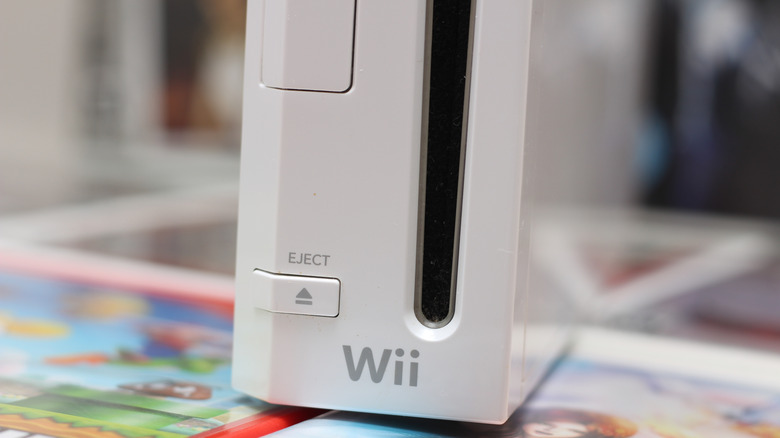
Considering the Wii Shop Channel closed back in 2019, you might struggle to make much use of your Wii without a working disc drive. Unfortunately, though, it's a fairly common issue that you might come across while trying to enjoy a bit of "Wii Sports Resort". Disc drive issues tend to appear in a couple ways. Your Wii might start rejecting discs by pushing them back into your hand, instead of taking them on properly. Or, it might "eat" discs while refusing to spit them out when you try to eject them.
Another, less obvious disc drive issue is your Wii refusing to load games properly, even though it can play installed software like the Mii Channel just fine. All of these issues are fairly common, but they tend to indicate that you need hardware repairs — which might mean you'll have to rely on a professional's help. The issue itself could be any number of hardware faults, including internal connection issues, a broken disc drive board, or a faulty motherboard.
Your Wii's disc drive is attached directly to the console's motherboard via a data cable and a 12-pin power connector. If they're disconnected, your console won't be able to play discs. If you open your Wii up and it seems like everything's connected okay, it's possible the drive or motherboard needs to be replaced entirely. If there's a problem with the motherboard, however, you'll probably be able to tell from other issues. So, if the only apparent issue is that games won't play, there's a reasonable chance it's the disc drive specifically.
Your Wii won't boot up correctly or at all
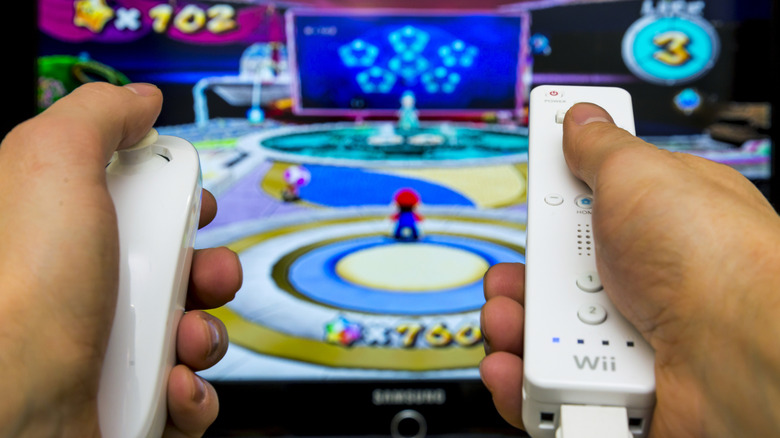
If you set your Wii up correctly and try to fire it up just to be met with a blank TV screen, you know something's up. It's a common issue, but one that can have a lot of different causes. It could be something as simple and straightforward as a blown wall socket or broken power supply — which is easy to test for and little extra work to fix — or it could be indicative of a deeper problem under your Wii's chassis.
As with testing any electronics, your first port of call should be to check for the easiest solutions: Try plugging your Wii into a different socket or extension cord, and see if it powers on. For the best results, it's worth entirely unplugging your AC adapter from the console and socket, before waiting at least two minutes for it to fully reset. When you plug it back in, make sure the cable connects fully, in case there's an issue with the connection point on the console itself. If that doesn't work, you might have luck replacing the Wii's power cord with an alternative from somewhere like eBay.
Once you've ruled out those options, your next step would be to head to a repair shop, or open your console up and take a look inside yourself. Your console might have internal damage that prevents it from starting up properly. Worst case scenario, the motherboard might be damaged or blown, or a broken Bluetooth board might be preventing the system from booting up correctly. Both of those parts can be replaced manually, either at home or by a technician.
Wiimotes won't connect to the console
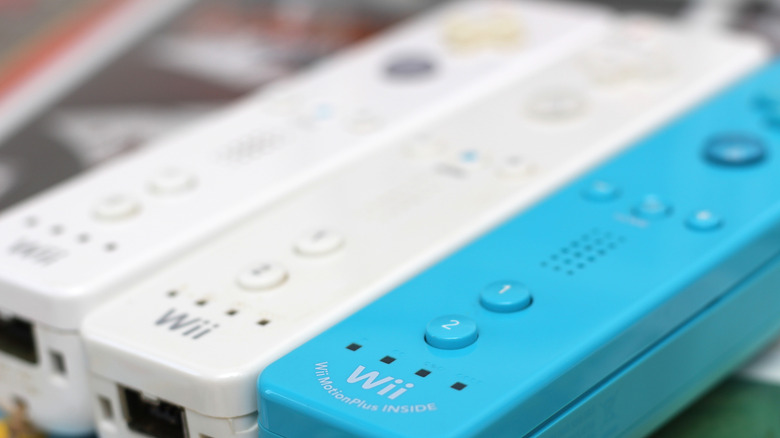
Perhaps obviously, you're going to struggle to do much gaming if you can't get your controller to connect. Unfortunately, it's still a common problem. If your Wiimote won't pair with your Wii, then you might be looking at a couple of different problems. Either the remote itself is broken, or its batteries have run out. It's worth trying to connect different Wiimote to rule this out. Your next option is to try resyncing your Wii with the Wiimotes. Doing so is somewhat time consuming, but not hard:
-
Turn off and unplug the console for a few seconds.
-
Open the door on the console's nameplate.
-
Plug in and switch the console on.
-
When the Health and Safety pop-up appears, press and hold the red sync button on the Wii for 15 seconds.
-
Grab your Wiimote and remove the back panel, like you're going to replace a battery.
-
Press and release the red sync button next to the controller's batteries.
-
Go back to your Wii, and press and release the red sync button again.
-
Repeat for any other Wiimotes you want to use.
If this worked, then your Wiimote should flash and connect as normal. If not, then there may be an issue with the console. For example, your Wii's internal Bluetooth board might have failed or become disconnected from the motherboard internally. Generally speaking, your Wii will also run into other problems, like failing to boot up properly, so there should be signs if this is the case. You can either replace or reconnect the Bluetooth board yourself if you have the right know-how, or hire a professional to repair it for you.
Distorted, faulty, or seemingly no audio-visual output
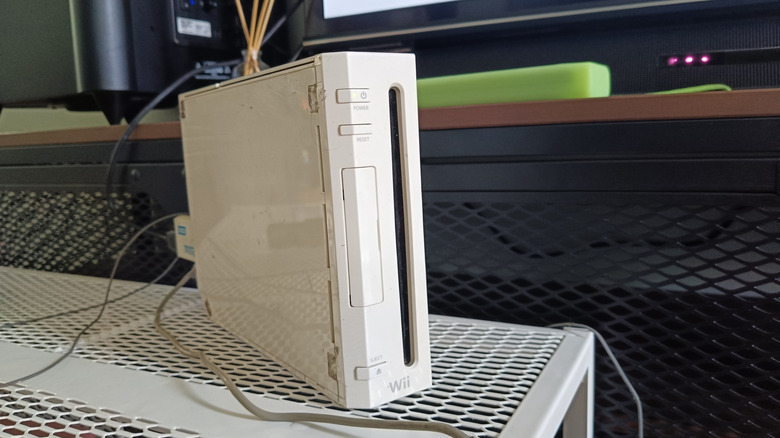
Another common problem you might run into while gaming on the Wii stems from the console's sound and visual outputs. It could start with crackly or even haunted-sounding distorted game audio, a glitchy-looking screen, or you might not get any kind of video or sound output whatsoever. Assuming you have your TV set to the correct channel and the volume turned up, there could be an issue with the console's connection port or the cables attached to them.
One possible fix is easy: You just need to check if any dust, lint, or other obstructions are blocking your Wii's connection points. All you need to do is unplug the cables and look for dust. If you find any, you should dislodge it carefully by using compressed air or a vacuum cleaner with a brush attachment. It's good practice to try and keep your electronics free from dust, as it can help to prevent them from overheating, which can lead to a host of other performance issues.
If everything looks clear, then there could be a problem with the cables. You can test this out by replacing your cables with alternatives from a retro game store or online. If that doesn't help, it probably indicates an internal fault, and potentially a need to replace internal parts. So, you might want to find a repair shop, or replace the console altogether.
The Nintendo Wii isn't directly compatible with modern TVs
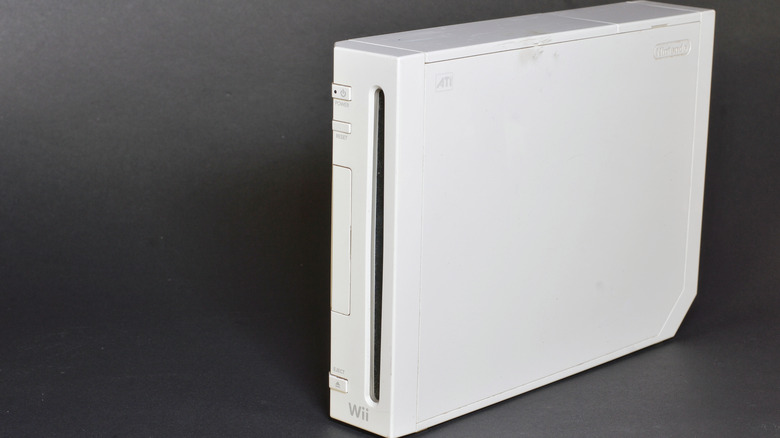
Although this isn't a fault with the Wii per se, if you're running your console with modern hardware, you're likely to run into compatibility problems. The Wii doesn't offer a regular HDMI output by default, making it difficult to hook it up to modern TVs, which rely on HDMI connections, by and large.
In place of an HDMI port, the Wii offers a few different outputs: Composite, component, RGB SCART, and S-Video. The exact connections you have vary based on where your Wii was produced. For example, PAL Nintendo Wiis come with a SCART connection, while an NTSC Wii would come with an S-Video port. You're unlikely to find these connection types hidden around the back of your modern TV, leaving you in a tight spot when setting up your Wii.
You have a couple of options for remedying this. The first (and perhaps easiest) is to invest in a component to HDMI adapter, which takes your Wii's signal and converts it to a format your TV can read. Alternatively, you can use an HDMI gadget designed with retro gaming in mind instead. Wii2HDMI devices are cheap and easy to come by. All you need to do is plug it directly into the back of your console and run an HDMI cable to your TV for your visual output. The final — and perhaps most complex — fix is to modify your Wii directly to install an HDMI output using something like the WiiDual. For some, that's the most reliable and highest resolution solution, but it definitely takes some time and skill to install, unless you can hire someone to do it for you.