

Becoming A NASA Astronaut Is Over 30 Times More Exclusive Than Getting Into Harvard - Here's Why
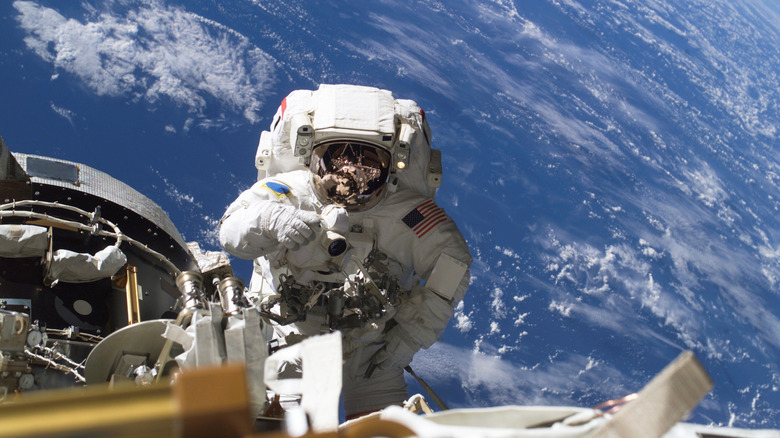
During NASA's last astronaut intake selection process in 2024, more than 8,000 people applied to be astronauts. Out of that group, only 10 were selected. If you compare that to Harvard's admissions statistics from the class of 2029, there were 47,893 applicants, and 2,003 students were admitted. Even though Harvard sees more applicants, the extremely small number of selected astronauts makes the NASA astronaut office a very exclusive place to be, with astronaut applicants being over 30 times less likely to be selected than Harvard applicants.
Getting into Harvard is challenging enough. Harvard's admissions committee not only looks at pure educational performance at high school level, but has to consider other factors such as community involvement, leadership, and extracurricular activities. NASA, on the other hand has to be a lot more careful with their screening process. Any typical NASA mission is a hazardous thing to do, and life-and-death decisions happen often. Astronauts have to place an unusually high level of trust in each other, which means that astronaut applicants not only have to be the best at what they do, but have to excel while working as part of a team.
NASA astronaut Anne McClain wrote in a 2020 NASA blog post that astronaut applicants have to "be adaptable, trustworthy, tenacious, and detail oriented." NASA looks for candidates who have proven credentials and who are already excelling in their respective fields. "You may be at the top of your field, or you may have just gotten another dream job that you love. You are contributing, you are trusted, and you know what you are doing. "
Navigating NASA's selection process

Before NASA will even look at your application, you have to be a U.S. citizen and have a master's degree in science, technology, engineering, or mathematics. In addition to this, you have to have a minimum of three years of professional experience and be able to pass NASA's astronaut physical evaluation.
If selected for the interview process, an applicant has several tests to navigate. Astronaut interviewee Chris Martin detailed his experience with NASA's astronaut physical assessment and interview process in this 2009 blog post. "For two hours, each of us stripped down to a pair of spandex briefs (plus sports bra for the female members of our group) and had every conceivable external measurement of our bodies taken. "
Martin also described the interview process and how it centers around telling your story more than testing an individual's ability to navigate loaded questions. "We were asked to write down 3-5 reasons why we wanted to be an astronaut. Then before entering the room, these reasons were read aloud (some other interviewees heard laughter coming through the door at this stage)," Martin said. "The classic opening question is 'Tell us about yourself starting with high school.'" From there, if applicants pass the initial assessments, more medical tests await. "There will be a week of in-depth medical testing (so in-depth that about 50% of people who go through the medical are expected to fail for one reason or another)," Martin said. From there, astronauts will move on to final evaluations, and even after being selected will go through a two-year training program before being assigned to a mission.
Why NASA's selection criteria is so stringent
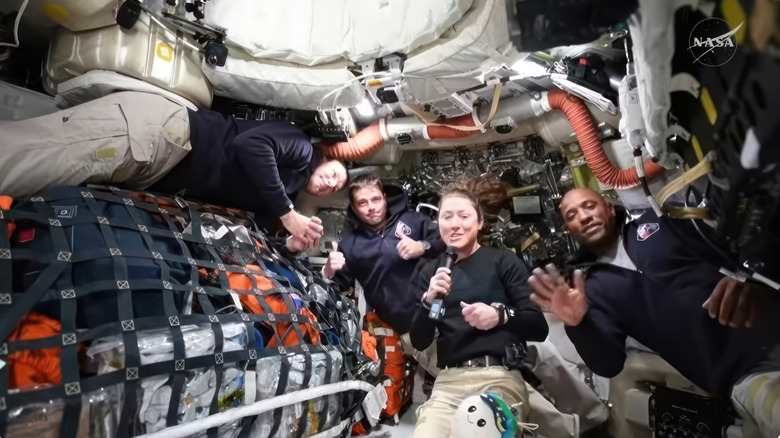
Selecting the right candidate is incredibly important. Astronauts have to thrive while working as a team, be of an agreeable personality, lack any underlying medical issues, and not have any known psychological conditions.
The reason astronauts are subjected to many medical evaluations is that certain medical conditions, while benign on Earth, can be aggravated by longer-term exposure to microgravity. Humans also have to be healthy to go on space missions, as health problems could force the early end of a mission. This was illustrated when astronaut Mike Fincke was the subject of a medical evacuation from the International Space Station.
Being an agreeable team player goes hand-in-hand with life as an astronaut. While crew resource management is important, astronauts also have to get along. While on long-duration NASA missions, astronauts have to maintain healthy and professional working relationships while confined to very small spaces, and be able to handle highly stressful situations calmly and professionally.
Psychological issues are harder to detect and could carry even greater risk to crews in space. NASA subjects astronaut candidates to extensive psychological tests to ensure that no underlying issues could endanger NASA crews when in space. Astronauts with serious mental health issues could cause great damage on space missions and could very easily cause the death of the entire crew if an issue is not identified during the selection process. If all else fails, NASA even has a playbook to deal with psychological episodes when in space, which goes as far as restraining the affected crew member and sedating them. While these processes are in place to protect the lives of NASA astronauts, no such incident has yet been documented in space.