

Next-Gen European Air Conditioners Could Change How You Cool Your Home
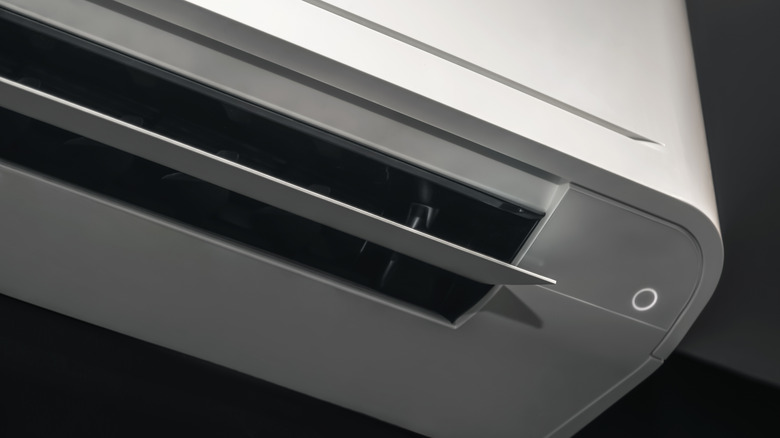
It may sound like an exaggeration, but Europeans would rather reach for a bunch of small gadgets to survive the summer heat instead of switching to air conditioners. Adoption rates are so low, in fact, that only around 20% of European households have them installed – a drop in the ocean when you throw it against the USA, where the figure is nearly 90%. However, while U.S. citizens may love powerful HVAC systems (in areas like Florida, they're essential), they're quite power-hungry, and in a world hurling toward an ecological disaster, it's a no-no. To address this problem, scientists experimented with cooling systems that don't rely on electricity.
But power consumption is only a part of the problem because traditional refrigerants used in air conditioners aren't eco-friendly either. Scientists invented a new refrigeration cycle using ionocaloric cooling, but it may be a half measure, as refrigerant is still at play. Fortunately, researchers at Saarland University in Germany may have cracked the puzzle wide open. Forced to address the hard-to-ignore temperature increase across Europe without contributing to the problem with classic AC, scholars are exploring solid-state or elastocaloric cooling.
Kicking refrigerant to the curb (figuratively speaking), this new cooling technique opts for nickel-titanium alloys. When these materials stretch and release, they provide cooling, which may be much more efficient than a refrigerant-based system. Though still in the early stages of research, elastocaloric cooling air conditioners can lower indoor temperatures by 5 to 10 degrees Celsius (9 to 18 degrees Fahrenheit).
Will elastocaloric cooling catch on?
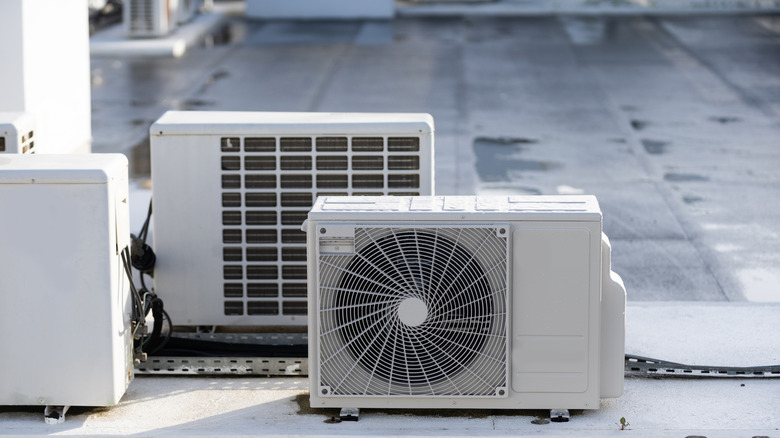
The core behind this new air conditioning is nickel-titanium and its unique property to deform and spring back to its original shape. As the structure transforms, heat transfer occurs as a side effect. It's quite nifty. Stretching a wire constructed of this alloy releases heat into the atmosphere (or liquid), and once you remove the stressor, the wire cools down and absorbs any heat. That's the gist of it. The process is so simple it doesn't require sensors, though the material itself responds to mechanical stress, rather than directly to atmospheric heat.
According to the team leader (via Techspot), Paul Motzki, the heat pumps are potent enough to disrupt the current cooling industry. Yet, the battle is far from over, as the system may not become available for at least a few years. In other words, the tech is experimental. Yet, the sheer simplicity, coupled with the system only using electricity, means it's perhaps the cleanest alternative to regular HVACs.
The European Commission certainly believes this to be the case. While the approach is gaining traction across the pond, it remains to be seen if the alloy can perform at scale. It may seem like magic, but if none of the major manufacturers hop on board, it may fail in a consumer sense. Yes, it's the eco-friendly version of air conditioners and the science is impressive, but it doesn't stop the experimental tech from falling apart in its launch stages.