

How The Average TV Size In The '70s Compares To The Screen Size Today
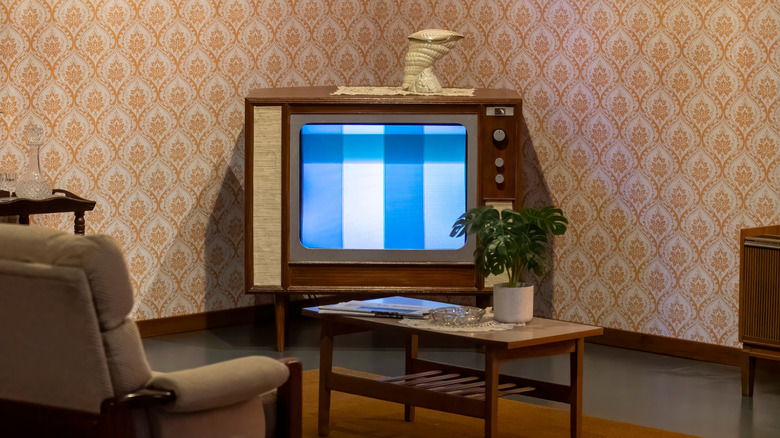
As of 2022, the average size of TVs installed in U.S. homes was 47.5 inches. Many people simply aren't willing to settle for a screen that's smaller than 50 inches anymore, and in fact, sales of TVs sized 80 to 89 inches grew by 26.5% year-over-year in 2025. The largest TV size you can buy is an extreme home cinema that easily takes up an entire wall in your house. The rapid advancement of TV technology can be traced back to the 1970s, the time when practically every home television was being upgraded to one with a color display. But for the sake of comparison, what was the size of a TV in the '70s?
The typical size for a home television in the '70s was 21 inches. This is what a premium TV looked like in the 1970s: a bulky CRT box with a 19- to 25-inch screen built into a wooden console cabinet, complete with front-facing speakers and on-device controls (remote controls were an uncommon luxury). The picture may have been fuzzy, and the TV may have been 25 inches at the absolute most, but the console TV was one of the chief electronics that shaped an entire generation in the '60s and '70s. It was the height of entertainment in the same way that our 75-inch-plus 4K displays are now.
When did TV screens start getting so much bigger?

Aspect ratio is an important thing to keep in mind when discussing the increased size of TVs over the years. In the '70s, TVs were square boxes that displayed images in a 4:3 fullscreen ratio. With the introduction of affordable high-definition displays in the mid-2000s, though, widescreen TVs became mainstream. HDTVs were also thin and lightweight compared to their CRT forebears, so a bigger set could feasibly be transported from the store to the home. This marked the moment when TV screens started to quickly get bigger and bigger.
Once it became physically possible — and financially practical — to make larger screens, it became really easy to see why TVs keep getting bigger. Frankly, a bigger screen with a higher resolution makes for a more enjoyable image and a more immersive experience. If a movie lover or video gamer can spare the cash to buy a larger TV, it simply makes sense to do so.
However, the current trends in the TV market are focused on better technology and increased affordability. Manufacturers are already making massive TVs, so consumers are now thinking more about image quality and longevity. It's not just "75-inch is better than 65-inch," it's also about Mini LED versus OLED and which technology makes the most sense for your living room.