

TVs Keep Getting Bigger, But Size Isn't Everything
Over the past few years, consumers have seen TV screens keep getting bigger and bigger. The selling point of these big-screen monstrosities is that a larger screen means a more immersive experience. However, when it comes to being immersed in your entertainment, size isn't the only thing that plays a part. You'll also want to look at the components and features that the TV offers, as different brands can offer different functionality and even different types of display panels, all of which play a part in the overall immersiveness of your experience.
Whether the display is a miniLED or a standard OLED panel can make a huge difference in the way brights and darks play across the screen. Even the overall refresh rate of the TV, and the upscaling tech it uses, can change how you view your favorite media. Many companies are already reportedly putting their best tech inside the largest TVs they offer.
And while that can be a negative for those who need a smaller display, it also means you want to be sure that the brand you're going with has the features and functionality that you're looking for, especially considering the price of some of these large-screen TVs. That's why it's always a good idea to look at what the best smart TVs on the market are, and then start looking at everything those brands have to offer in their larger sizes.
Why screen size feels like such a big deal
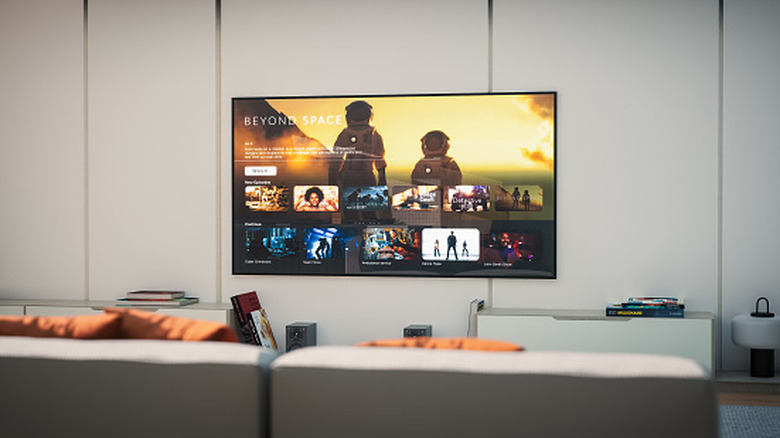
The sad truth of the industry is that, overall, technical hardware advances appear to have mostly stalled. While there is new panel tech coming out in the form of RGB Mini LED, a lot of the new "big" features that consumers are seeing are AI-related, like Google's Gemini assistant hitting Google TV systems. For most, though, that might not always feel like a massive leap forward. On the other hand, seeing manufacturers like Samsung, LG, and Sony embracing even larger TV screens feels like a step forward, probably because it is a difference that can be seen directly, especially now that 4K displays help make content feel less pixelated.
And that trend is likely only going to continue, as the ongoing trends the TV industry is seeing suggests there will be even more larger screen sizes, perhaps even some that go beyond the 100-inch displays seen advertised in 2025. There is, of course, nothing wrong with going all-in on a large display, especially if you host a lot of people and just want to have a super immersive entertainment space. However, there are other factors to consider when you are looking at a big TV beyond just the type of display panel it uses and what features it has under the hood.
Size can only do so much for your immersion
Unfortunately, how the human brain translates the information provided by your eyes isn't quite as simple as you might think. You can actually have a TV that is far too small or too big for your space. To fully understand what's meant by this, you have to first understand why TV size and distance to the TV matters. It all comes down to your eyes' field of view.
If you have a TV that is too small, it will leave a lot of space open around the device, which can take away from the immersion of your experience. Likewise, if you have a TV that is too big, and you're situated too close to it, your field of view may be cut off, essentially causing you to miss parts of the image — this is why I never sit in the front row at the movie theater.
Because of this, you should always take a look at how large your space is and then judge whether or not a large TV works for that space. If you want something larger, like Hisense's budget-friendly 100-inch TV, then you'll want to make sure you can be at least 13 feet away from the TV when viewing it. This will ensure you don't miss out on any of the content on display. If you need help figuring out how far away you should be for optimal viewing, RTINGS offers a handy TV view distance calculator.