

Underwater Internet Cables Are Doing Something Unexpected For Endangered Orcas
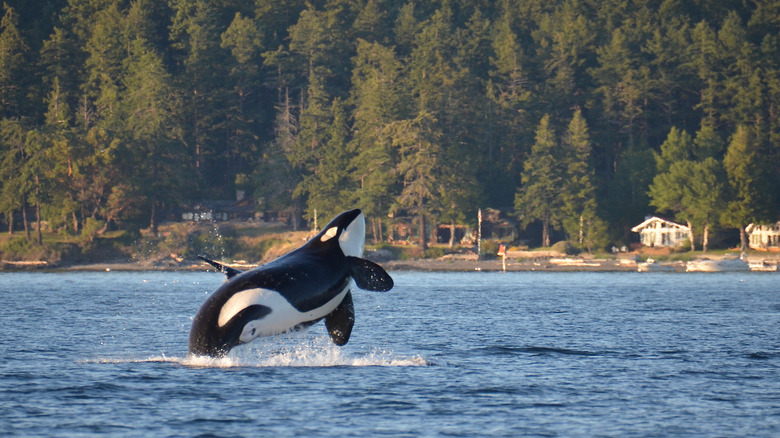
Underwater cables have been used for over 150 years to open up communications between continents, starting with the telegraph. They've been used for carrying internet data across the ocean since 1988, when the first internet cable (recently pulled from the ocean) was installed. These cables can be used for more than just their intended purposes, and scientists from the University of Washington are trying to use them to monitor whale movement and behavior in the hopes that the data can protect endangered orcas.
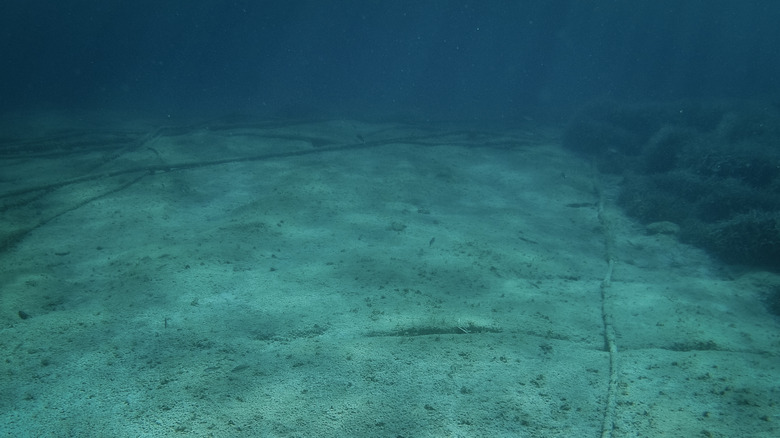
In October 2025, the UW researchers laid two kilometers of fiber optic cable in the Haro Strait (connecting Washington state to Canada) to show how distributed acoustic sensing (DAS) technology can be used to track marine mammals that use echolocation to navigate. DAS works by sending laser pulses through the wire that can pick up on and take measurements of vibrations, essentially turning the entire cable into a massive sensor.
While the tech was developed to detect issues within pipelines, scientists can use the real-time data DAS systems pick up to measure and precisely locate disturbances such as seismic activity or, in this case, whale movements. The UW team, led by oceanographer Dr. Shima Abadi, will monitor Southern Resident orcas in the area for two years. As Abadi told The Associated Press, the cables allow researchers to "know where the animals are and learn about their migration patterns."
Technology can help nature in unexpected ways
Learning more about Southern Resident orca behavior will hopefully help improve conservation efforts for a species that has been listed as endangered for over 20 years. As of July 2025, there are only 74 of these whales left due to limited food access, pollution, and (most relevant here) noise. Because whales use echolocation for hunting, the noise from ships is disorienting and makes it difficult to find the Chinook salmon they rely on.
Orcas produce higher-frequency signals than what's been tested with DAS so far, which is why the UW study is so important. If it works as intended, it'll give the thousands of miles of underwater fiber-optic cables a new purpose: tracking whale movements. That data could potentially be used to adjust human behavior, such as construction or ferries, based on when the orcas are nearby.
This isn't the only case where researchers have helped give technology developed for one purpose another use that helps wildlife and the natural world. In central California, solar farms have been protecting endangered San Joaquin kit foxes by giving them shelter from predators. The fences were even designed to meet the foxes' needs, which is a perfect example of how learning more about animal behavior allows scientists to find creative ways to help them.