

4 Of The Worst-Rated Soundbars, According To Consumer Reports
We may receive a commission on purchases made from links.
Investing in a great soundbar is one of the easiest and fastest ways to upgrade your TV audio. Most systems connect via HDMI or digital optical, and it only takes a couple of minutes to get bars up and running. Many soundbars aren't overly expensive, either. Spending anywhere between $250 and $500 is a safe bet for landing a solid bar-woofer combo. There are also systems that cost less than $250, but according to Consumer Reports (CR), these are the soundbars you want to stay away from.
Spending under $250 doesn't guarantee you'll be disappointed, but in many cases, one of the first sacrifices is a wireless subwoofer. A lot of the best soundbars for audiophiles are bundled with them, but you'll often find manufacturers going the "built-in woofer" route at these lower price points. You may also lose features like up- and side-firing speakers, HDMI input switching, Wi-Fi connectivity, as well as companion app support.
Buying a stinker of a soundbar isn't going to ruin your life, but when your TV speakers are providing a wider, more immersive soundstage than the $250 Polk Audio bar you brought home, there's a bit of a problem. To help you steer clear of some of the worst, we put together this list of the four worst-rated soundbars, courtesy of CR's lab testing and expertise.
ZVOX AccuVoice AV835
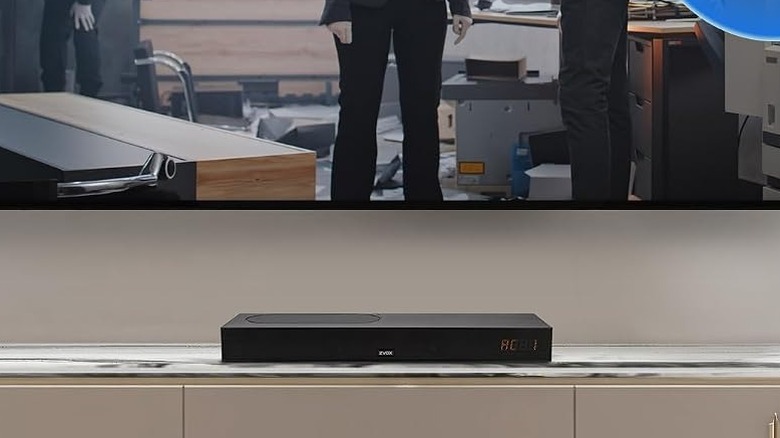
Welcome to the bottom of the barrel! We have it on good authority from CR that the $250 ZVOX AccuVoice AV835 is one of the worst soundbars on the market, and there are a few reasons why. For starters, the system doesn't come with a wireless subwoofer; Instead, ZVOX decided to add two built-in woofers to the chassis. It's a nice idea on paper, but the integrated subs on the AV835 just don't sound very good.
User feedback also makes it clear that ZVOX doesn't include any printed instructions with the system, and you can't download them, either. The main purpose of the AV835 is dialogue and vocal clarity, and ZVOX claims you'll be able to choose between 20 levels of dialogue boost (although one Amazon user reported that there were only 10 modes). And while the physical port selection is pretty solid (1 x HDMI ARC, 1 x digital optical, 1 x 3.5mm auxiliary), the AV835 doesn't support Bluetooth or Wi-Fi.
If you like the idea of built-in woofers, the $280 Yamaha SR-B30A is a much better alternative. The slim bar has a "Clear Voice" preset for enhanced dialogue, and even supports Dolby Atmos virtualization when connected via HDMI eARC.
UPDATE | August 3, 2026: ZVOX reached out to make a few clarifications. First, the company notes that a user manual is in the box (and available on its website), though it might be hidden from view depending on how the user opens the box. ZVOX also reiterates that there are "20 levels of dialogue enhancement –- 10 levels of AccuVoice and 10 levels of SuperVoice" and claims the instructions for changing these is clearly stated in the user manual.
LG S20A
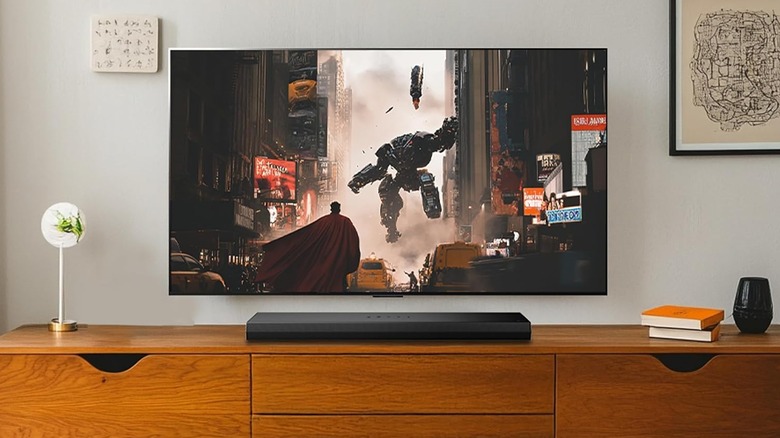
The $120 LG S20A isn't much to look at, and unfortunately, the appearance matches the deliverables (sometimes, you can indeed judge a book by its cover). There are detractors left and right with this system, and the first one-star review on Amazon confirms that the S20A will only work via HDMI ARC/eARC. Most bars include digital optical as a failsafe, and it's especially weird that a soundbar that costs less than $200 a.) doesn't support optical at all, and b.) supports HDMI, instead — it's usually the opposite.
This is also a 2.0-channel soundbar, which means that LG didn't even bother to add woofers. If you're buying for bass, you'll definitely be let down, and it doesn't look like there are any audio presets to hone in on low frequencies either. Considering its stereo design, the S20A also doesn't support 5.1 surround, so Dolby Digital and DTS formats are always down-mixed to stereo. One saving grace: If you have a compatible LG TV, you can use the WOW Orchestra feature to combine soundbar and TV speakers for a bigger soundstage.
Is there a better option for about the same price? You bet there is! Look no further than the $130 Hisense HS2100. This 2.1-channel system comes with a wireless sub, supports Dolby Atmos and DTS:X, and even includes six configurable EQ modes for fine-tuning your sound.
Sony HT-S400
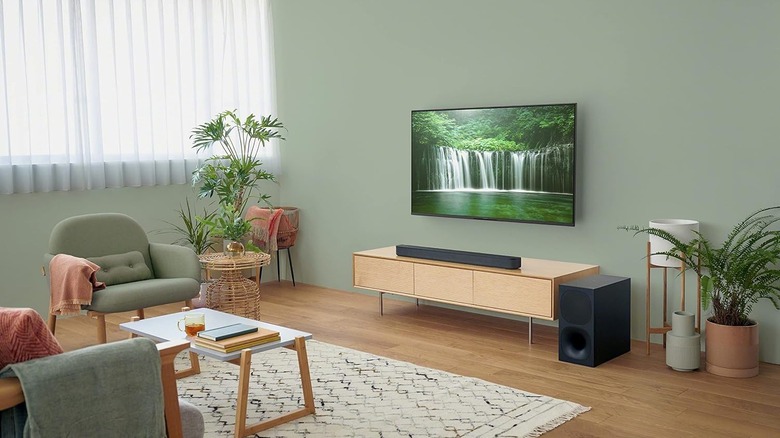
CR felt that the biggest disappointment of the $300 Sony HT-S400 was the bar's overall sound quality, and they're not the only experts complaining about lackluster audio. Our pals at RTINGs put the HT-S400 through lab tests, too, and ultimately dinged the system for "poor surround sound" and "limited sound enhancement features." One of the main complaints amongst Amazon shoppers is that the HT-S400 doesn't get loud enough, and does a poor job at mixing/balancing audio.
Sony attempted to punch above its weight class with the HT-S400, as the system uses the company's S-Force Pro Front Surround tech to widen the soundstage. Unfortunately, the results aren't very impressive, and because this is a 2.1-channel bar, all 5.1 audio is down-mixed to stereo. There also isn't much in the way of customization, other than an on/off Voice preset and night mode. You can adjust the subwoofer volume, too, but can't tweak the treble or bass settings for the bar itself.
Here's our upgrade suggestion: Spend $50 more and get yourself the $350 Sony BRAVIA Theater Bar 5. This system features a dedicated center speaker, supports Dolby Atmos and DTS:X, and numerous presets and other audio adjustments (Sony | BRAVIA Connect app required).
Polk Audio SIGNA S2
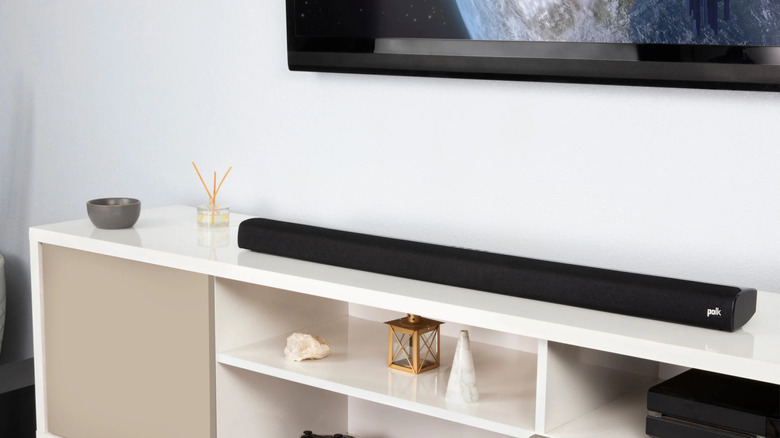
The best of the worst on our CR-inspired list is the $250 Polk Audio SIGNA S2. First of all, this soundbar has been on the market for over six years. We're not sure how much of that is a "if it isn't broken, don't fix it" mentality from Polk's engineers; Ironically, there are a few things we'd fix about this bar-woofer combo. We'd start with its lack of format support. The SIGNA S2 supports HDMI ARC, but doesn't support anything greater than regular Dolby Digital, nor DTS at all.
We'd also try to improve the overall volume output, as well as the fact that the remote increases/decreases volume in increments of three. The remote is fairly basic, but we do appreciate the master subwoofer volume and range of audio presets. There's also a Bluetooth input if you want to stream music wirelessly from a phone, laptop, or other device.
The SIGNA S2 is a "decent" upgrade if you're cursed with bad TV speakers, and the dedicated woofer brings a decent amount of low end to the table. If you want bigger volume and don't mind spending a bit more to get it, the $350 Polk Audio SIGNA S3 delivers up to 80 watts, compared to the 25-watt max output of the SIGNA S2.