

Your Solar Panels Could Be Losing Most Of Their Power To One Thing You Can Barely See
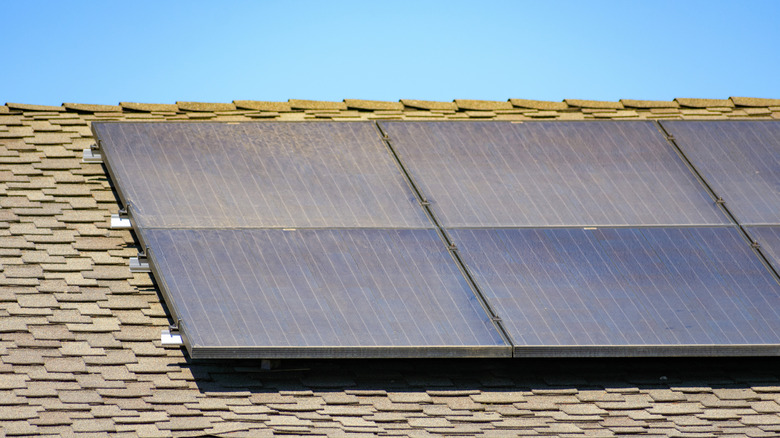
Installing solar panels at your home is a great way to tap into a renewable source of energy that isn't going away anywhere. Many households are opting for solar, enticed by government incentives and the potential to reduce their monthly energy bill. However, many folks often make a big mistake with solar panels and forget about maintenance after getting them installed and then wonder why their solar setup is suddenly producing less power than what their installer promised them or what they were getting in the early days of the setup. There is one very simple reason why your solar panels aren't as efficient as they are supposed to be – dust.
As solar panels are installed in the open, usually on your rooftop or in a wide-open area, they come in contact with everything that the weather and the surrounding environment have to throw at them. This means dust, dirt, and other grime can quickly accumulate on them, and while it might not seem like a big deal, this accumulation stops sunlight from reaching the panels, resulting in less power generation and potentially impacting how long the solar panels last.
How much power can you lose because of dust and other grime on your solar panels
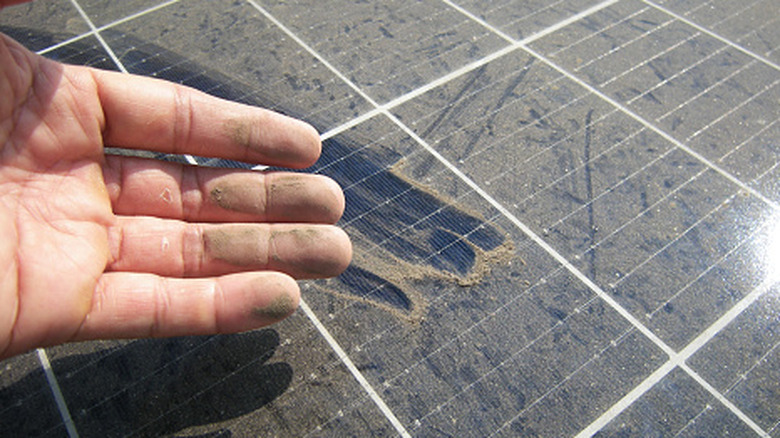
As the level of dust and grime accumulation on solar panels can vary based on environmental factors, such as the amount of dust in the air and the frequency of bird droppings, the impact on power generation is also variable. According to a paper presented at the International Conference on Advanced Technologies for Humanity in 2025, an examination of 30 recent studies on the topic showed that dust on solar panels can reduce the solar panel efficiency by anywhere from 10% to 40%. Similar tests conducted by MIT researchers showed a drop of 30% in energy output after just one month without cleaning. Another paper by Indian researchers showed polycrystalline solar panels getting more severely impacted by the dust buildup, with a power output decline of 30.48%, in comparison to around a 14% decline in the monocrystalline panels.
There have been tons of other studies on the subject, with each showing a similar reduction in power output and panel efficiency getting more and more impacted as dust keeps accumulating over months, with drops as high as 65% after no cleaning for six months. All these findings clearly highlight that if you're leaving your solar panels unattended for long periods of time, you can be giving up on a lot of power.
How to ensure you're not losing power to dust buildup
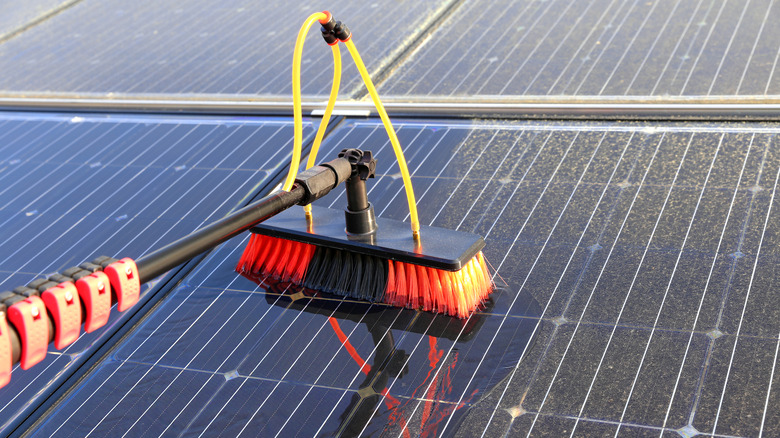
The clear empirical evidence showing the decrease in output efficiency of a solar panel because of dust and grime accumulation makes a strong case for timely maintenance. Depending on how accessible your solar install is, you can clean it yourself, or you might require the services of a professional. A soft, non-abrasive brush with soapy water is typically more than enough to get rid of all the buildup on your solar panels. The frequency of the cleaning will depend on where you live and how quickly your panels are getting dirty.
If you're willing to spend a bit, there are automatic solar panel cleaning systems that offer varying levels of cleaning, which you can install with your solar panels. These systems are typically automatic and clean the panels on a set frequency. This is a less hands-on way but requires at least a one-time significant investment, and may be useful if your panels are not easily accessible and require professional cleaning.
Ensure you're cleaning your solar panels in the morning or on an overcast day to avoid water evaporating too quickly and leaving streaks of dust. It's also a good idea to turn off your solar system before cleaning and use the right tools.