

3 Of The Worst Places To Put A Subwoofer In Your Home
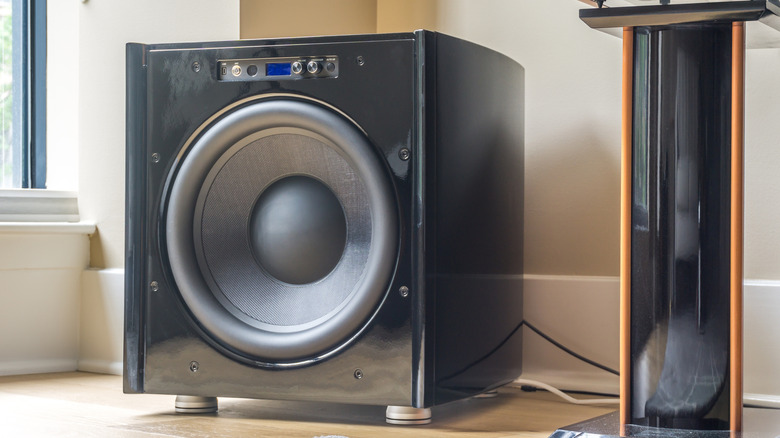
The modern subwoofer is one of the most essential pieces of any home theater system. Whether you've got a soundbar and subwoofer combo, or a full-fledged setup with dedicated speakers connected to an AV receiver, a subwoofer produces vital bass notes that balance out your favorite music, movies, or TV shows.
As important as a quality subwoofer is, though, finding the right place in your home to put a subwoofer can make or break the bass it delivers. Subwoofers of all shapes and sizes depend heavily on the acoustics of the environment they are in to do their job. It's so crucial that many subwoofer owners resort to the classic "sub crawl," which literally means placing a subwoofer where you normally sit and crawling around your room to find the spot where the subwoofer sounds the best.
You may not need to take such a drastic measure for your space, but you should know the typical traps to avoid. With that in mind, here's three of the worst places to place a subwoofer in your home; from the center of a room, to a space with concrete walls or floors, or worse, inside a cabinet.
In the middle of your room
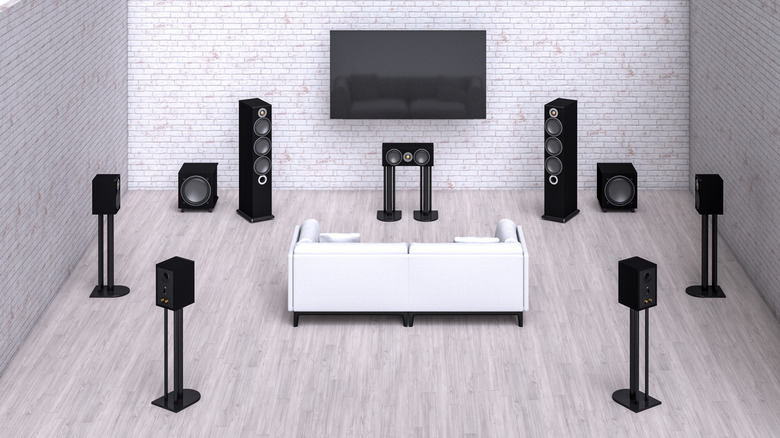
As a good rule of thumb, most subwoofers do well when placed directly in a corner of a room. Every room's acoustics are different, of course, so your mileage may vary. But a corner placement will generally allow a subwoofer's bass notes to bounce directly off the corner walls, serving as an easy way to boost those frame-shaking bass notes.
Interestingly, the opposite is true for subwoofers: Placing a sub directly in the middle or your room, or equal distance from two opposing walls, will most likely sap the woofer of any meaningful bass. Instead, it will cause the subwoofer to sound "muddy," or "boomy" and incapable of creating tight, punchy bass notes.
You won't damage your subwoofer by putting it in the middle of the room, and the good news is it's usually no easy task to achieve that placement anyway. But if the opportunity ever arises, you will be far happier sticking it in a corner instead.
In a room with concrete floors or walls
Unfortunately for some, this may be a less avoidable situation than other placements on this list. The hard truth is that concrete floors and walls have a bad habit of annihilating bass notes, meaning that your subwoofer won't be able to reach its true potential when it's surrounded by these types of surfaces. Accessories like isolation feet can help establish a bit of separation between a sub and concrete floors, but it will still be difficult to keep a woofer from sounding bloated and boomy as it tries to combat those acoustics.
Conversely, more absorbent wall materials will complement subwoofers and the sound they put out. We don't all have the luxury of choosing our wall and floor materials, of course. That said, if you're in the middle of a home theater build, consider covering any concrete to get the best possible performance from your subwoofer.
Inside a cabinet
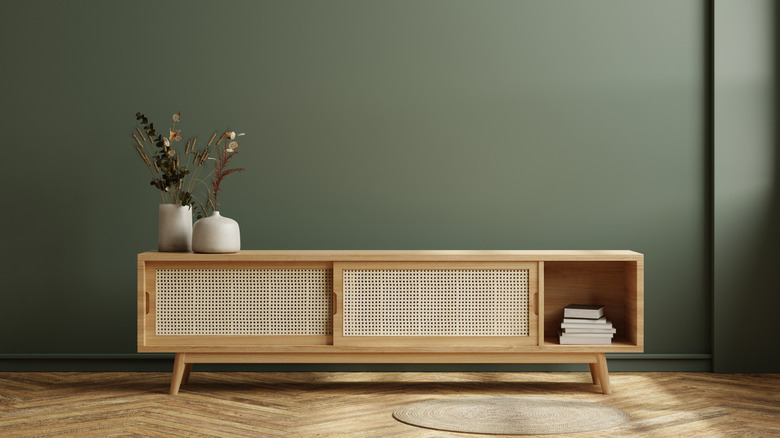
Possibly the most devastating spot for a home theater subwoofer is inside a cabinet, such as a media stand or entertainment center. Similar to how speakers need a certain amount of room between walls in order to sound their best, subwoofers need space for the frequencies they generate to travel to create the epic, thunderous sounds. That higher quality adds up to a greater sense of immersion to the action-packed movies that we all know and love. When a subwoofer gets imprisoned in a cabinet, there's minimal room for those low-end notes to travel, rendering the sub itself ineffective.
If you are dedicated and willing to find the spot that suits your subwoofer best, take the time to do a sub crawl in your home. Or, if you would rather set it and forget it, an open corner of your living room is a perfectly fine spot for a subwoofer more often than not. Just try and keep it away from the middle of your room, concrete slabs, and if at all possible, those woofer-killing cabinets.