

3 Disadvantages Of Wirelessly Charging Your Phone
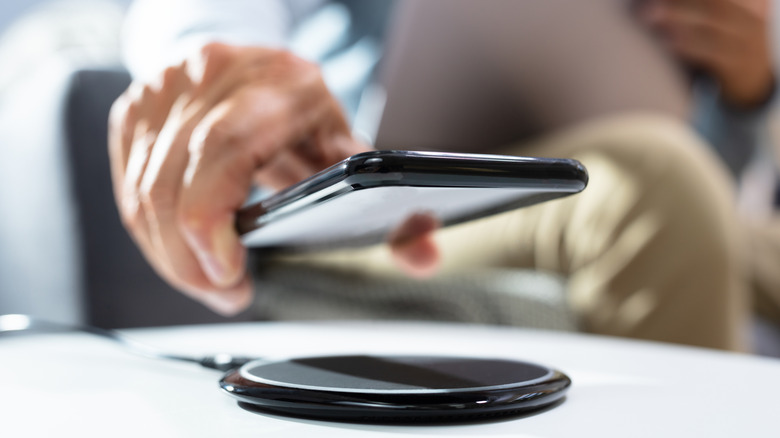
Wireless charging has been a part of smartphones for years now, but there's still something cool and futuristic about laying your phone on a surface to power it up without needing a cable. Their ease of use and sleek designs can be appealing to those who are tired of fiddling with cords that frequently get lost, tangled, and (if they're cheap) wear out quickly. You can even get wireless power banks that give you an easy way to charge your phone on the go without needing to carry around a cable.
However, there are some clear downsides to wireless chargers, even if claims that they're unsafe to use and fry your phone's battery are false or overblown. That's not to say you should avoid wireless charging altogether, but it's far too soon to toss your USB-C cords. Good wireless chargers are more expensive than traditional ones, so it's good to understand the cons before you invest in one.
You can't use freely your phone while charging
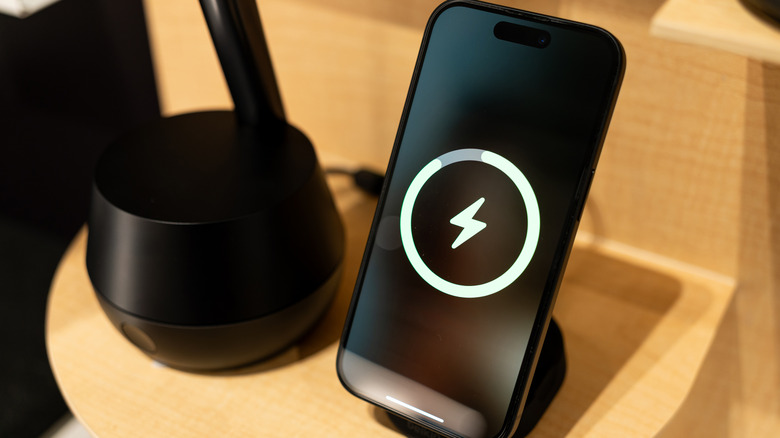
One clear downside to wirelessly charging your phone is that you can't keep using it the way you normally do while it charges via a cable. Your phone needs to lie flat on the charger, and since they can be sensitive to slight misplacement, it's best to leave it be. There are wireless chargers designed to serve as stands to make using your phone while charging easier, but it's not like wired ones where you can keep freely using your device as it powers up.
It's definitely a disadvantage, but it's far from a major problem. While it may be an inconvenience if you need to keep using your phone, connecting and disconnecting from a wireless charger is as simple and instantaneous as picking it up and putting it back down. It's one of the reasons why wired chargers will always have their place, but wireless chargers are perfect for those times when you plan to put your phone down for a bit while you do other things.
Wired chargers are faster
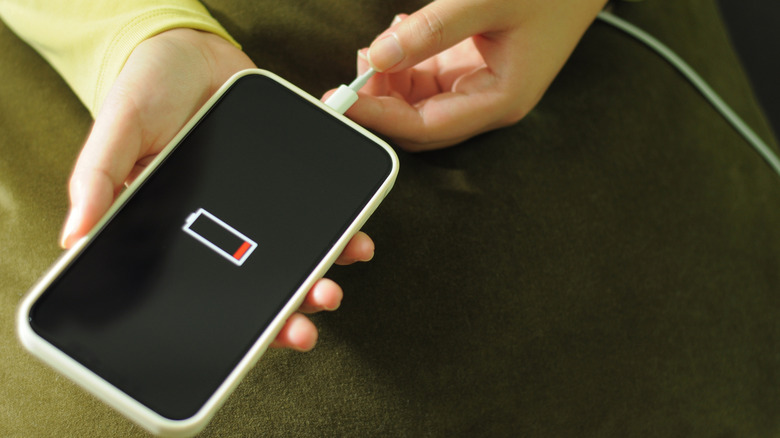
While wireless chargers can be convenient, wired ones remain superior in terms of speed. For a long time, wireless chargers maxed out at 15W, only reaching 25W in 2025 with the introduction of the Qi2.2 standard. It's a long way from the 5W of the original Qi standard introduced in 2010, but new wireless chargers can still feel slow. As one Reddit user said, "Even when a charger is rated for 25W, real-world charging doesn't always feel that fast."
There are ways to speed up wireless charging, namely taking your case off. Though some argue that there's no need for phone cases anymore, many would rather use a case to protect from dust, scratches, and drops. That's especially inconvenient for those with heavy-duty cases that aren't easy to remove, as cases thicker than 5mm significantly slow down or completely block charging.
On top of that, wired charging speeds are getting faster. For example, the iPhone 17, iPhone 17 Pro, and iPhone 17 Pro Max can charge at up to 40W, getting to 50% in just 20 minutes — and that's nothing compared to some non-Apple or Android phones, especially those coming out of China. The smartphones with the fastest charging batteries go all the way up to the Realme GT3's 240W.
Wireless charging runs hot

Though wireless chargers are safe to use, they definitely are not better for battery health because they produce heat while in use. Modern smartphones are designed to avoid overheating, but that doesn't mean it can't happen. Extended exposure to heat can speed up battery degradation in the long term and cause your phone to require more frequent charging. It's also another reason to take your case off when using a wireless charger, as they'll trap heat no matter how thin the material.
Wireless chargers are also inefficient in terms of power consumption. According to charging brand Anker, "wireless charging typically operates at around 70% efficiency, meaning approximately 30% of the energy is lost during the transfer process." That's because wireless charging is indirect, involving a magnet connecting to a coil within the device to generate power, which is also what generates heat. In comparison, wired charging only loses around 5–10%, making it the more energy-efficient choice.