

4 Cheaper Alternatives To Expensive Smart Home Sensors

We may receive a commission on purchases made from links.
Building a smarter home often involves incorporating fairly sophisticated smart devices, like video doorbells, smart locks, garage door openers, smart lights, voice assistants, and even smart switches or plugs. But there's often another, simpler way to outfit your home and engage with all of those devices, besides using apps and automations. Namely, you can install sensors with the express goal of measuring various elements to trigger a desired action. For example, door and window sensors can send out alerts when those entryways are opened. Or how about a water-level sensor that tells you when a bin, bucket, or pot is about to overflow? You could install a vibration sensor that detects movement or tilt in a liquor cabinet to immediately notify you when someone opens it up.
Unfortunately, smart home devices like this, with sensors built in or those meant to be used alongside other systems, are often expensive. If you're resourceful enough, though, you can always build some of these setups yourself. The sensors on this list will help you get there without breaking the bank in the process.
Thirdreality temperature and humidity sensor
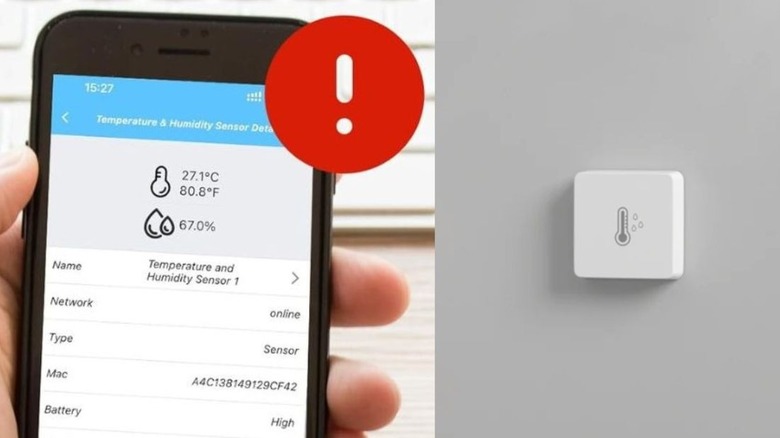
Overall, Thirdreality offers some incredibly affordable smart home gadgets, spanning switches, plugs, controllers, sensors — you name it. If you're in the market for something specific for your smart home, it's always worth taking a look at the company's collections. But a standout is the temperature and humidity sensor, available on Amazon for $20. It supports the Zigbee standard and is also compatible with a wide variety of existing ecosystems, like Home Assistant, Amazon's Echo, and Hubitat.
This device uses an accurate sensor from Sensirion to detect temperature and humidity and pairs with automations to support your desired scenarios. For example, you could use it to automate and turn on HVAC systems when the indoor temperature reaches a threshold, turn on a smart plug connected to a fan at the same time, or activate a heater when a room gets too cold. It runs on two AAA batteries, with the initial set included. If you're going to use it with Zigbee, you'll need a Zigbee hub or coordinator before you can add it to your setup, so keep that in mind. It has over 470 reviews on Amazon with a 4.3-out-of-5-star rating. If you want to go even cheaper, IKEA has a temperature and humidity sensor for $10.
IKEA Myggspray wireless motion sensor
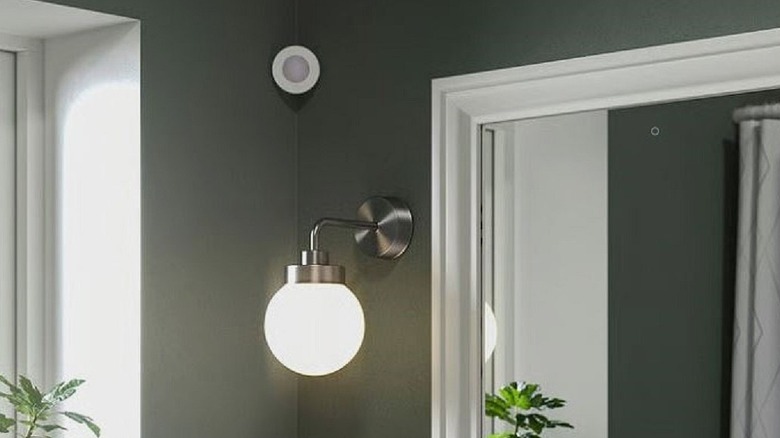
If you're willing to get creative, there are a ton of awesome smart home automations you can try with a motion sensor or something simple like it. Knowing that versatility, it's hard to believe in this day and age that IKEA has a $10 wireless motion sensor. For that price, you get a device that runs on two AAA batteries and is Matter compatible. IKEA markets it as a tool to automate your smart lights — the idea is that you walk by and it turns on the lights you need to see around you. But the Myggspray can also be used, through Matter, to trigger or control a variety of other events. You'll have to write your own automations using the Matter system, though, if you're using it for anything other than IKEA's intended purpose, which is controlling the brand's lighting and smart home ecosystem.
Setting up this gadget as a motion sensor for lighting is fairly easy if that's all you want to do, though some users have voiced difficulties getting it to initially pair with their smart home setups. That said, it's a low-cost option, has a lot of potential, and the reviews are decent: it has a 3.2-star-out-of-5 score with over 300 reviews on the IKEA site. While not super positive, that's not a terrible rap for something so cheap, especially if you can get it to work for what you want. You just might have to throw in a bit of elbow grease of your own.
Aqara vibration sensor
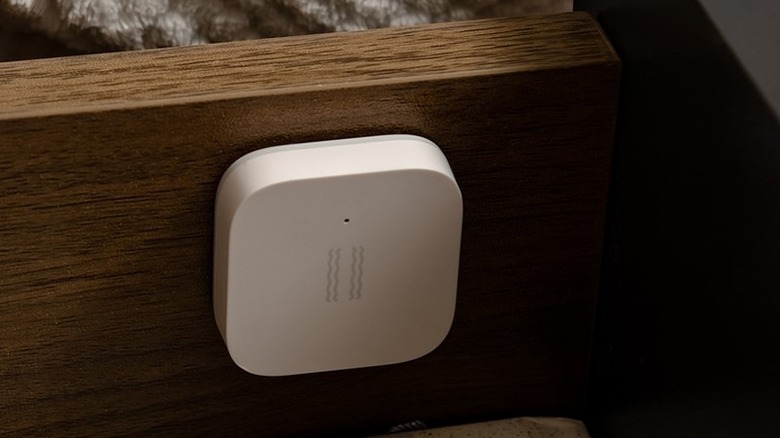
Some other brands on this list have vibration sensors, too, including IKEA and Thirdreality, so you have options in this realm. But what makes Aqara's $19 sensor a top choice is the affordable price paired with the high degree of compatibility. Plus, it reacts to several different events or actions, and you could make a case for it being listed among the best smart home gadgets for minimalists. This device is lightweight, easy to conceal, and has a ton of potential.
For starters, the Aqara sensor works with the brand's self-titled ecosystem, Zigbee, Apple Home, Alexa, and IFTTT. It also works with Matter, through the Aqara hub, so while it lacks native support, if you have the hub you can still use it with a Matter-outfitted home. As for events, the sensor reacts to vibrations, tilts, and drops. When one of those actions is detected, it will sound an alarm, send app notifications, or trigger automations that you have set up.
You could mount the Aqara vibration sensor to valuable items to ensure no one is handling them or that they don't walk away. You could also mount it inside drawers, cabinets, or on the inside of doorways and entry points. You can also get more granular, like installing it on the inside of a gun safe or a lock box to send alerts when the container is opened. The gadget has 3.8 stars out of 5 with over 1,800 reviews on Amazon, so people seem relatively happy with it.
Sonoff Zigbee human presence sensor
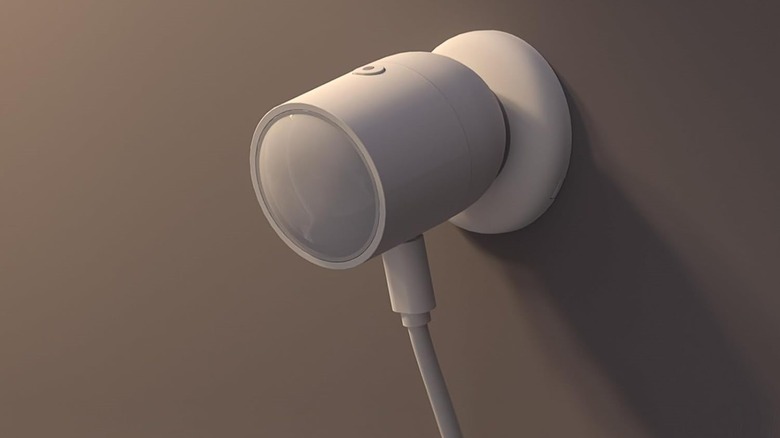
Motion sensors are great when you're moving about, but sometimes you're sitting down, relaxing, or enjoying a space, in which case you don't necessarily want the lights to turn off or a trigger you have set to reverse. Enter Sonoff's $18 human presence sensor, which detects both moving and stationary people. It can control ambient lighting and room scenes, and it can also trigger various actions based on parameters you have set, for both when you enter and leave a room and when you're still in a space or environment. A lot of smart home settings deal with remote changes while you're away on a trip, but this one could power some excellent automations for when you're home or spending the day inside.
It's compatible with Zigbee 3.0 hubs, but also Alexa, Google Home, SmartThings, Alice, IFTTT, and Home Assistant. It works using an intelligent 5.8-gigahertz microwave radar rather than motion sensing alone. It can also detect lights or lighting changes. Overall, this sensor has a 4.0-star rating with over 380 reviews on Amazon. A majority of users seem to be impressed or happy with their purchase.
How we chose these smart home sensors

As you likely surmised by now, there are a lot of brands that make smart home sensors, including Aqara, Tuya, Sonoff, IKEA, ThirdReality, and many generic or unknown brands if you're browsing Amazon. The first goal for this list was to keep all choices below $20 maximum, even lower than that if possible. That's a reasonable threshold between cheap and expensive, and where the aggravation and time involved in building your own devices don't outweigh the costs of buying outright.
Moreover, it was important to not only choose devices that have been reviewed mostly positively, but also products with a track record of smart home owners using them in the wild. Beyond that, the devices we chose are all compatible with a wide array of ecosystems and smart home solutions. They can also be utilized in various ways, usually in more ways than what's intended. So, for example, a sensor meant to work with lights could be used to trigger other actions and automations with some customization. Finally, to make this list, products had to be widely available online from large retailers like Amazon and IKEA.