

Moto Buds 2 Plus Review: Solid, Well-Priced Buds

Motorola has been quietly building out its audio lineup for a few years now, and the Moto Buds 2 Plus are the latest model. Released in 2026 as the successor to the Moto Buds+, these are mid-priced, true wireless earbuds with a "Sound by Bose" badge on the case, Pantone-certified colors, and a series of AI features that tie into Motorola's phones.
The Moto Buds 2 Plus launched at around $149, which puts them in a strange spot — below flagships like the AirPods Pro 3 and Sony WF-1000XM6 but above a flood of sub-$70 budget buds from the likes of CMF, Realme, and boAt. Essentially, they're in direct competition with premium options from the likes of Nothing.
And that's a crowded space to be in. There are more wireless earbuds out there right now than anyone could reasonably keep track of, and they're not all created equal. So, do the Moto Buds 2 Plus actually earn their place in that middle ground? I've been testing them for a while to find out.
Design
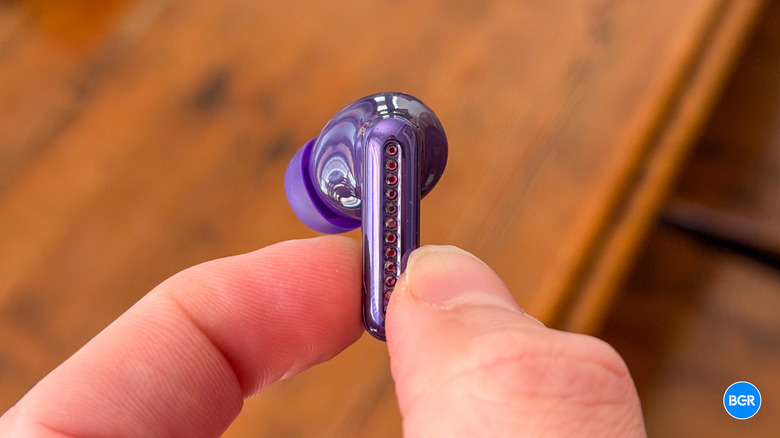
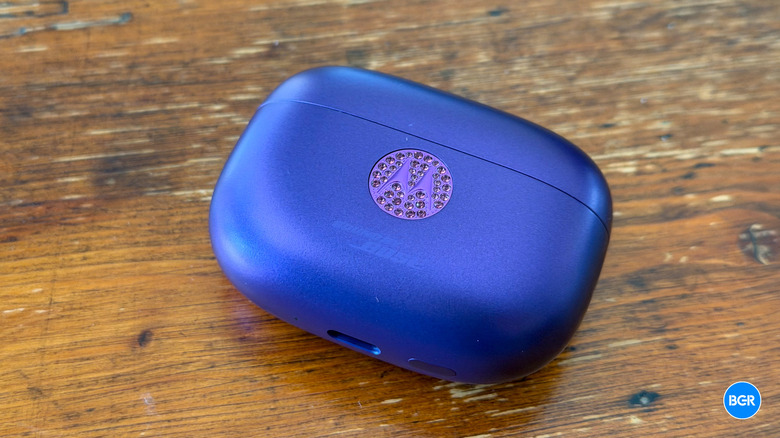
The Moto Buds 2 Plus stick with a familiar formula in terms of design. You get an in-ear stem design with silicone ear tips, paired with a compact, rounded charging case with a matte plastic finish. Nothing about the look will surprise you, but that's not necessarily a bad thing. Motorola's design is a little understated, and not everyone wants something flashy or unique in terms of design.
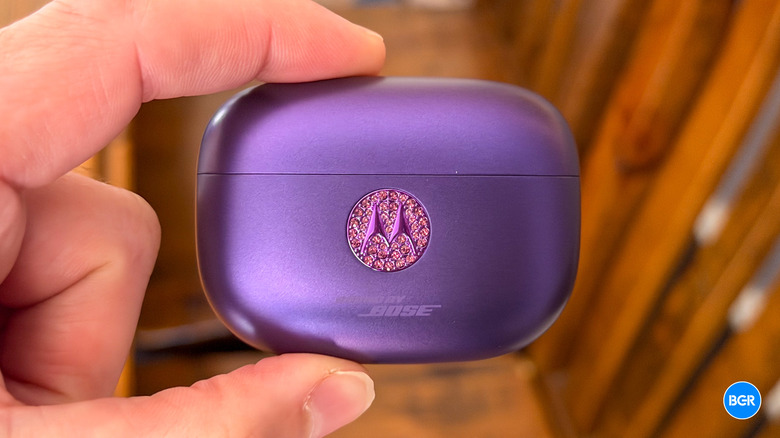
The Pantone partnership gives you two main colorways: Cool White and Silhouette — however, there's also the special-edition Pantone Violet Indigo color which I'm reviewing. I like colorful tech, but this one is very purple. Not my style with the glittery logo, but cool-looking nonetheless.
The build quality isn't bad. The plastic isn't luxurious, but it doesn't feel fragile either — hinges and magnets are solid, and the whole package presents well for a mid-range product.
Durability is where you'll want to pay attention, though. The earbuds themselves are rated IP54, which covers dust and splashes — sweat, rain, and workouts are all fine. The case, however, is only rated IPX2, which means it can handle a few drips and not much else, and if you happen to jump in the pool with these in your pocket, it's pretty likely they'll break.
Comfort

Stem buds tend to be more comfortable, and these earbuds are no exception. No, the buds aren't as small as other stem-based options, but in my ears, they felt comfortable and secure, and I was able to wear them for extended periods of time without issue.
Comfort is one of the stronger arguments for these earbuds. The moderate stem length and lightweight build make them easy to wear for hours at a time, without the internal ear pressure that some sealed in-ear designs create. I found them stable enough for commuting and light exercise, which is exactly the use case the silicone tips are designed for.
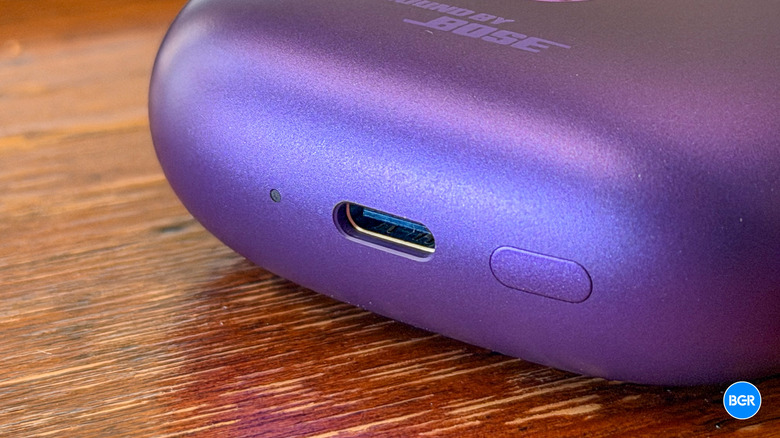
One thing I do like is that the case is relatively small and pocketable. It's easy to open, and it's easy to get the buds out of the case. On the bottom of the case is a USB-C port, which, unfortunately, is the only way to charge them — there's no wireless charging option.
The Moto Buds app includes a Fit Test feature that uses the internal microphones to check for audio leakage and confirm you've got a proper seal. It's worth running — a poor seal undermines both the noise cancellation and the bass response, so a couple of minutes with the fit test pays off. The CMF Buds 2 Plus deserve credit here too, for what it's worth. Both are lightweight, comfortable buds that you can wear for long sessions without thinking about them, so comfort alone won't help you decide between the two.
Features and noise cancellation
The Moto Buds 2 Plus offer noise cancellation, and Motorola says it's rated at up to 55 dB, thanks to a combination of a six-microphone array and tuning in collaboration with Bose. In practice, the actual quality of the ANC is pretty good for the price. General hums, office chatter, and street noise get knocked down effectively, though certainly not to the same level of more expensive options. Low-frequency transport rumble is another story — on trains and planes, you'll still hear some of it. The premium tier from Sony and Bose does better here, and there's no pretending otherwise. But those buds cost a lot more, and for everyday commuting, this level of ANC is more than serviceable.
You can switch between standard ANC, an Adaptive mode that adjusts intensity based on your environment, and a Transparency Mode that's a real highlight. It sounds natural enough that you can hold a quick conversation without pulling a bud out — no weird delay, no distorted voices. Cheaper earbuds routinely get this wrong, and Motorola didn't.
Connectivity is handled by Bluetooth 6.0, with Dual Connection multipoint so you can stay paired to a laptop and phone simultaneously. There's also an Audio Share feature that lets two pairs of buds connect to a single device, which is a niche but genuinely useful trick for shared movie watching on a flight.
Then there's the Moto AI layer. Features like "Catch me up" for notification summaries, "Pay attention" for hands-free meeting transcription, and in-ear translation are all here — but they require a compatible Motorola smartphone, and even then, I suspect most people won't use them.
Battery
Battery life is a strength. You'll get 9 hours of continuous playback from the buds themselves and up to 40 hours total with the charging case. A 10-minute quick charge gets you roughly 2 hours of playback, which covers the classic forgot-to-charge-before-the-gym scenario.
That said, this isn't the endurance champion of Motorola's lineup. The standard, cheaper Moto Buds 2 manage 11 hours per charge and 48 hours total — the Plus trades a bit of stamina for its fancier audio hardware. If raw battery numbers are your top priority, there are better options. For most people, 9 and 40 will be plenty.
Sound
The sound quality on offer by the Moto Buds 2 Plus is actually quite solid, especially for a pair of earbuds in this price range. Inside each bud is a dual-driver setup pairing an 11mm dynamic driver with a Knowles balanced armature — the dynamic driver handles the low end while the armature takes care of detail up top. That's the kind of architecture you usually find in more expensive earbuds.
The Bose tuning delivers a balanced, reasonably articulate profile rather than the boomy, bass-forward signature typical of this price bracket. Vocals come through clearly, instruments stay well separated, and nothing feels overly exaggerated. The bass is present, tight, and well-integrated, but it won't rattle your skull. Listeners coming from bass-heavy budget buds might initially find it restrained. You won't get the level of clarity and detail that you would more expensive options, but again, for the price, it's pretty solid.
Codec support is also a strength. You get LHDC and LDAC for hi-res playback, alongside AAC and SBC. Spatial audio is supported too, including Dolby Atmos and Dolby Head Tracking for a 360-degree soundstage — though the head tracking, again, requires a compatible Motorola Edge device.
Conclusions
The Moto Buds 2 Plus sit at a genuinely competitive intersection of price and performance. They support hi-res codecs, Bose-tuned sound, solid ANC, and 40 hours of battery. That's all available no matter what device you use.
The catch is that some advanced features lock you into Motorola's ecosystem. Head tracking and the Moto AI suite are reserved for Motorola phone owners, so how compelling these buds are depends a fair bit on what's already in your pocket. But even stripped of the ecosystem extras, the audio and battery life alone make them worth a look at their current street price.
The competition
The CMF Buds 2 Plus are an obvious alternative, and at $69 (or as little as $39 in some markets), they're significantly cheaper with stronger standalone battery life. But the Motorola buds justify the premium with far better EQ tools, spatial sound, and overall audio refinement. Within Motorola's own lineup, buyers who care purely about battery life and saving money should grab the standard Moto Buds 2 — the Plus is the pick for audio fidelity. And at the top end, the Moto Buds 2 Plus can't match $300 flagships from Sony and Bose for absolute silence or soundstage, but at roughly a third of the retail price, they don't really need to.
Should I buy the Moto Buds 2 Plus?
Yes, if you already own a Motorola phone and want solid audio and helpful features.