

Are TV And Phone OLED Screens The Same? The Key Differences Explained
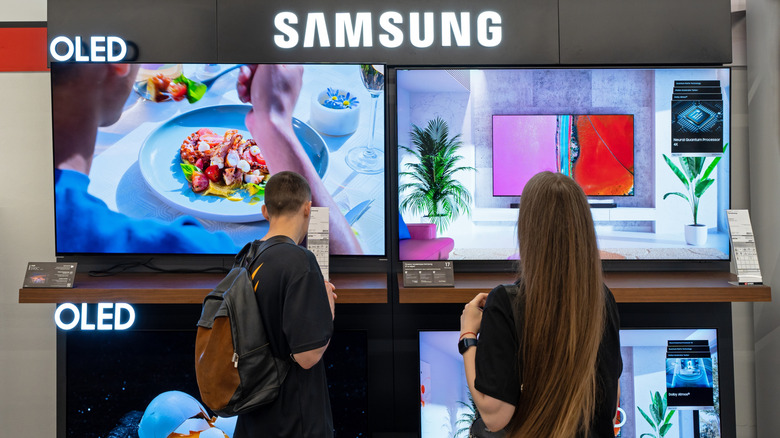
The state of electronic display technology has progressed to the point where most people will see at least one OLED screen while out and about in their daily lives. They're used for advertisements, wayfinding signage, or even informational displays. You might be curmudgeonly or choosy enough to stick with an LCD panel at home, but if you own a moderately-priced smartphone from the past few years, even you can't avoid those organic light-emitting diodes.
We're at a point in time when you won't find giant glaring differences between the OLED displays of the average smartphone and TV. Quantum dots have made a big difference in the large-panel category, though. Tons of research has been poured into these dots, but it hasn't been enough to bring QD-OLED technology down from 80-inch panels to six-inch ones. Still, the tinkering goes on, and a recent development out of the Massachusetts Institute of Technology and Samsung could bring us that much closer to all-around better screens.
What is the difference between OLED displays on smartphones and TVs?
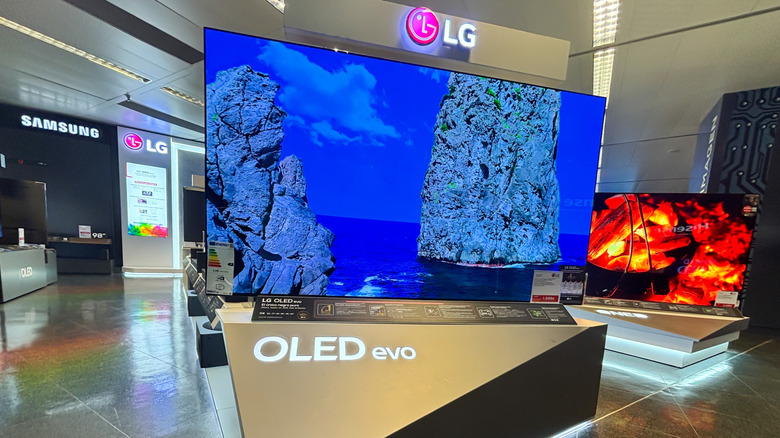
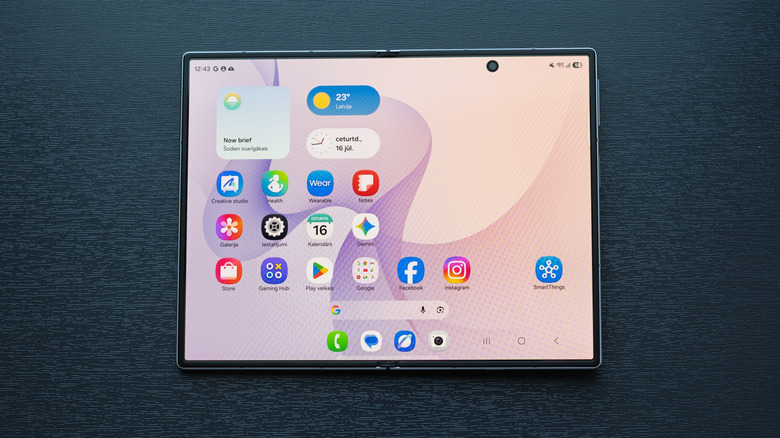
OLED displays are complex sandwiches full of metals, crystals, glass, and plastic that are aligned so millions of little self-illuminating dots can deliver constantly-updated picture information to a viewer's eyes. These days, smartphone and TV manufacturers are able to apply the same material choices to achieve a desired outcome in many cases. If the end product is meant to be curved or even flexible, such as in the Samsung Galaxy Z Fold 8 foldable smartphone series, engineers will favor plastic for the diodes and various surface substrates. Subpixel arrangements are more varied on large OLED formats than small ones, where the green-heavy, mass production-friendly PenTile matrix reigns supreme, but at the pixel densities and intended viewing distances for each size, these pixel patterns don't exactly make too much of a difference.
The biggest differentiator between premium and budget OLED displays right now is low-temperature polycrystalline oxide technology (LTPO). In short, many existing OLEDs use silicon-based transistors to switch circuits and then drive the diodes. LTPO replaces the silicon in those driving transistors with a metal oxide that improves image quality and overall efficiency. One feature LTPO enables is adaptive refresh rate, which allows a device to switch its display frame rate on the fly as opposed to requiring a reset to adjust that frame rate.
Are TVs' quantum dots coming for smartphones?
Let's ramp it up and talk about a technology that might actually replace OLEDs, at least as we know them. Instead of diodes, quantum dot technology utilizes nanocrystals that can emit highly pure colored light when they are excited. This technology is currently integrated into panels where a blue OLED layer feeding high-energy blue light activates quantum dots that can emit lower-energy red and green light. The result? A poppier image on a QD-OLED TV versus using a regular OLED panel, but a somewhat inefficient material stack that would feel out of place in a smartphone's footprint.
Work has been ongoing to improve the feasibility of electrical stimulation of quantum dots. At the SID Display Week convention in May 2026, Samsung showcased a couple of so-called EL-QD panels sizing up at 6.5 and 18 inches with brightness ratings of 400 and 500 nits, respectively — far from the levels required to properly display content with high dynamic range. One contributing challenge on that front lies with blue quantum dots, which degrade at significantly faster rates than red and green ones. A recent joint finding from MIT and Samsung points to moisture buildup over a lifespan of excitation cycles as a likely driver of that degradation. That said, the same study says that coating the dot in a resin can limit exposure to errant hydrogen and oxygen atoms and, thus, lengthen the useful life of a blue quantum dot. It's a small step for an even smaller dot, but it could lead to a big improvement in how you see things on your phone and TV.