

The Likely Reasons Why Apple Stopped Making Battery Packs
No company has built brand loyalty in America quite like Apple through the iPod, MacBook Air, and iPhone. In our current era where smartphones define daily modern life, survey after survey has found more than 90 percent of iPhone owners would buy another one when the time came. The company sits on a throne it made through attractive software paired with sleekly designed hardware.
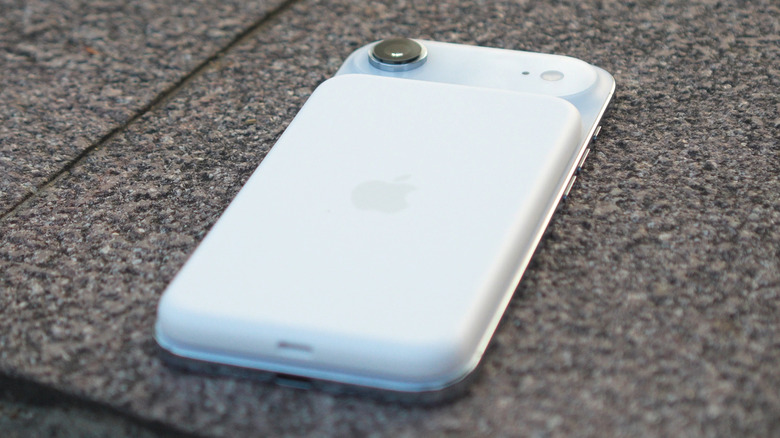
Apple also sells accessories under its own name, spanning the spectrum from Apple Watch bands to iPad cases to MagSafe battery packs for the iPhone. Well, it used to. It now only sells one such battery pack specifically for the iPhone Air — so it won't stay magnetically attached to any other iPhone. Most recently, before the iPhone Air Battery Pack, the company had a MagSafe Battery Pack it sold from July 2021 to September 2023, when it debuted the first iPhone with a USB-C port instead of the company's proprietary Lightning design.
Outside of the iPhone Air Battery Pack, demand for an Apple-made USB-C MagSafe Battery Pack has been met with silence. Apple has never explained why it discontinued its previous version, and it will likely discontinue the battery it made for the iPhone Air sooner rather than later if that product lineage ends at one. While there is no definitive explanation as to why the tech giant has left this gap in its accessory lineup, there is some history that can help us read between the lines.
Apple has failed at iPhone charging accessories (battery packs) before
Apple might be the house that Steve Jobs and Jony Ive built, but even legends will make mistakes, sometimes as big as the outsized responsibilities they hold. Apple's focus on "intuitive" design has certainly come into conflict with practical engineering and business impositions at times, and nowhere is that tension better displayed than in portable wireless charging accessories.
In 2015, the company launched the Smart Battery Case, which connected a case-mounted battery to an iPhone via an embedded Lightning connection. At the time, BGR was apoplectically critical of the case's imposing, boxy design, which held just enough for about 80% of the iPhone 6s' built-in battery. Apple had made a play for functionality at the cost of a friendlier form.
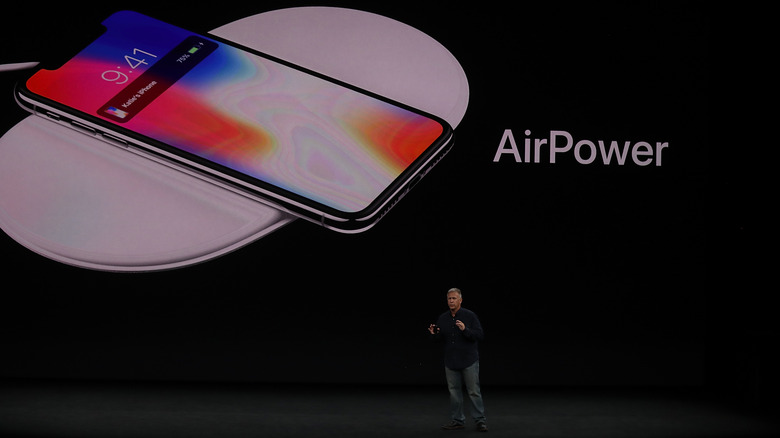
That same year, Apple went public with the AirPower wireless charging mat, one that was meant to juice up to three devices simultaneously without any regard as to where on the mat users put them. Launch dates in 2018 came and went, and so did the entirety of 2019. We later learned about crucial thermal design obstacles that ultimately put the kibosh on the project. This episode is widely considered one of Apple's biggest design disasters in its history.
Skipping out on the iPhone 8 and iPhone X, the Smart Battery Case came back for the iPhone XR and XS. But Apple suffered another embarrassment: it had to initiate a replacement program because a significant portion of cases were not charging their devices properly.
Why can't another company make an iPhone battery pack for Apple?
If you've held an Apple product, you probably know the tiny words silkscreened into many of them: Designed by Apple in California. Assembled in China.
The first clause, we know about. That second clause (which has changed around a bit) moves in tandem and acts in tension with the first. It is reflective of Apple's M.O.: designing goods and getting someone else to manufacture them for sale. While the company's sustained financial success has made it less averse to many risks, the anomalous, protracted failure to launch AirPower led some observers to ask why Apple can't have someone else make a MagSafe battery pack? You probably already see them sold at the Apple Store from reputable names like Anker and Belkin. Why not go white label and slap some batteries inside Apple boxes?
We don't have specific insights into Apple's complex relationship with its accessory makers, but we can take some indications from the iPhone Air MagSafe Battery. The iPhone Air went up against Samsung's Galaxy S25 Edge in a freak revival of the thin-and-light category of smartphones, which itself happened in the midst of a small panic over consistently lower-selling 'Plus' model flagships. Even as the company advertised the phone's airfoil looks and all-day battery life, it still anticipated some demand for a battery pack that complemented the iPhone Air's aesthetic. Designers attempting to apply their primary design principles had to compromise between the company's thin-and-light aesthetic and the physical requirements of creating a useful battery pack.
At the end of the day, if Apple can't own good design decisions for a product, then it will likely opt not to participate in a product category. Sometimes, though, certain business imperatives will lead you down the garden path right over a cliff's edge.