

What Did Speakers Look Like In The '70s?
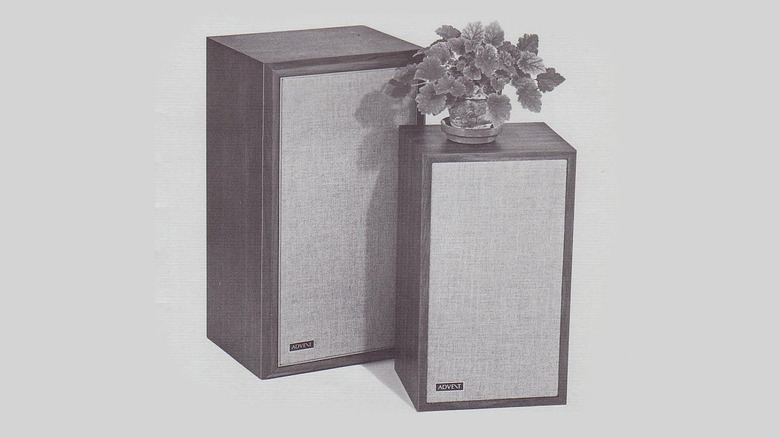
Audiophiles love to talk speakers, but its these devices from the 1970s that are often spoken about with a wistful tear in the eye. Referred to as the "Golden Age" of speakers by many, as the technology advanced quite rapidly during the decade, speakers in the '70s were showy in some cases but built primarily for practicality.
Speaker boxes from this era were often boxy affairs with lots of exposed wood grain and ornate front covers. Popular speakers at the time, like the Advent Loudspeaker and JBL L100s, drove the path forward, offering great sound (or a divisive argument on why it's overrated by audiophiles), with a design that was meant to be part of the decor rather than just blending in with the rest of the room.
It wasn't without purpose, though, as speaker boxes were designed not only to protect the driver but also to help with how the speaker itself sounded. Open-back speakers provide a cleaner listening experience, while closed backs are preferred by those wanting louder sounds.
1970s boxy speakers will never die
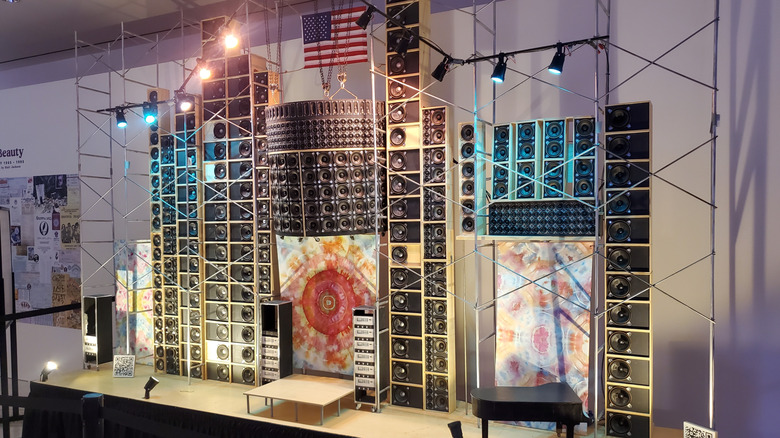
The iconic speaker box design helped bands like Grateful Dead put together spectacular stage setups during live shows. The band is known for its "Wall of Sound," and in typical '70s fashion, no one is quite clear on how many speakers made it up. Richard Pechner, who licenses out an image of "Grateful Dead and the Wall of Sound" taken on May 17, 1974, claims the setup is made up of 640 total speakers (including 604 JBL speakers and 54 Electro-Voice tweeters) powered by 48 600-watt McIntosh MC-2300 amps.
Obviously, speaker design has drastically changed since the '70s. JBL produces a lot of tube-shaped, Bluetooth speakers, with a focus on waterproofing and durability. Box speakers never went away, but high-end brands now tend to design speakers with a luxury angle. Thanks to huge advances in computer design tools and machining, as well as the materials, we're no longer limited to the simple box shape — even if it is still the most practical.
The icons of the '70s might have been very boxy, but it wasn't a decade without experimentation. Certain speakers decided to take some liberties with design and come up with something fairly unique. The Garrard XPP 15 are speakers suspended in a frame, while the Dahlquist DQ10 had a five-way speaker system laid out in a thin square, providing a powerful bass and accuracy.