

These TV Brands Claim To Last For Years - But What Does That Really Mean For You?
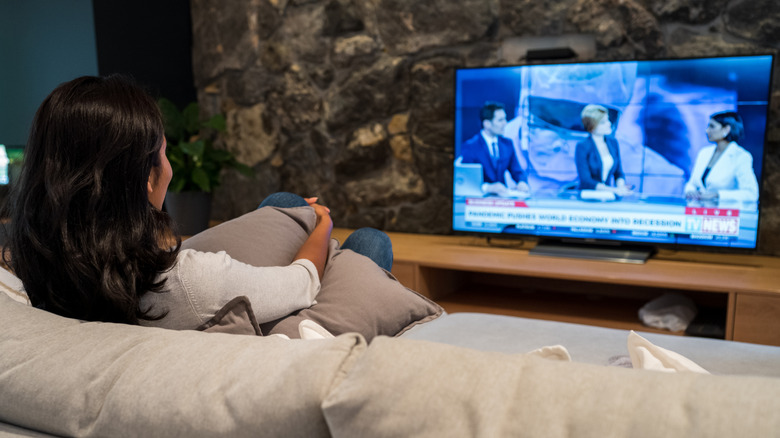
TVs are probably our longest-lasting bits of tech these days. Unlike phones or headphones, TVs only get abandoned as manufacturers improve on the technologies embedded within, or if the underlying software has been abandoned. It's generally agreed that modern screens last between five to seven years, but this is an average across all types of screens. We're no longer just looking at LCD or OLED, but have to consider other panel types.
What does this mean for you? You should continue using the TV as normal. Being overly protective of your TV will just suck out the enjoyment of anything you watch. If you watch a lot of TV, every day, consider turning down the brightness to avoid any burn-in or LEDs burning out. Use your device — don't be scared of it — but do take into consideration that at some point over the next few years, you'll eventually have to replace it. One aspect of modern screens is that we have to consider how the panels are built.
For instance, RTings, which ran a massive test on TV durability from all angles, found that edge-lit TVs failed more often than other TV types being stress tested. In the investigation, it was found that edge-lit TVs were at risk of running into problems. The LEDs are placed along the edges but still generate heat. After some time, that heat either gets to the panel itself, causing warping or cracks, or burns out the LEDs entirely.
Your TV will break... eventually
This is what was discovered in a stress test, with a schedule to shut down and allow the screens to do any self-maintenance. Stretch that out over years of regular use, and it's very likely to impact your screen at some point. In 2018, Samsung revealed it had been certified "burn-in free" for its QLED panels, but will still eventually fail due to the LEDs packing it in.
With OLED, the length of its life will depend on how it is watched, or how it's treated. If you crank the brightness to 100% and watch nothing but the news with static imagery, burn-in or damage to the screen is inevitable. However, the average user might see that TV through to ten or more years, even if it's well worn, by opting to allow for pixel refreshes and using it normally over the years.
Mini-LED TVs come with their own things to check before buying, but are expected to last up to 15 years, but again, the same rules with OLED apply. By using it normally, the mini-LED screens should last a considerable amount of time. MicroLED is expected to last over 100,000 hours (according to Samsung), but full tests to meet this claim aren't actively being conducted.
It's not just hardware you have to fear with TV lifespans

RTings found that in its full failure breakdown, Hisense had the most failures, with five of its 13 TVs completely dying and three partial failures. Most broken screens were found to have the common failure point of the backlight giving out, followed by electronics failures.
TV brands can stand and posture about the life of the hardware, but ultimately, you'll eventually come up against forced obsolescence. In 2015, when Samsung moved from Orsay to Tizen, it left the previous operating system to languish, resulting in apps and modern software features never making a debut on the platform, or being removed. This has happened with other brands too. Despite the screens themselves being more than serviceable or still high quality, brands have routinely let their hardware become obsolete.
To get around situations like this, where the TV operating system becomes untenable for modern usage, you can always use a Fire Stick, Roku, or other HDMI-based device to take over operations. This will also mean that if your TV is feeling "slow" in the menus, you won't have to suffer the native operating system taking its time navigating to Netflix. Depending on the streaming device you choose, you may also gain access to features like AirPlay or Chromecast, without having to seek out alternative apps.