

Why Don't We Put More Turbines Underwater? The Pros And Cons Of Tidal Energy
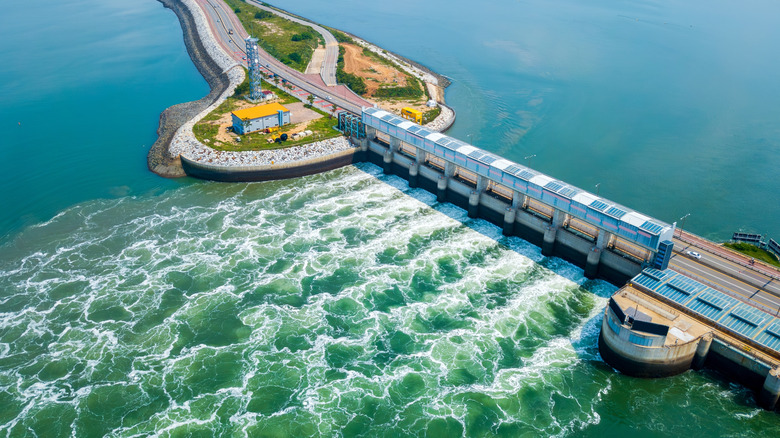
In the pursuit of reliable renewable energy sources, the chief options have been solar and wind power. Offshore wind farms in countries like China have made some very impressive strides in that particular field. However, there's a third option that doesn't seem to get quite as much attention: tidal energy, drawing power from the movement of the Earth's oceans via massive, spinning turbines. It's a similar concept to wind turbines, generating power through the natural motions of the planet, creating little-to-no carbon pollution in the process.
China has also dabbled in underwater infrastructure like data centers, but tidal power generally isn't used much around the world, especially compared to wind and solar. Considering that, why don't organizations build more underwater turbines? Unfortunately, while tidal energy does have some distinct pros, such as its zero-carbon, high power output, it has just as many cons, such as its high upfront cost, the inconsistency of tides, and less obvious environmental impacts.
Pro: Highly renewable, near-zero-carbon
The primary goal of most renewable energy sources, when pitted against fossil fuels, are to reduce the presence of harmful carbon dioxide in the atmosphere, as well as supplant exhaustible power sources with something that, in theory, can't run out. In these particular pursuits, tidal energy has a lot going for it.
Much like how the presence of a wind turbine doesn't make the world less windy, the presence of a tidal turbine doesn't make the waves less wavy. The tides themselves are generated by the movement of the Sun and Moon around the Earth, so barring some kind of catastrophic celestial event, this is a resource that will never run out. Additionally, while tidal turbines do still produce carbon dioxide when generating energy, it's exponentially less than that produced by fossil fuels like coal or oil. A single kWh of energy produced by a tidal turbine only generates around 0.05 pounds of carbon dioxide, so using tidal power more would do a lot of good for the atmosphere.
Con: Potentially negative environmental effects
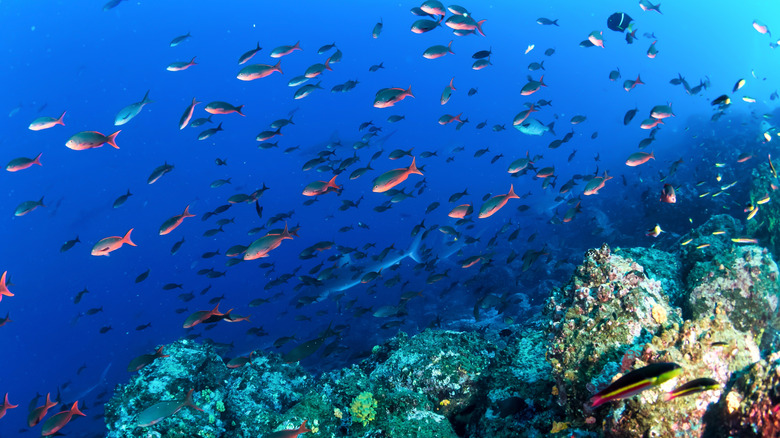
While tidal energy is highly renewable in terms of power generation and creates very little carbon dioxide, trying to find ideal environmentally friendly energy solutions isn't just about protecting the atmosphere, important as that is. It's about considering all possible impacts that an energy source's presence could have on the areas around it, and unfortunately, tidal turbines can have some negative effects on ocean flora and fauna. These effects can be both obvious and subtle.
For instance, the effort it takes to actually build the turbine would likely displace many undersea creatures, the spinning turbine blades could endanger sea life swimming nearby, and the presence of a large structure could disrupt nearby flow fields. In addition to all that, a study conducted by the European Commission in 2015 discovered that the electromagnetic frequencies generated by a turbine can disrupt the magnetic pathfinding abilities of certain creatures like sharks or whales, and the noise pollution from the turbines can hurt sensitive mammals like seals.
Pro: Strong power output
Raw energy output is one of the largest barriers to widespread adoption of renewable power sources. No matter how efficient wind gets, it's still not as consistently powerful as fossil fuel. Tidal energy, however, is quite powerful in its optimized state, not only more so than wind, but enough to even give fossil fuel a run for its money. The big difference between water and wind in terms of power generation is that, compared to wind, water is obviously a much denser substance.
This means that, even if it's moving slowly, it's still powerful enough to turn the blades of a turbine without much difficulty, which helps to maximize power output. The largest tidal energy generation facility in the world, located in South Korea's Sihwa Lake, can generate a maximum of 254 megawatts of power. That's 254 million watts. It typically takes around 10,000 to 20,000 watts to run everything in a house, so that's quite a lot of juice to say the least.
Con: High upfront cost, difficult zoning

Compared to putting up a wind turbine, getting a tidal turbine assembled underwater is neither cheap nor easy. A company would need to invest extensively in parts for the turbine and installation machinery that can resist both intense water pressure and the corrosive effects of seawater, and would need to keep investing for the several years it would take for the project to finish. Additionally, according to a 2019 study from the United States Department of Energy, operating a tidal turbine in the U.S. can run as much as $280 per megawatt hour, as opposed to the just the $20 it takes to operate a wind turbine.
All of this is assuming that a hypothetical company could even find a good spot to put a tidal turbine. A tidal energy power plant can only be built on a coastline, and they have to be placed at a very specific midpoint between the shallows and the depths, deep enough to avoid wave turbulence, but not so deep that the movement of the tides has no velocity. Only a handful of countries around the world have optimal tidal energy conditions, including Australia, Spain, and Norway, to name a few.
Pro and Con: Tides are easily forecasted, but can only make intermittent power
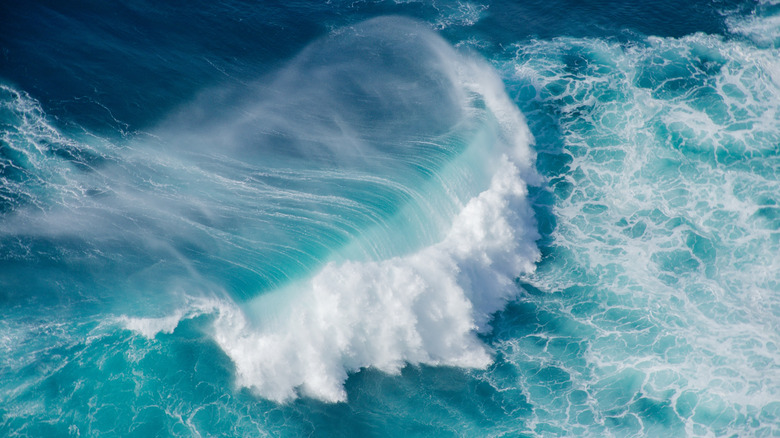
Compared to other natural phenomena, the tides are predictable. The appearance of the world's tides occurs at more-or-less fixed intervals, and in the event of some kind of major event that changes the timing or trajectory of the tides, it can be predicted far in advance. This is a major benefit when compared to the other major renewable power sources like wind and solar. Wind patterns in particular can be very tricky to predict, relying heavily on weather forecasts and atmospheric conditions.
The same goes for solar power, which can drastically lose effectiveness if some clouds happen to roll in. The tides are always moving, rain or shine, day and night, so there's less randomness to the power generated from them. While the tides are consistent and predictable, the potential power generated by them isn't quite as consistent. The chief conundrum here is that, due to the way tides physically operate, tidal power can only be used as an intermittent power source.
Say, for example, that a particular coastline's high tide occurs every day at noon. For those who need power at noon, that's great, but for those who need power in the early morning or late at night, when the tide has already gone out, there's not going to be as much power coming in. Because of this, tidal energy simply can't be a sole provider of power, requiring either the aid of another power source, or the ability to store energy in a battery, which would make things even more expensive.