

Space Missions Are Having An Unexpected Effect On Astronauts' Sense Of Smell
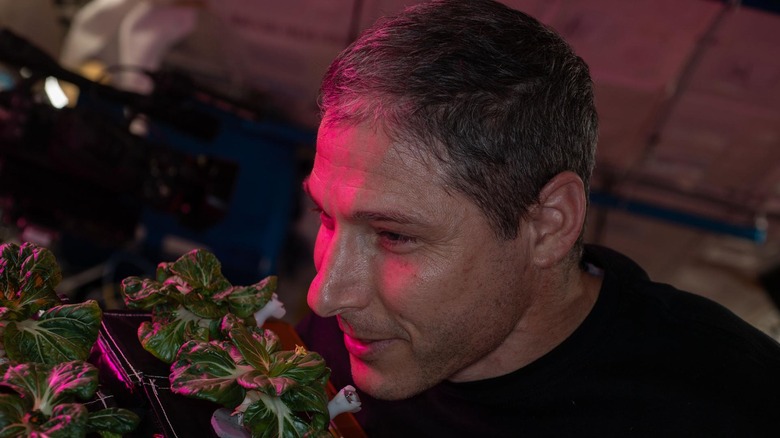
Astronauts have been going to the International Space Station (ISS) on long-duration missions since 2000, and for years have shared anecdotes on how their sense of smell unexpectedly changes while on the ISS, and how overwhelming it can be when they arrive back on Earth. Solid research on this phenomenon is relatively scarce, but the stories told by astronauts point to interesting contrasts in how smell changes when living in the orbiting laboratory. Smells in space can change based on different types of food and can fluctuate between individuals. The ISS takes some getting used to, and astronauts even have to adjust how they drink in space.
The change in smell comes down to two factors, one being the effect of microgravity on the human body, and the other being the consistent nature of the smells that are experienced on the ISS. When in the microgravity environment of the ISS, astronauts experience fluid shifts in the body that occur due to the lack of gravity, which causes fluids like blood to pool in the head. This causes a phenomenon that can only be described as a perpetual head cold that often causes nasal congestion, and this often dulls the astronaut's sense of smell and taste. Astronauts also have to worry about other health problems when adjusting to life in microgravity including muscle and bone density loss, disorientation, and a unique problem called baby feet. Changes in smell seem to vary based on different anecdotes by astronauts, with many reporting the loss of smell and taste, while others recount instances where tastes became more intense on the ISS. Astronauts have even described being able to smell what space smells like immediately after spacewalks.
How the consistent environment of the ISS can cause loss of smell
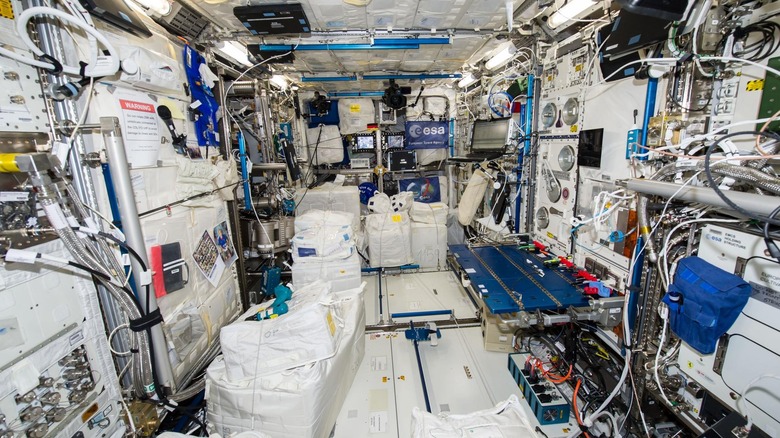
Another factor at play with a perceived loss of smell is the highly consistent smell of the ISS, being a closed and tightly controlled environment. The smells experienced on Earth vary greatly based on our ever-changing environment and what we eat, and the brain is sensitive to fluctuations that form part of our daily sensory experiences. On the ISS, when the same astronauts live together in the same environment, with the same supplies on board, with the same equipment generating a consistent set of smells, the brain tunes out a lot of those smells purely because they don't change.
NASA even has a dedicated facility at its White Sands base that evaluates smells of different items before they are sent to the ISS, and for good reason. All items that will be held in habitable areas of the ISS are evaluated to manage the risk associated with olfactory saturation, which is a condition where astronauts can become overwhelmed or even nauseated by disagreeable or offensive smells. This is particularly dangerous because if an offensive smell were to enter the closed environment of the ISS, astronauts have limited means of eliminating it. This also has an added risk of removing an astronaut's ability to detect dangerous smells associated with ammonia leaks or fires.
Astronauts experience sensory overload when they come back to Earth
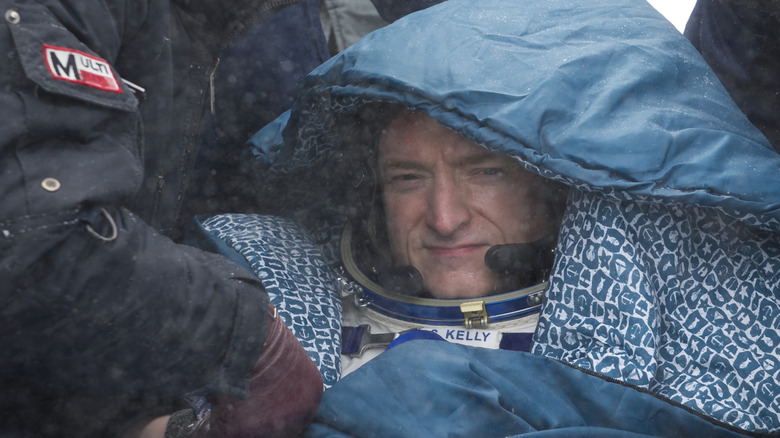
While astronauts spend months on the ISS adapting to life without gravity, coming back presents the opposite challenge. Although smells are frequently dulled in space, they are often described as overwhelming and sometimes even intoxicating when experienced on Earth for the first time after returning from space. Former NASA astronaut Doug Wheelock once described the smells he craved to experience the most while in orbit, and how they intensified when he finally experienced them back on Earth. "Your sense of smell and taste are dulled in space. I craved the aroma of leaves and grass and flowers and trees," he said. "These things are not present on the space station. When you get back to Earth they are literally intoxicating."
The sense of smell and taste is easy enough to get reacquainted with, but other bodily functions are not as quick to readapt. Astronauts who return from space after long missions of six months or more often describe feeling nauseated because of the vestibular system's need to readjust to Earth's gravity. Other more alarming health-related issues experienced by astronauts coming back from space include general fatigue, painfully swollen legs and feet, and even rashes that occur due to the body not being used to direct contact with fabrics when sitting down or sleeping. Astronaut Chris Hadfield even reported that he had learned how to talk with a weightless tongue and had to change how he was talking when he arrived back on Earth.