

How Does Google Maps Know A Business Is Busy?

When you look up a specific business on Google Maps, whether on desktop or in the app, you can see a host of details to help you make more informed decisions. In addition to customer reviews of restaurants, another really neat and extra helpful feature is the option to see how busy a place is on a given day. This applies to retail and grocery stores too, so you can plan out your visit for a less hectic time.
On the Google Business Profile Help page, the company actually tells us exactly how this is done. "To determine popular times, wait times, and visit duration, Google uses aggregated and anonymized data from users who have opted in to Google Location History," the site explains. Google basically measures the number of users in a store or restaurant by looking at the density of phones in the area. That information is recorded and tracked over time to build an appropriate profile for the business.
If you've never noticed this feature, simply tap or open the Google page for any location and reference the "Popular Times" section to see the aggregate date. Look at the "Live" time for a current read on how busy the business is. None of this information is entered manually, and actually, busy times won't even show up on business pages when Google doesn't have sufficient data. But when it does, Google can share popular times, real-time traffic, the average visit duration for customers, and estimated waiting times. It works similarly to how Google Maps predicts traffic on roads and highways.
Does that mean Google and Google Maps are always tracking you?
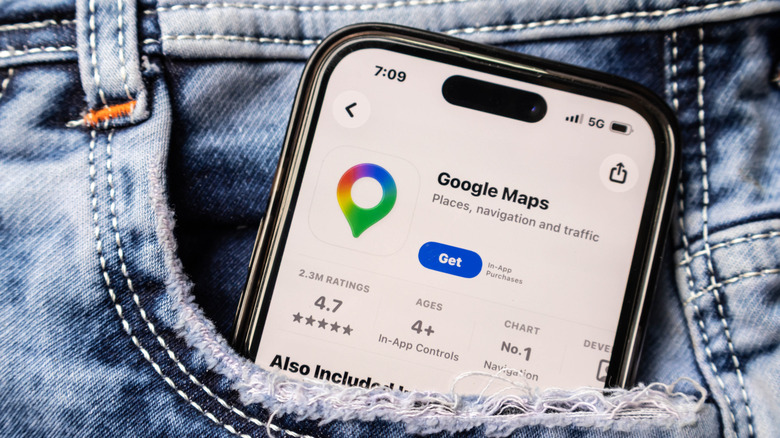
The short answer here is yes. As long as you haven't opted out of location tracking and effectively shored up your data privacy, Google will use the data it collects to inform its services, like Google Maps. "We use differential privacy, which ensures that busyness data can't be used to identify you," Google explains, adding that it won't publish that data when it doesn't have enough information to ensure anonymity and accuracy. That said, the systems in use are still collecting that data and tracking you, like when you're using Google Maps, visiting new places, and trying to find your way in the world.
It may surprise you to learn this, but Google Maps is tracking more than just your location data from your phone, as well. It also collects a lot of personal details, far beyond what you might expect, like name or phone number. It gathers payment information, purchases, search history, browsing history, and much, much more.
As a whole, Google knows where you are even with your phone's GPS off, and it achieves that through a lot of the excess data it collects — certain information enables approximate tracking. It knows when you visit a business or location, how long you're usually there, how often you go, and where you go after. That's why the busyness information is generally pretty accurate. Google also potentially knows what you purchase or order, if that information is digitally available, and, if you leave a review, what you thought about the experience.