

What Is The Lifespan Of A Data Center? Longer Than You Might Think
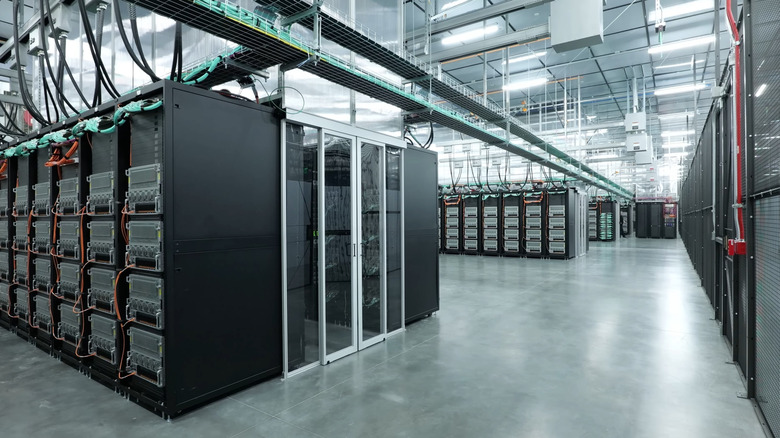
Nothing lasts forever, sang the likes of Guns N' Roses and Goo Goo Dolls. Of course, the songs weren't written about data centers, but the phrase still applies. An average data center stores and continuously circulates large amounts of data, and as such, its components will inevitably degrade. At one point, the tech will also become so ancient it won't be able to keep up with today's demands. Hence, it doesn't make economic sense for operators to provide the facility with a "ship of Theseus" treatment, as an aging data center will eventually have to shut its doors. However, a data center's death isn't as quick as you'd assume — not by a long shot.
So what is the lifespan of a data center? A data center can stay in operation anywhere from 20 to 30 years. While it's a whopping life expectancy figure, that's not the fiscally productive lifespan. A data center in its twilight years is too inefficient, which is a primary reason why a Department of Commerce study (PDF) capped the productive lifespan at 10 to 15 years. Pushing past this range tends to drive up costs. When you add in regular operational expenses (it gets worse because heat waves drive up data center cooling costs), regular maintenance, repairs, and modular updates, costs can spiral out of control quickly.
Despite the fact that binning an out-of-date facility can lead to significant savings (when EM closed one of its Hanford Site centers, it saw $100,000 in annual savings), companies often try to squeeze out a few extra years. But at some point after the 15-year mark, the center will hit a capital expenses brick wall. And guess what? The expenses will go up.
Is the lifespan of a data center set in stone?
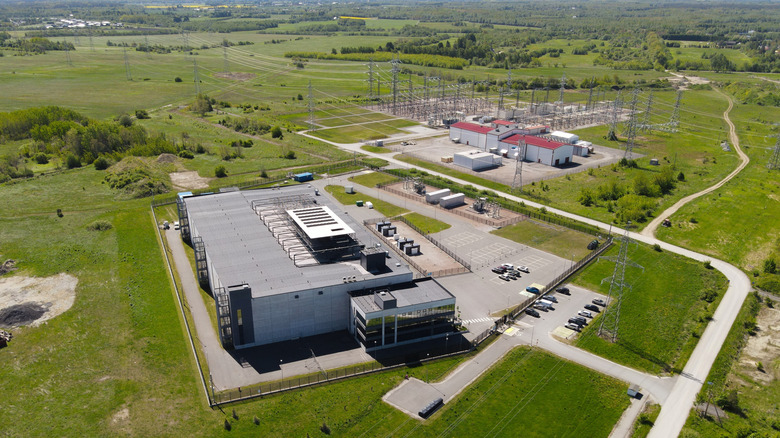
An estimated lifespan is just that — an estimate. Not all data centers are the same, and there are loads of variables to account for, some of them having to do with the environment itself. For instance, temperature, airflow, and humidity have a direct impact on how fast sensitive components degrade. Air quality matters, too, as airborne pollutants like acidic aerosols can exacerbate corrosion — a big no-no for sensitive data center equipment.
Many data centers are moving to rural areas. Naturally, a part of this has to do with lower costs of resources and the land itself. Yet, the further you move inland, the less airborne salinity there is. Thus, a data center in middle America will likely have a longer effective lifespan than one in a coastal region. Similarly, data centers in metropolitan areas are more likely to see an increase in pollutants such as sulfur. All of the above likely influence how long the equipment continues to operate at a high level. So, when you think about it, it's a bit ironic that data centers are escaping polluted areas and moving into rural regions where they themselves may contribute to an uptick in pollution.
What fails first in a data center?
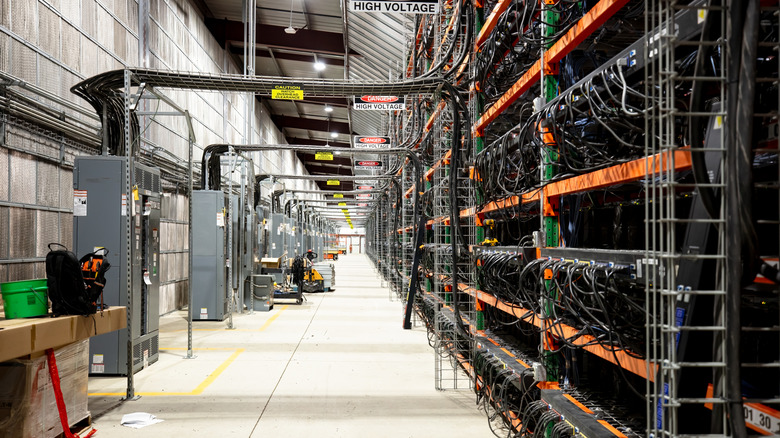
There's a lot that can go wrong in a data center. With multiple systems running like clockwork, a whole range of mechanical or electrical failures can happen on a whim. Some components tend to kick the bucket first, and there are quite precise numbers to back up the claim. Batteries and capacitors, as electronics with limited lifespans, tend to fail within five to seven years. It's not worth repairing these, so they will have to be replaced.
Things tend to get worse with age, and data centers aren't an exception. Operators will eventually have to rebuild or completely retrofit chillers after 10 or 15 years if they're lucky. Once the sundown years hit, the real challenge kicks in: the data center will require a new UPS system at one point in the 15- to 20-year bracket.
These failures don't account for a whole slew of other challenges that may befall a facility during its lifespan: weather conditions can shift, and the enterprise may also experience a wide array of network failures or IT issues. However, once you put all those cascading failures on paper, it's easy to see why a data center will eventually need to be decommissioned. The equipment itself may become obsolete, and the facility may not have anyone with the know-how to repair it. At a certain point, it will make more sense to pull the plug than to drag out the inevitable.