

Is The Steam Deck OLED Worth The Upgrade In 2026?
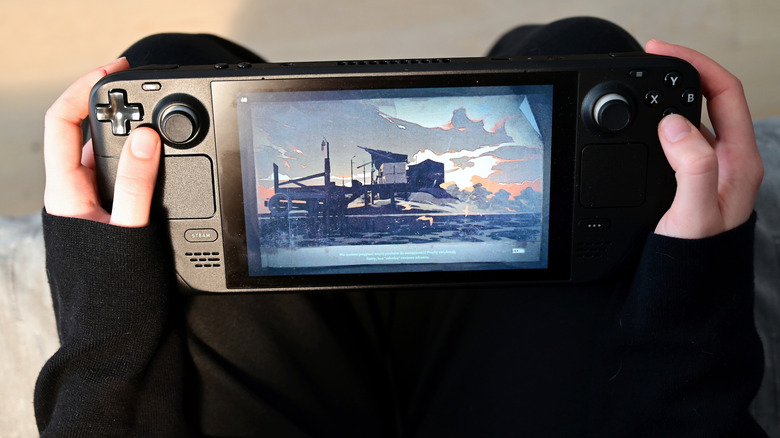
With Sony eventually dropping disc support and Valve's steep price to get into couch PC gaming with the Steam Machine, people want to know what to do next for a hardware upgrade. The million-dollar question becomes, just what's worth investing in if you're a console, handheld, or a casual PC fan? As it stands, considering a potential digital-only future, people might clamor to get into PC gaming for the flexibility of digital storefronts.
Still, while PC gaming has its upsides, people might not love sitting at a desk 24/7, especially if their day job involves being in an office or in front of a computer. So it's only natural that the Steam Deck is a great prospect for either those who want a ticket in without having to park in front of a monitor or those who want to upgrade their current handheld of choice. But the reality is that if you already own the Steam Deck LCD, it is not worth upgrading to the Steam Deck OLED — the 2026 price hike is a noticeable jump, and this has happened across all major PC handhelds.
So then it becomes whether that $1,000 to $1,600 might be better spent elsewhere on a budget compact gaming rig. For example, there's the Beelink SER8 or the Beelink SER9, which are compatible with SteamOS, assuming you prioritize portability. Decent gaming laptops with AMD Ryzen CPUs and AMD Radeon graphics cards are also decent options for native SteamOS and Windows support.
The Steam Deck OLED is not worth the upgrade
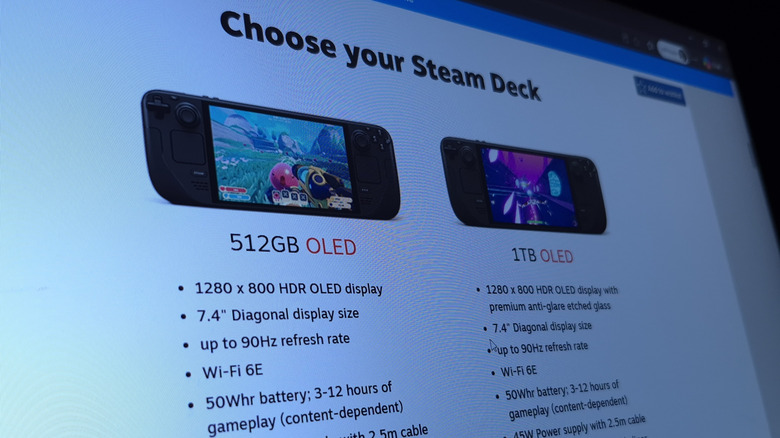
I will preface this by saying I love my Steam Deck OLED, but I can't justify it as an upgrade over the Steam Deck LCD, especially since both are made to last (though the OLED screen may burn out quicker). This is mainly due to current costs: the Steam Deck OLED 512GB is still $789, while the 1TB model is still $949 — the price jump is from $240 to $300. The Steam Deck OLED has a beautiful screen and better battery, but the performance between the two models is identical.
That's still not enough to justify spending a few hundred dollars. Plus, Valve doesn't have a trade-in program you can take advantage of, putting the value of your Steam Deck LCD toward the OLED model. Instead, you're responsible for selling it through another platform or in person, then using the proceeds to secure the Steam Deck OLED. Plus, there are no guarantees you'll get a fair price for it. So consider waiting for the Steam Deck 2.
There isn't much information about it, but the next generation of Steam Decks should have a performance boost from a new chip – potentially 40% better performance-per-watt — and possibly more RAM. However, the launch date is unknown, and there are no guarantees about how component prices will scale (memory prices have become ridiculous). Therefore, the price may be higher than you'd like, but with a competitive market between the Lenovo Legion Go 2 and the ROG Xbox Ally X, it may also pressure Valve to keep it to a more reasonable range.
Other handheld options still exist, but they are pricey
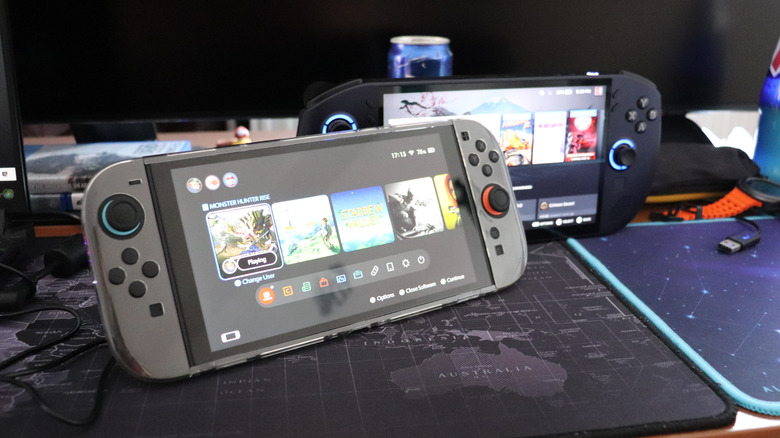
The problem lies mostly with the ecosystem. If you're looking for a much cheaper experience, a much more affordable handheld alternative would be the Nintendo Switch 2, but this is a completely different system, meaning you're only bound to Nintendo titles and the various supported ones released on that platform. Someone who already owns a Steam Deck LCD will want to stick with their Steam library.
Next are the ROG Xbox Ally X and Lenovo Legion Go 2. Both are great options for what they offer, as they both deliver a premium experience that packs a lot of power. Neither will be cheaper than the Steam Deck OLED, though. The ROG Xbox Ally X is close to $1,000; the base ROG Xbox Ally is around $600, which is much more reasonable, and it will offer a more similar experience to the Steam Deck LCD, with some subtle improvements. If you want to use SteamOS, though, instead of the Windows 11 UI, you'll need to set up a dual-boot.
Lenovo Legion Go 2 is another strong option, but it's pricey. Depending on the model you secure, you're looking at between $1,500 and almost $3,000 for the highest-end option. While this handheld is the cream of the crop, if you want a much more affordable entry point without breaking the bank, consider the Lenovo Legion Go S with native SteamOS support. The two models are the Ryzen Z2 Go at $990 and the Ryzen Z1 Extreme at $1,580. Sadly, prices remain not great, as everything has taken a nasty price hike since 2025.