

Why Are Phone Charging Speeds Measured In Watts?
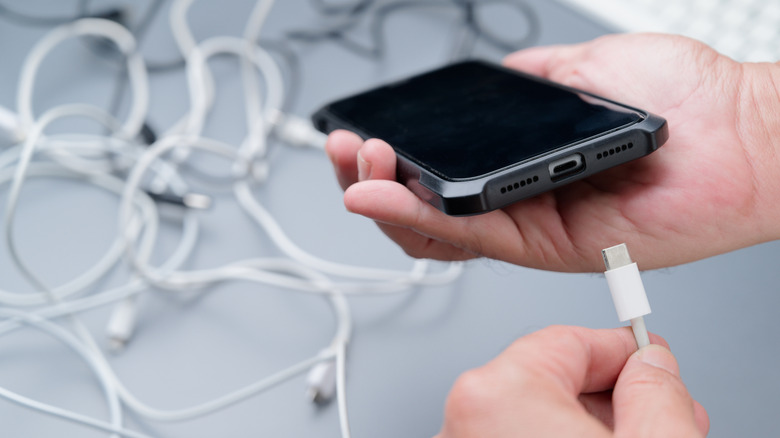
Walk down the electronics aisle at your local Best Buy or browse for a new phone charger online, and you'll instantly notice one letter popping up on the packaging: "W." Whether you're looking at a compact 20W brick for your daily driver or a beefy 100W adapter meant for a laptop, watts (W) are the scientific buzzword for modern power. But why did the tech industry settle on wattage as the universal language of charging speed?
In the early days of smartphones, chargers were usually described by their separate voltage and current (amps). A standard old-school USB block might output 5 volts at 1 amp, for example. But as phone batteries grew larger and our need for rapid top-ups increased, those individual numbers became a little bit confusing to track. Wattage eventually became the norm because it's a direct measurement of power (and you don't have to bust out your calculator to do some multiplication while standing in Best Buy). Essentially, wattage is the most useful way to think about a charger's "speed" because it tells you exactly how fast it can move into your device's battery within a given time frame, even if you're using your phone while it's charging.
How to understand the simple science of wattage power
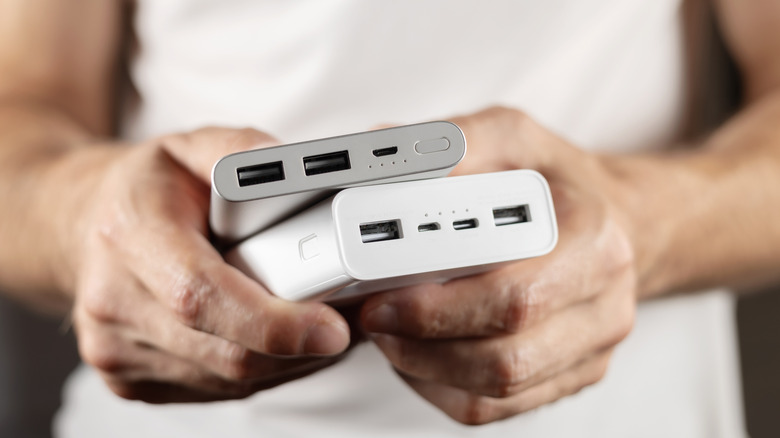
To understand why wattage is the best metric for charging, you only need a tiny bit of basic science. The formula for determining electrical power is incredibly simple: watts equals volts multiplied by amps (that's W = V × A for you math heads).
There's an easy way to visualize this, too: think of electricity as water flowing through a pipe. Voltage represents the water pressure, or how hard the water is being pushed through the system. Current, which is measured in amps, represents the volume of water flowing through the pipe at any given moment.
If you only know the water pressure, you don't really know how much water is filling your bucket; you need to know both the pressure and the volume to figure out the total flow. Wattage is that total flow. So by multiplying the voltage and the current together, wattage gives us a single, easy-to-understand number that tells us the total power delivery. And as newer chargers have gained the ability to intelligently adjust both their voltage and amperage on the fly to maximize efficiency, listing a single wattage number became the easiest and most accurate way to tell what any particular charger is actually capable of. Just make sure you aren't charging your phone wrong to begin with.
Why your fast charger might still charge devices slowly
Knowing all this, you might be tempted to go buy the highest-wattage charger you can find. However, having a massive 120W charging block doesn't guarantee your phone will actually charge at that speed. There are other forces at play here, and one or more of them can create a charging bottleneck.
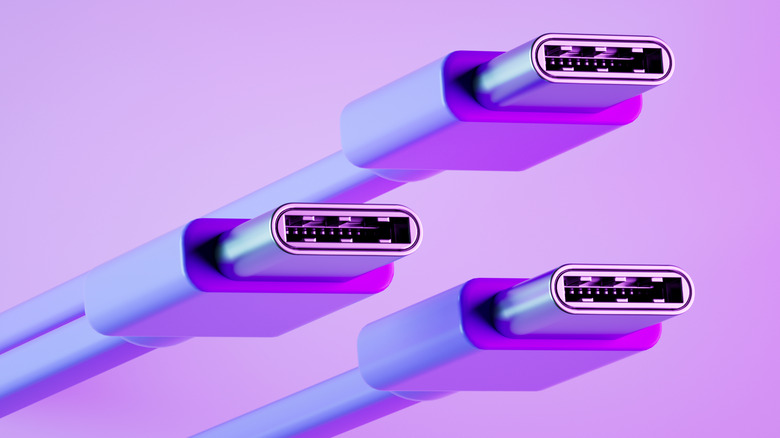
Charging isn't a one-way street where the wall plug simply forces power into your device. Instead, your phone, the charger, and the charging cable all stay in constant communication with each other using smart protocols. While cables and charging blocks have their stated limits, your phone also has a built-in system that tells these devices the maximum power it can safely accept. It's also worth noting that standard USB-C cables are rated for 60W; if you need to push more, there are ways to get the best charging speed possible on your Android phone.
These higher-capacity cables contain a microscopic e-marker (electronic marker) chip. When you plug in, the charger looks for this chip to confirm the cable can safely handle the extra heat and current. If the chip isn't there, the system caps the wattage down to the lowest baseline. Ultimately, your charging system is limited by its weakest link. While watts reflect potential charging speed, you need the right combination of charger, cable, and device to actually get it.