

Battery Health Vs. Cycle Count: Which One Matters More And Why
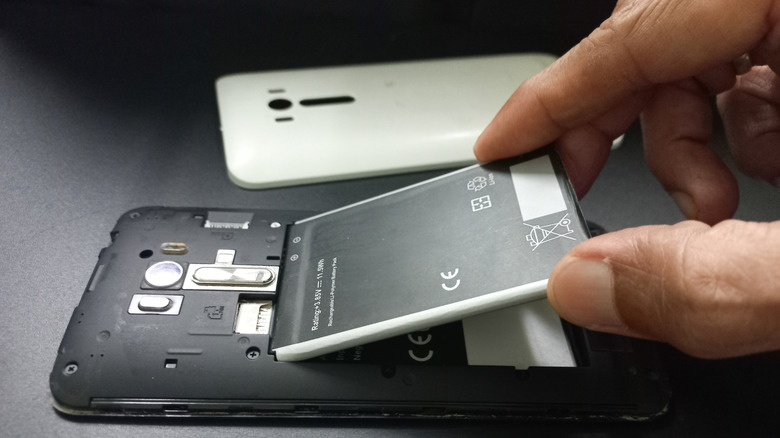
When talking about the longevity of a lithium-ion (Li-ion) battery, whether it's for a laptop, phone, smartwatch, drone, Nintendo Switch 2, wireless earbuds, or electric vehicle, terms like battery health and cycle count are thrown around. Li-ion batteries are prone to chemical degradation over time, which reduces their maximum capacity (how much charge they can hold). Unfortunately, this is a process that can't be stopped, but both battery health and cycle count provide important information about a Li-ion battery's capacity. However, there's one you should pay more attention to than the other.
Battery health informs you about the overall condition of your battery, particularly how much its capacity has degraded from when it was 100%. Cycle count is the number of times you've used 100% of the battery's current capacity. If you charge the battery to 100%, discharging it to 50% counts as a half cycle. If you top it off to 100% and then discharge it to 50% again, that would count as a full cycle over those two charges. A cycle is not always a straight line from 100% to 0%.
As you can see, these terms are related in the sense that cycle count is one of the measures of battery health. For this reason, it's battery health that matters more, which is why it's often talked about more by brands like Apple, Samsung, Microsoft, and Google when it comes to the condition of the lithium-ion batteries. It encompasses everything that can degrade your device's battery over time.
Why battery health matters more than cycle count

It's essential to understand how cycles work in relation to battery health. Lithium-ion batteries have a limited number of cycles, and if you exceed them, the battery's capacity will fall below the industry standard of 80%, indicating serious degradation. The battery will hold less charge, requiring more frequent charges. For instance, for a smartphone's battery capacity to drop below 80%, it would take 300 to 500 cycles on average, which is the equivalent of two to three years of use. Although, the batteries of some phones, like the iPhone 15 or newer, are designed to reach 1000 cycles before degrading below 80%.
The keyword there is "use," because cycle counts don't tell the full story of a battery's health. For example, if you have bad phone charging habits, that can cause the phone to generate excess heat. Heat hastens thermal degradation, causing the battery capacity to drop faster, even though your cycle count remains within the normal ranges. So cycle count can only tell you how used the battery is. But if you want to answer important questions like why your battery isn't lasting as long as it used to, the battery health estimate, which factors in cycle count, charging pattern, and temperature history, can give you a much better answer. It's recommended to replace the battery when it drops below 80%, even if the cycle count is below 300 cycles.