

What Are Blue Light Screen Protectors, And Do You Need One?
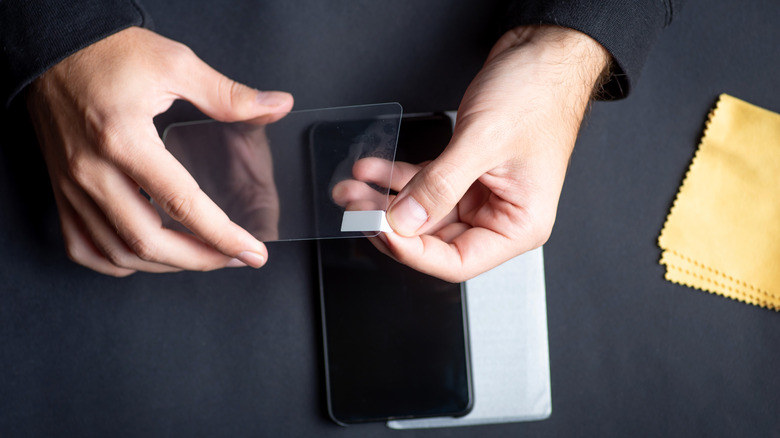
These days, screen protectors do more than just safeguard our screens against scratches and drops. For instance, we now have privacy screen protectors, which obscure your phone's screen unless you're looking straight at it. When viewed at an angle, you see nothing, preventing people from spying on what you're doing on your phone while in public. We also have screen protectors that claim to block blue light, which is visible light with a short wavelength of between 380 and 500 nanometers, often appearing (surprise!) blue to the human eye.
Blue light screen protectors have a special coating with a yellowish tint that filters out 30% to 60% of blue light emitted from our devices. But why is it important to filter out this type of light? If you are to believe companies that sell these anti-blue light screen protectors, they protect your eyes from harm and help you sleep better. Turns out, you probably don't need them for the first reason, but they can help with the second one, even though it might not be enough.
If you're cool with software-based blue-light filtering, you also don't need these blue light screen protectors. Modern phones and computers have built-in blue light filters that are free and effectively block between 30% and 70% of blue light, depending on the intensity level you've set. These software-based filters go by different names. For instance, it's called Eye Comfort Shield on Samsung phones, Night Light on Windows 11, and Night Shift on iOS and macOS.
Your eyes probably don't need a blue light screen protector
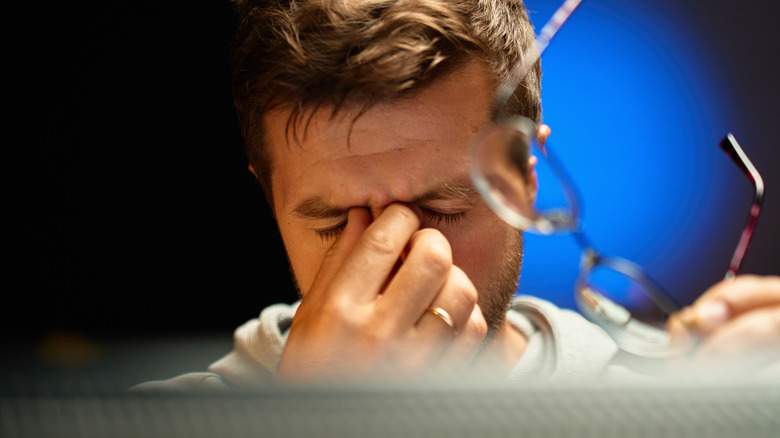
Companies that manufacture blue light screen protectors wouldn't really be able to make bank unless they told you that blue light poses a danger to your eyes. Yes, screens can temporarily cause your eyes to experience harmful effects through a phenomenon known as digital eye strain (DES). However, once you look into the causes of DES, using a blue light screen protector against it doesn't make much sense.
For example, when your eyes feel tired, it's because the eyes' muscles are tired from concentrating on the screen for too long, or the screen is so bright that it's creating a harsh contrast with low ambient lighting, stressing your eyes. If your eyes feel dry and irritated, it's because you weren't blinking enough to keep your eyes moist, and now the surface has dried out. When you get a headache, it's because the tension from the fatigued eye muscles has radiated to the temples and forehead. Neck strain? Poor posture and bad viewing angle are often the culprits.
Now, what do any of these have to do with blue light? Nothing, and there's no solid scientific evidence to back up the idea that blue light can hurt your eyes in the long term. So the claim that blue light screen protectors protect your eyes from harm is mostly a marketing gimmick that you shouldn't fall for. These problems can be solved by resting your eyes regularly, lowering your screen's brightness in low-light conditions, consciously blinking, and putting the display at the right angle and height.
Do blue light screen protectors help you sleep?
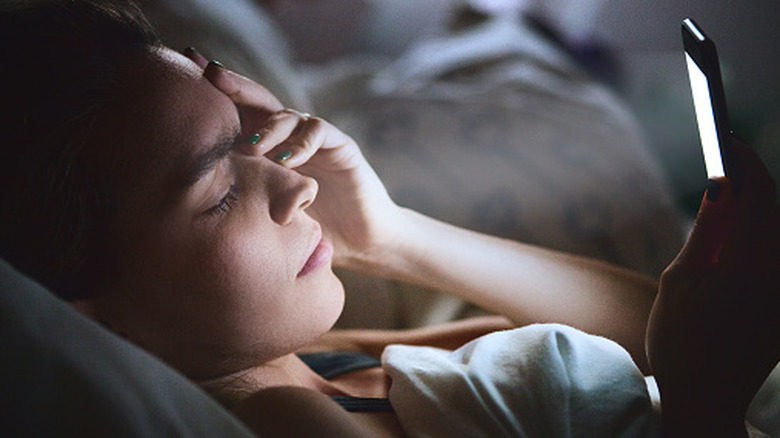
Blue light is a high-energy light. Exposure to it keeps your brain alert, especially during the day because the sun is one of the biggest sources of blue light. To put it simply, our brains have come to naturally recognize blue light as a signal that it's daytime, stopping the production of melatonin. This is the sleep hormone that tells the brain it's time to power down for the night. You don't control the processes that happen in your brain, so that shift from day to night is an important cue to start producing melatonin. Now that you know blue light keeps you awake, it might click that it's probably why you find it hard to fall asleep after looking at your phone at night. But that's not entirely correct.
Brian N. Chin, a sleep researcher and assistant professor of psychology at Trinity College, wrote in an article published by The Conversation that social media is another culprit. For instance, the emotionally engaging content you read while doomscrolling can make your brain hyper-alert at night. It can also cause stress from comparing yourself with others, making it harder to sleep. Also, the fear of missing out (FOMO) may keep you checking your phone at odd hours, disrupting your sleep pattern. So don't think a blue light screen protector or filter is the be-all, end-all of solving your sleep problems from screen exposure before bed ... though it might help.