

Who Owns Atari Today? The Retro Console Brand Had Many Owners
In the '70s and '80s, Atari was one of the biggest names in video games. Founded in 1972 by Nolan Bushnell and Ted Dabney, the California-based company Atari Inc. was a pioneer in home consoles, home computers, and arcade games, and is widely credited by experts with laying the foundation for modern gaming as we know it.
Not only did Atari Inc. popularize the arcade cabinet, thus birthing arcade culture, the company also released iconic titles, such as "Asteroids" and "Pong." In fact, 80s arcades are still relevant today as Gen Z are drawn to them for socializing. Atari's groundbreaking console, the Atari 2600, which has now become a collectible, also helped pave the way for modern home consoles like the PlayStation 5 and Xbox Series X.
However, the Atari brand's journey has been a somewhat convoluted one. The brand has changed hands numerous times over the last 50 years, and is now owned by the French holding company Atari SA (formerly Infogrames), which continues to make games and hardware. Below, we break down who has owned the Atari brand and company over the years and more on who owns it today.
Atari was split up in the '80s
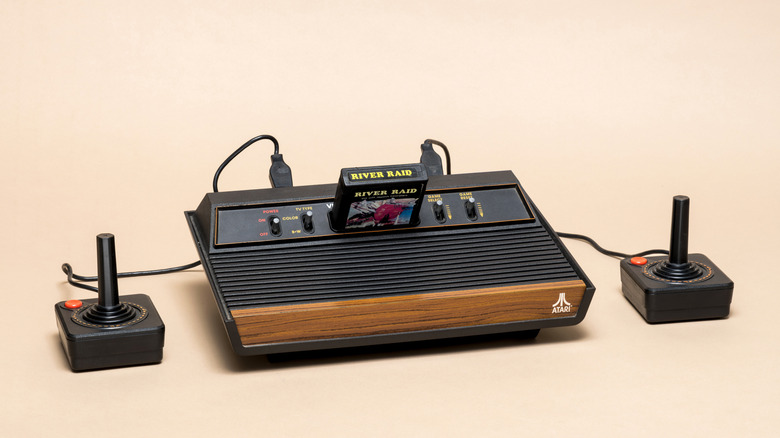
In 1973, Bushnell bought out Dabney, later selling Atari to Warner Communications for $28 million in 1976 to fund the production of the expensive Atari VCS (later renamed the Atari 2600). However, despite a huge marketing spend by Warner, the VCS wasn't an immediate hit, and Bushnell had repeated disagreements with Warner over the direction of the company, resulting in Bushnell leaving in 1978 (after being fired as co-CEO and chairman).
Atari grew from strength to strength, with the Atari 2600 becoming a huge hit. Its iconic joystick is still considered one of the most beloved retro controllers of all time. However, the video game crash of 1983 changed everything. The market became oversaturated with primarily low-quality video game consoles and games, Atari Inc.'s sales diminished, and the company suffered financial difficulties, reportedly losing $310.5 million in the second quarter of 1983 alone. As a result, Warner decided to sell Atari Inc. in 1984. However, no single buyer would take the whole company, so it was split into several divisions, with its consumer division sold to Commodore's founder Jack Tramiel, who renamed it Atari Corporation, and the rest of the company was rebranded as Atari Games Inc (still under Warner). In 1985, Warner sold Atari Games to Namco, which controlled the brand's arcade division.
Who owns Atari now?
In 1996, following the failure of the Jaguar console, Tramiel merged a struggling Atari Corporation with disk-drive manufacturer JTS, but little was done with the company. In the same year, Atari Games was acquired by Midway Games. Then, in 1998, Hasbro Interactive acquired all Atari Corporation's IP from JTS for just $5 million.
In 2000, facing financial difficulties, Hasbro sold Hasbro Interactive — including the Atari brand — to French publisher Infogrames Entertainment SA. In 2003, Infogrames rebranded the division as Atari Interactive and rebranded its Infogrames Inc. division (formerly GT Interactive) as Atari Inc., which licensed the name and logo from Atari Interactive.
Finally, in 2008, Infogrames completed the total acquisition of Atari Inc., making Atari a wholly owned subsidiary for the first time since 1984. In 2009, Infogrames changed its name to Atari SA, which is still used today. But what about the arcade titles? Well, Warner Bros. Games now owns Atari's post-1984 arcade titles, following Midway Games' bankruptcy in 2009.
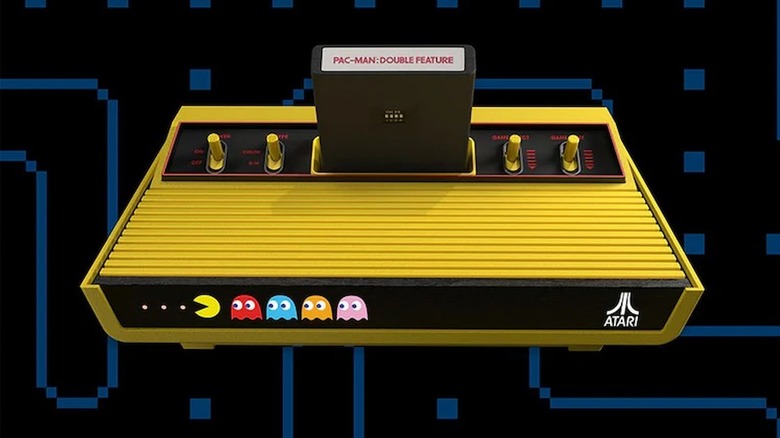
But the road remained rocky for Atari SA. In 2013, the company filed for bankruptcy in the U.S. and has been making a gradual comeback. Despite entering the casino space for a while, in recent years, Atari has refocused on its classic franchises and retro gaming, shipping its re-imagined Atari VCS console in 2021, releasing remasters of its classic titles, and acquiring developers Nightdive Studios and Digital Eclipse. On August 3, 2026, Atari reported revenue growth of 66% year-on-year to $65 million, its highest annual revenue in more than a decade.