

Why Did Samsung Stop Making Cameras?
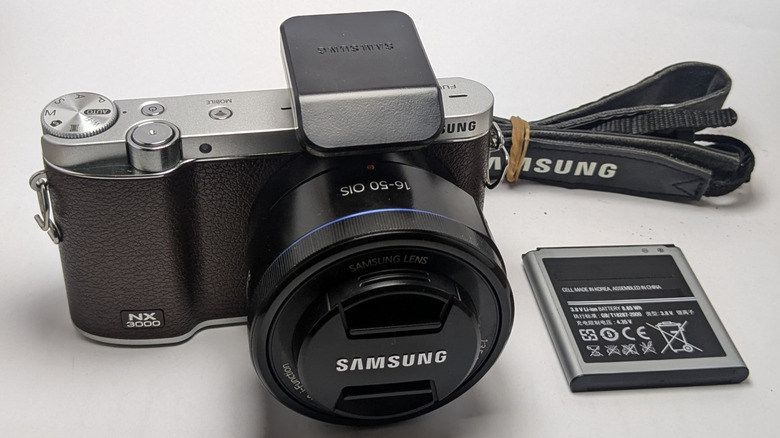
Considering Samsung saw as much as $270 billion in revenue in 2026, it's impossible to deny the tech giant has been killing it recently. As a manufacturer pushing out the most reliable Android smartphones while also managing to become one of the biggest smart TV brands, almost anything Samsung puts out is bound to stick on brand recognition alone. So, what happened to its dedicated camera equipment, though? Why did Samsung stop making cameras?
It's fairly simple: Samsung pulled the plug on its camera business in 2017, citing the growing popularity of smartphones and declining sales for standalone cameras. Of course, if you're even remotely familiar with classic camera brands, this isn't all that odd. After all, Pentax, Contax, Minolta, and Konica have all disappeared from the camera market. Only the stuff that catered to professionals survived, such as Nikon and Canon. Samsung may have made solid advancements with its revolutionary NX-series of mirrorless cameras, but the pros were reluctant to come on board, as most were either team Canon or Nikon or started switching to Sony's mirrorless system.
On top of Samsung's strange positioning in the space, smartphone cameras practically rendered the low-end consumer camera market dead. Ironically, it was the portion of the market where Samsung was well-versed. So, in a sense, Samsung's smartphone camera quality helped kill its own business.
Can Samsung ever weave its way back into the pro space?
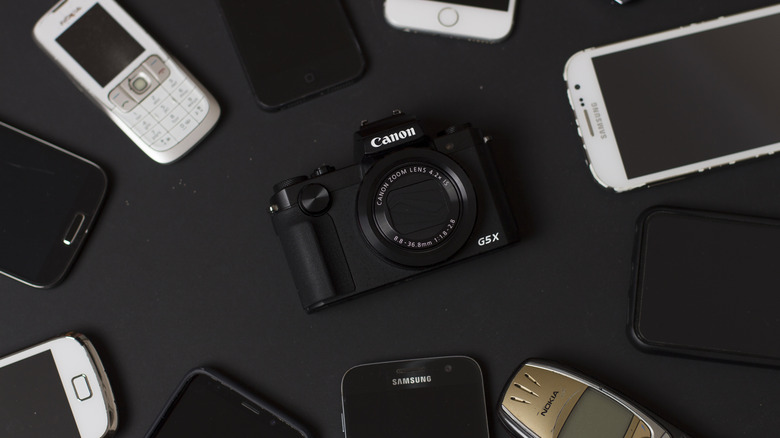
The camera market is shrinking. Sure, compact cameras are experiencing a resurgence (courtesy of youngsters trying to escape smartphones), but it's still a relatively small piece of the pie. After all, the numbers are impossible to ignore. In 2010, over 120 million digital cameras were sold, but by 2025, that number dropped to under 10 million. Professional photographers will likely keep the premium industry afloat as it remains unclear if, or when, smartphones will become the standard for pros.
Samsung, as one of the best camera phones available, but despite the advancements in smartphone cameras, the sensors are generally smaller in size, resulting in more noise and the capture of less light. This is why professional photographers aren't likely to make the switch any time soon. Smartphone manufacturers are bridging the gap by introducing AI and other software shenanigans, but professional photographers still gravitate toward superior optics and large-sensor cameras.
Samsung and other smartphone manufacturers have their work cut out for them, as they first need to solve the problem of ergonomics (try shooting a three-hour wedding with a smartphone) and provide more lens customizability before pros embrace phones.Granted, smartphone cameras are continuously improving, so much so that it's getting a lot harder to pick which ones were made on a high-end mirrorless or a phone.