

Steam Deck OLED Vs. ROG Ally: Which Gaming Handheld Should You Buy In 2026?
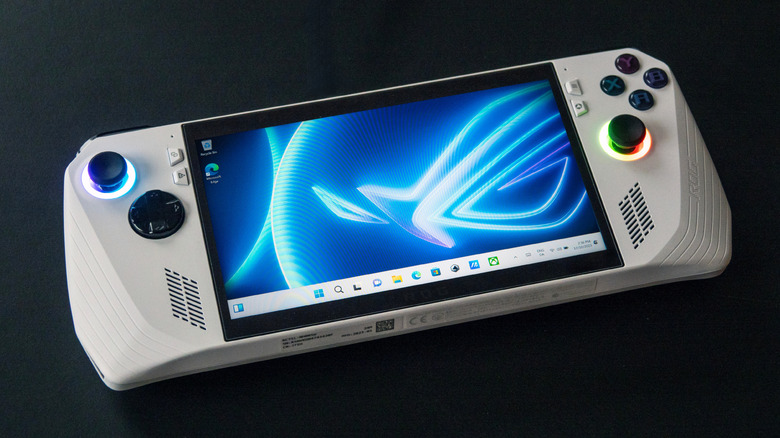
The Steam Deck has inspired a variety of competitors in the portable gaming PC market, including the ROG Ally. These handhelds let you access your PC library wherever you are, whether that's a long flight or on the couch watching TV, possessing the versatility of a smartphone or Nintendo Switch while harnessing the power of a gaming computer. If you're thinking about buying either a Steam Deck or ROG Ally, there are a couple of things to consider.
Both are powerful pieces of hardware that'll run a wide range of games, but there are differences in how the two operate that may make one more appealing than the other. Another major consideration is price. Valve's hardware recently went up by hundreds of dollars due to the ongoing digital storage shortage, and while the nearly $1,000 Steam Deck OLED still sold out in the 24 hours after the restock, it's certainly a bigger financial decision than it was previously. That's why, while the Steam Deck OLED is the better piece of hardware overall, if you're looking to buy a handheld gaming PC in 2026, the ROG Ally is the better option.
ROG Ally is currently more affordable than Steam Deck OLED

The ROG Ally comes in a few different models, and the company has released new hardware every year since the line debuted in 2023, which is one reason why you can sometimes find used and like-new units at a discount. Starting with the cheaper one, the 2025 ROG Xbox Ally costs $599.99 and has 16GB of RAM and 512GB of storage, meaning it has comparable specs to the Steam Deck OLED at nearly $200 less. There's also a higher-end model in the ROG Xbox Ally X, which costs $999.99 and has 24GB of RAM and 1TB of storage.
While more expensive than the 1TB Steam Deck, it comes with more RAM, allowing it to be, as BGR's review puts it, "an extraordinarily powerful gaming rig." Regardless of which one you're interested in, another point in the ROG Ally's favor is that it's easy to access games you have on all digital storefronts. Xbox and Steam come preloaded on the system, and you can download launchers for other platforms like Epic Games Store, EA Play, and Ubisoft Connect by simply going to the Command Center thanks to Windows 11. Unfortunately, running on Microsoft's operating system is also a downside, as your gaming experience will be affected by various bugs that frequently arise after major updates.
Go with Steam Deck if you want convenience
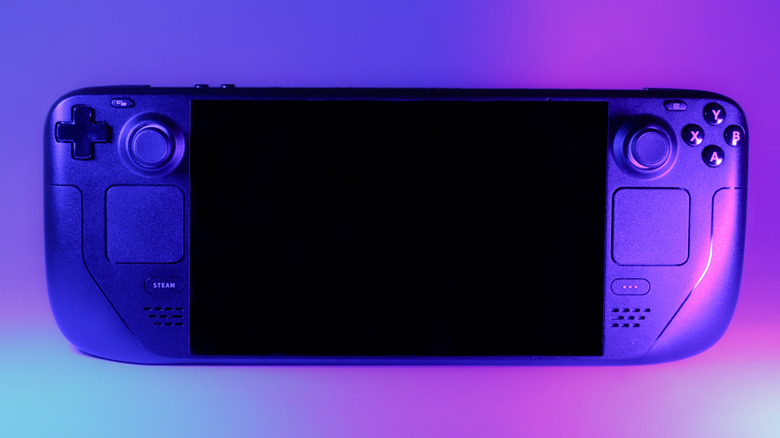
The Steam Deck OLED ranked highest amongst the eight major handheld gaming consoles for good reasons. Both models have an AMD processor and graphics card, 16GB of RAM, and a 1280 x 800 resolution, 7.4-inch OLED screen. While the ROG Xbox Ally X has better specs, the Steam Deck makes up for that with the overall user experience. Valve's handheld is built around optimization thanks to SteamOS, a Linux-based OS that's capable of running games made for Windows.
There's also the Steam Deck Verified system, which makes clear what is and isn't compatible with the hardware. You may need to tweak some settings once you're in the game, but I've rarely had to do that in the four years that I've had mine. Having your games ready to immediately jump into once you've downloaded them is perfect for casual users and those who aren't particularly tech-savvy. You can also download Steam Deck apps like other launchers, though it's not as straightforward as it is on the ROG Ally.
Unfortunately, the Steam Deck's price isn't great. $789 for the 512GB and $949 for the 1TB, a price increase of $240 and $300, respectively. I'm an early adopter who still loves my Steam Deck, but I paid around $400 for a 256GB LCD model. I certainly have no interest in spending nearly double for a better screen and more storage space. At its core, even the Steam Deck OLED is a four-year-old piece of tech being sold at an exorbitant price, which makes it hard to recommend right now.