

The Largest Data Center In California Has Been Denied Water For Cooling — Now It's Suing A Public Agency
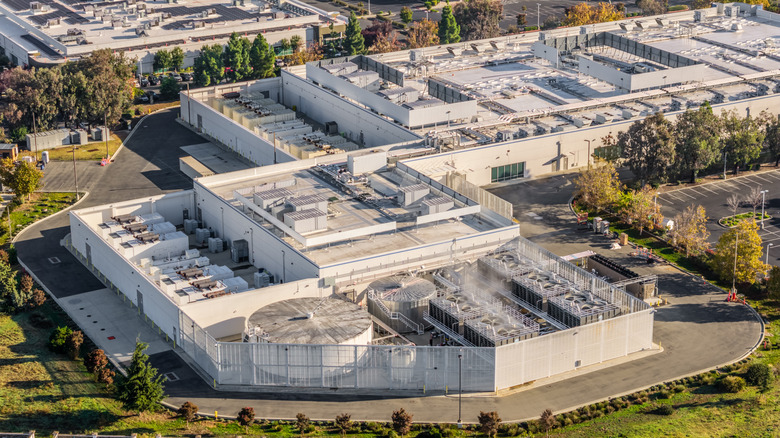
The original incarnation of the Cold War was about nukes. Now, it's about AI supremacy, but with a key difference. While most of the U.S. used to be on board in supporting the country's nuclear edge (one could say that the danger was palpable), citizens are actively pushing back against facilities that make AI developments possible — data centers. It's easy to see why: living near a data center is rough, and these facilities drive up utility prices and put significant strain on the local water supply.
However, tech companies building new data centers won't go down without a fight, it seems, and the events transpiring in Imperial Valley, California are a prime example. After the Imperial Irrigation District (a government agency in charge of delivering the freshwater from the Colorado River to the area) denied the data center developer's request to use the water supply and wastewater for cooling, Imperial Valley Computer Manufacturing filed a lawsuit. The company is planning to build the largest data center in the state. A 330 MW monstrosity, the facility will require 287 million gallons of water.
The problem is that the Colorado River constitutes a threatened water source, one that supplies water for 40 million people across seven U.S. states, and is essential for local farms. The key figure behind the data center, Sebastian Rucci, argues that the data center would have as much impact as a 160-acre farm. Yet, experts say this is problematic, as the developers plan on reallocating the water from the farmland, which would put people in rural areas at jeopardy.
Why is the Imperial Valley data center being met with pushback?
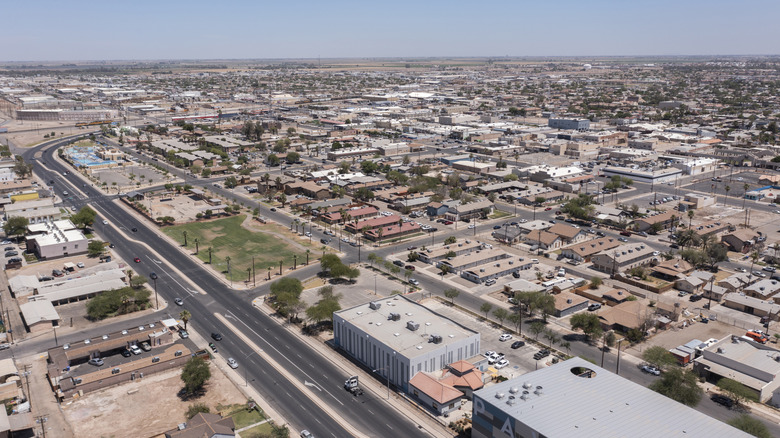
The lawsuit argues that there's "no rational basis" for the agency to say that an industrial company can't use various fields and combine them into a single unit for water reallocation, all while allowing agricultural users to do the same. While Rucci clarified that the project would economically benefit the area, most citizens are pushing back against data centers — so much so that the community is generally in favor of a strict moratorium on new construction. None of this is surprising. Agriculture in the Imperial Valley area already accounts for nearly 80% of California's entire water supply allocation. Thus, an extra 287 million gallons is a major red flag, especially considering that the Colorado River has had its fair share of issues with drought.
Data centers are a major resource hog, particularly in terms of water. Amazon's data center reportedly used 2.5 billion gallons in a single year, which is made worse by the fact that the company itself claims its facilities are seven times more efficient than the average. News from Cheyenne, Wyoming, where an under-construction Meta data center purportedly polluted the city's wastewater system with a rare bacterium, certainly didn't help the public image of data center developers. Rather, it added yet another data point to the list that justifies citizens' growing concerns about AI's blistering expansion.