

IBM Just Made A Huge Fusion Energy Breakthrough Thanks To Quantum Computing
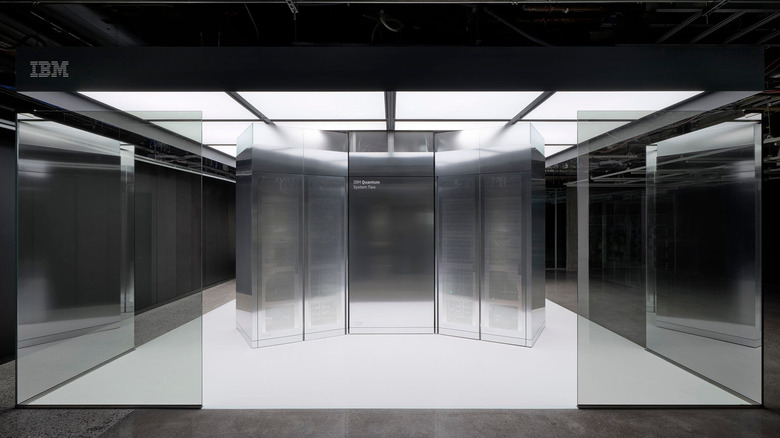
Quantum computing is kicking the doors open on a fusion energy problem that has long challenged scientists. IBM, in partnership with the Oak Ridge National Laboratory and Cleveland Clinic, discovered a new way to model how fusion plants could produce and recover tritium. It's a rare fuel found in several common objects that are radioactive. Tritium is created naturally when cosmic rays reach the upper atmosphere, but supplies are limited as its 12-year half-life results in relatively quick decay.
The lack of tritium is a roadblock to having fusion as a power source. But this radioactive isotype of hydrogen can be produced by exposing more commonly available lithium to neutrons. Tritium is notoriously hard to capture and reuse, but a molten salt known as FLiBe (fluorine, lithium, and beryllium) can surround the fusion reaction like a blanket, helping with this process. Scientists need to know which recipe for doing so is the most efficient, but calculations on this scale are too challenging for classical computers.
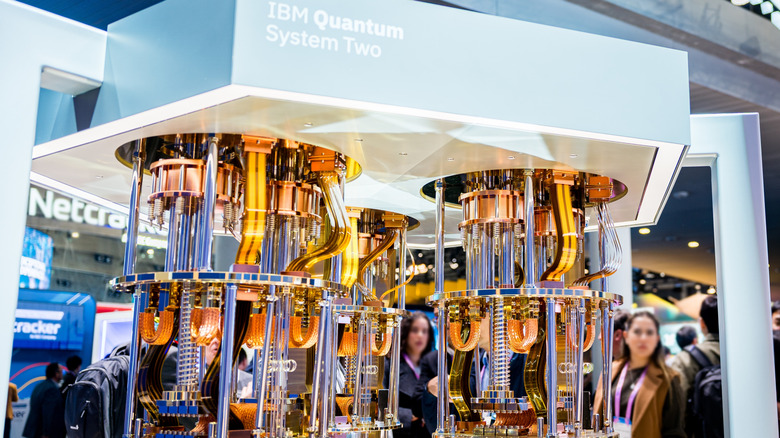
The solution is to use classical computers for simpler modeling and let IBM's quantum hardware determine the nine specific molecular configurations of this material. It helped them model how the molten salt behaves with and without tritium. IBM calls it the first-known instance of fusion-material computations on quantum computers.
How quantum computing helps solve fusion's biggest problem
Nuclear fusion is nuclear fission's friendlier cousin. Instead of splitting atoms, fusion combines them, much like the sun. The process doesn't produce chain reactions, and it creates shorter-lived radioactive waste. Fusion has a lower risk of meltdown and a smaller environmental footprint than fission. Yet the potential is enormous, which is why this quantum computing breakthrough is important.
Fusion is incredibly hard to control. The process can be hotter than the sun, and a working plant has to absorb fusion neutrons, create tritium, and recapture that tritium as fuel under these conditions. That's where IBM's quantum computing comes in. The models help scientists calculate how strongly tritium binds to the molten salt, a key test for whether a future fusion plant could recover enough fuel to keep running.
This difficultly is why there are currently no commercial fusion plants in operation. The U.S. Department of Energy has a roadmap to build them, however, it will only happen with more breakthroughs in fuel production and reactor design. IBM might be the first to commercialize quantum computing, but will have to invest billions to do so. The breakthroughs aren't limited to energy. In May 2026, IBM announced scientists used quantum computing to model how drug-like molecules attach to proteins in water, similar to reactions that would happen inside the human body. It could give pharmaceutical developers a better way to predict which molecules are worth testing before they begin lab work.