

5 States With The Most Wind Turbines (And How Much Energy They Make)
Love them or loathe them, wind turbines look set to stay. The turbines have actually been a feature of the American landscape since 1941 after the first large-scale one to deliver electricity to the grid began operating in Castleton, Vermont. While the project was short-lived (a blade failure led to its shutdown in 1945), the Vermont turbine is widely regarded as a landmark in the development of modern wind energy worldwide. While numerous wind turbines dot the landscape today, it wasn't until the 1973 oil crisis that the industry really started to expand. While California emerged as a leader in the field in the 1980s, Texas has gone on to become the state with the greatest number of operational wind turbines, and by some margin.
In the U.S. in 2025, about 10.5% of total net electricity generation came from wind. The number looks set to grow, too, as analysts predict steady growth in both onshore and offshore wind, contributing to the long‑term decline in coal use while also gradually reducing the country's reliance on natural gas. Future designs like flying wind turbines could also play a part, though that may not be happening for a while yet. Let's take a closer look at wind energy across the U.S., including which states have the most turbines, how much power they produce, and how many homes that energy could power if it were dedicated solely to residential use.
1. Texas
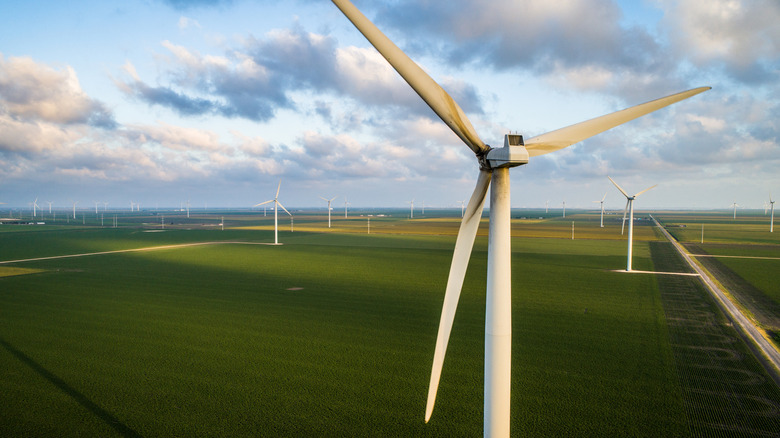
The Lone Star State tops the list by a wide margin, with 19,415 wind turbines — all of them onshore — operating as of 2025. Texas may be known as America's oil powerhouse, but that clearly hasn't discouraged it from harnessing clean energy, too, beginning with its first wind farm near Pampa in 1981. The state's wind boom really got going in the 2000s when improved turbine technology, federal incentives, state renewable energy policies, and major investments in transmission infrastructure helped Texas to better access its vast wind resources.
According to the U.S. Energy Information Administration (EIA), Texas wind turbines generated 124,278 gigawatt-hours (GWh) of electricity in 2024, accounting for around 22% of the state's total electricity generation from all sources. While Texas's wind-generated electricity is fed into the wider grid and shared across multiple uses rather than being directed only to households, the standard EIA household electricity-use benchmark of about 10,500 kWh per year suggests the state's wind output would be able to power around 11.8 million homes for a year.
The wind boom enjoyed by Texas has been made possible to a large extent by the sprawling plains of West Texas and the Panhandle, but developers are also looking toward the Gulf of Mexico for possible projects that would become the state's first offshore wind farm. Federal officials have identified a number of offshore wind areas off the Texas coast, although commercial projects are still in the early stages of development. The state could look to China's recent advances in floating offshore wind, which include the world's largest single-unit operational floating offshore wind turbine.
2. Iowa
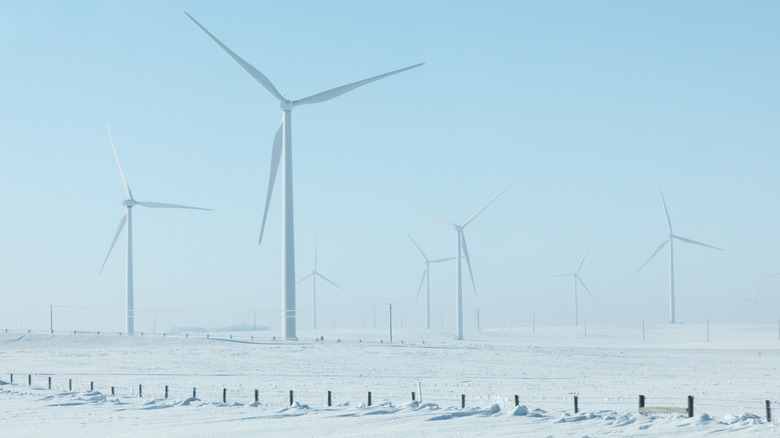
Although it's second on the list, Iowa, with 6,472 wind turbines, still has less than half the number of Texas. But like Texas, Iowa's wind revolution got started early when in 1983 it became the first state to require utilities to include renewable energy in their electricity mix, giving the state's wind industry an early advantage. Iowa's wind industry expanded significantly in the 2000s as falling turbine costs and government incentives helped transform the state into one of the country's biggest wind power producers. With strong winds blowing across vast amounts of flat farmland, the state clearly had many of the natural advantages needed to support large-scale wind development.
Iowa's wind turbines generated 44,277 GWh of electricity in 2024. Using the same EIA household electricity-use benchmark of about 10,500 kWh per year, Iowa's wind output would be equivalent to powering around 4.2 million homes for a year. Eagle-eyed readers will have noticed that that's close to half the Texas figure, despite Iowa having almost exactly a third of the total turbines. It shows that many factors can influence overall wind output, among them turbine size, technology, the consistency of local wind conditions, and the age of the wind farm.
Notably, Iowa gets a bigger share of its electricity from wind than any other state in the nation. In 2024, for example, 63% of Iowa's electricity generation came from wind, just ahead of South Dakota at 59%. The impressive figure means that nearly two out of every three units of electricity generated in Iowa came from wind turbines turning on the state's wide-open plains. It's also one of a select group of resource-rich states that produces far more electricity than it uses, allowing it to export power to neighboring states.
3. Oklahoma
Oklahoma's wind industry has grown rapidly over the past couple of decades, with 5,597 wind turbines operating across the state as of 2025. Like Iowa, its success is closely tied to its location in the Great Plains, where wide-open landscapes and strong, consistent winds have created the ideal conditions for large-scale wind farms. Although the state is better known for oil and gas production, Oklahoma has nevertheless emerged as a leader in wind power in the U.S., and in 2024 generated 37,967 GWh of electricity from wind.
Going by EIA's previously mentioned benchmark, Oklahoma's wind generation would be equivalent to powering around 3.6 million homes for a year. It's an interesting figure, especially when you consider Iowa's significantly higher output despite having only around 900 more wind turbines. It underlines the earlier point that many factors are at play when it comes to wind-powered electricity generation.
A major boost to the state's wind power generation came in the spring of 2022 when the Traverse Wind Energy Center came online about 65 miles west of Oklahoma City. With 356 wind turbines and the ability to generate 999 megawatts (MW), the wind farm is the state's largest in terms of capacity. Oklahoma also produces more electricity than it uses, so, like Iowa, it's able to send some of it beyond its state borders.
4. California
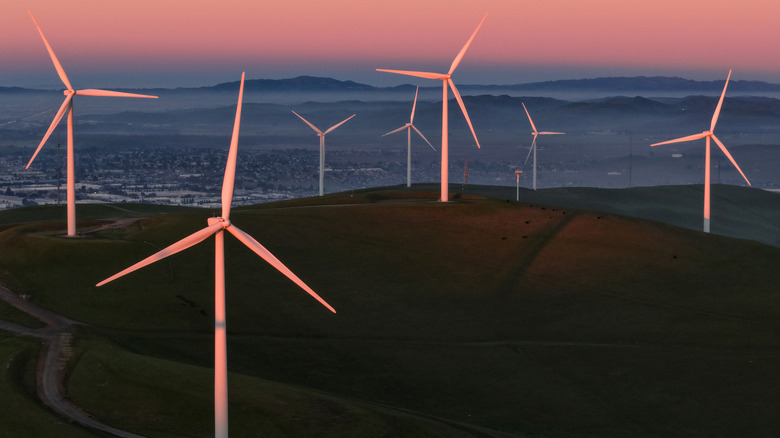
The Golden State helped shape the nation's modern wind industry, starting in the early 1980s and developing some of the country's first large-scale wind farms. Long before wind turbines became common across the Great Plains, thousands of turbines were already turning in places like the Altamont and Tehachapi Passes, and as of 2025 the entire state is home to 5,510 of them. With a large population and ambitious clean-energy goals, California has used wind power as part of wider efforts to diversify its electricity supply and cut its reliance on fossil fuels.
In 2024, California's wind-generated electricity reached 15,648 GWh. EIA data suggests the output from California's wind turbines would be enough to supply the annual electricity needs of around 2 million homes for a year. While California's contribution has been significant, it is smaller than the output of leading Great Plains wind states such as Iowa and Oklahoma, where stronger winds and vast open landscapes have allowed wind power to expand on an even larger scale.
In recent years, many of California's older wind farms are being updated. The work involves replacing the smaller turbines with taller and more efficient ones, with fewer needed to generate the same amount of electricity. The changes are especially notable at Altamont Pass, where early wind development upset environmental groups that said the older turbines' smaller, faster-moving blades were injuring and even killing birds of prey. As expected, the newer turbine designs have increased electricity generation , and while they have had some benefits for wildlife, it seems that the turbines are still a safety risk for a number of birds birds and also bats. Indeed, bird strikes are one of several issues with wind turbines that scientists are trying to solve.
5. Kansas
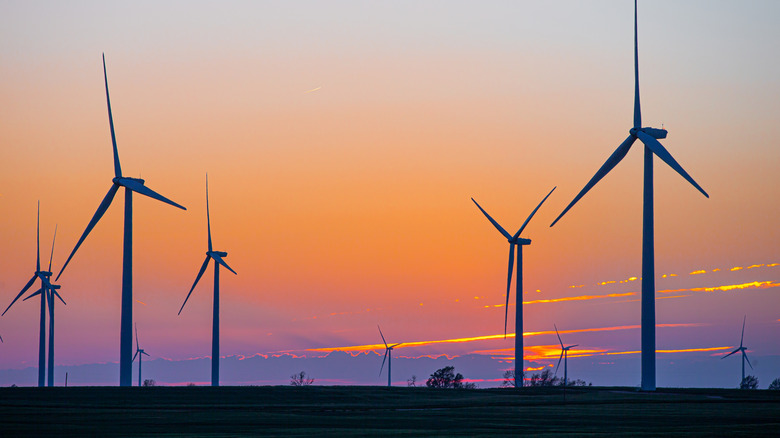
Fifth on the list is another state on the Great Plains: Kansas. Just south of Oklahoma, the Sunflower State is home to 4,415 wind turbines as of 2025. When you think of Kansas, you might think of swaying wheat fields and farmers working the soil, and while agriculture certainly remains central to the state's identity, Kansas has increasingly turned its reliable prairie winds into a new economic resource to become another of America's prominent wind-power states, with 2024 data putting wind-generated electricity at 29,795 GWh.
According to EIA's benchmark, the electricity generated by turbines in Kansas in 2024 would be able to power around 2.8 million homes for a year. Like Iowa and Oklahoma, Kansas also produces more electricity than it needs, allowing it to export the excess to other states. Similar to many states in the 2000s, electricity generation in Kansas was dominated by coal, with wind playing only a small role. Over the following two decades, however, big investment in wind infrastructure transformed the state's energy system, making wind its largest source of electricity.
For some Kansas farmers, wind has become a valuable new source of income. Rancher Pete Ferrell has described it as his "best cash crop," showing how turbines can provide a regular income alongside traditional agriculture.