

Who Owns Oppo?
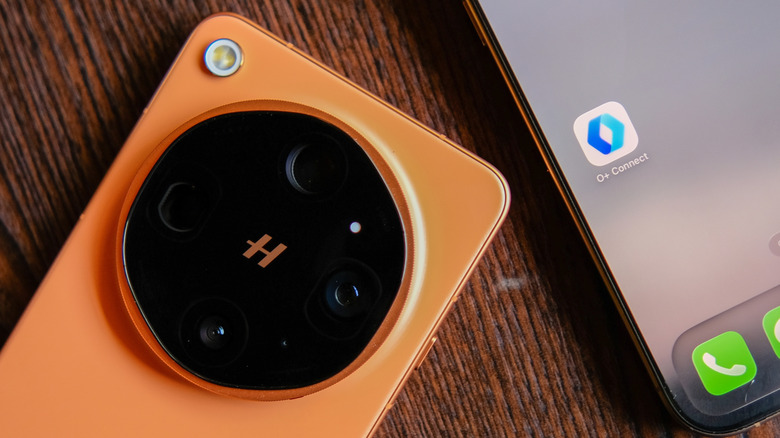
Oppo is a Chinese electronics brand with a main line of Android smartphones. In the West, the company is less well known than its subsidiary, OnePlus, a brand co-founded by one of its departed engineers, Pete Lau, who has since returned to Oppo as an executive. OnePlus had ambitions to establish itself as a value-conscious phone maker in the West, especially in North America, where other Chinese brands have floundered. All the more surprising, then, that the company decided to retreat from those markets in 2026.
You might be curious about picking up an Oppo phone off eBay or even going through the import gauntlet. If so, you'll probably also have questions about the company. Like, who really owns Oppo? And is it even possible to get an Oppo phone working on an American wireless carrier? Well, the short answers to both questions are that Oppo is a privately owned company and that it is possible to bring an Oppo device onto some cellular networks, namely those running on T-Mobile's network.
Who actually owns Oppo?
Oppo traces its origins back to 1995, when Duan Yongping founded the home appliances manufacturer BBK Electronics in China. In 2004, Duan and one of his proteges founded Oppo with a focus on media players. Much like Apple, which shifted from iPods to iPhones, by 2009 Oppo's focus had transitioned to smartphones. Through these ventures and other investments, Duan has accrued more than $1 billion in net worth.
Most market researchers and media outlets lump Oppo, OnePlus, and another smartphone maker, Vivo, into the same BBK portfolio. However, The Wire discovered in 2020 that only Vivo is directly owned by BBK. Oppo's biggest shareholder, with a 61 percent stake, is its associated workers' union committee — the committee, as with all other organized labor in China, is ultimately managed by the central government. Private stakeholders, mostly through an offshore holding firm, account for the remaining 39 percent. Duan is said to have a minor stake in Oppo.
Are Oppo phones allowed in the US?
The websites for AT&T, T-Mobile, and Verizon each have a "Bring Your Own Phone" section where you can check your device's network compatibility by entering its IMEI. That said, the tool doesn't exactly help if you haven't bought the phone you want to use in advance.
In the era of 5G and 4G technologies, most phones sold worldwide support a wide range of cellular spectrum and thus should be able to work on most networks regardless of region. However, a fair number of service providers will only allow devices that have been tested and certified for use on their network to connect to said network. AT&T and Verizon both enforce certified device lists, so you're almost certainly not getting an Oppo phone onto those airwaves.
T-Mobile customers have reported being able to bring foreign-brand phones onto the network, as well as prepaid carriers tapping into the same grid, including Metro by T-Mobile and Mint Mobile. Beware, though, that your device may not support every band in T-Mobile's spectrum portfolio, so you might not be able to access the fastest speeds or features like Voice over 5G or LTE.