

4 Signs Your Rechargeable Batteries Are No Longer Safe To Use
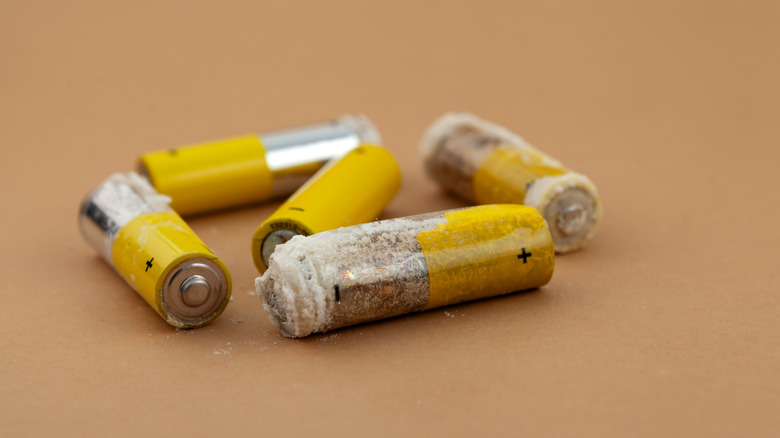
There's a limit to how many times you can use rechargeable batteries before they stop working entirely. After going through a certain number of charge cycles, a battery will reach a "failure point" where its health and per-cycle capacity will start degrading much more rapidly. However, just because your battery's charge capacity is degrading doesn't mean it's dangerous to use, right? Well, that may be true some of the time, but you should constantly watch out for a few telltale signs that your rechargeable batteries are no longer safe to use.
Defective batteries often show signs like overheating and might not be able to power your device optimally. In extreme cases, the battery might even show physical damage or start leaking chemical odors. A faulty battery can eventually pose a risk of damaging the device or even harming the user. There are times when it may be better to err on the side of caution by recycling that old battery early and slotting a new cell instead. But if you stay vigilant for these four danger signs, you can prevent a disaster stemming from faulty rechargeable batteries.
The battery is overheating

Lithium-ion batteries can heat up because of the chemical reaction that occurs when the battery is charging or discharging energy. Certain actions, like running intensive apps on a smartphone or using a device's "fast-charging" feature, can cause the battery to warm up even more. But if the device gets unusually warm to the point that the battery itself is too hot to touch, then you might be in a dangerous situation. Be mindful of your device's shape, too, because any swelling or bulging might indicate that the heat has caused a gas buildup. This might even be a sign that your lithium-ion battery could catch fire.
This is also the reason why lithium-ion batteries should not be disposed of by throwing them in a typical garbage can or recycling bin, especially if the battery itself is damaged or faulty. Even small lithium-ion batteries present some risk of entering thermal runaway. Unlike traditional fire, a thermal runaway is a self-sustaining chemical fire that could escalate quickly.
Physical damage to the battery
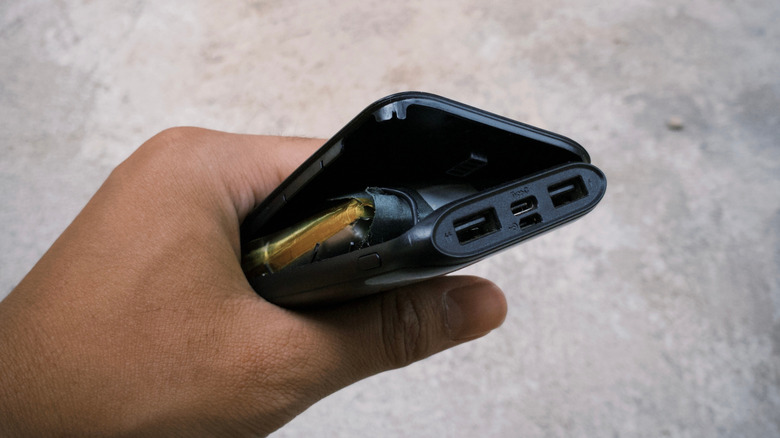
Watch out for cracks or bulges in the battery's casing. These are types of physical damage that you should never ignore, even if the battery still seems to be working just fine. Be extra cautious of corrosion to the battery caused by heat, pressure, or chemical reactions. If you notice a clear or white deposit on or around the battery, it likely means that corrosive electrolytes are leaking out. These chemicals may eat away at metal or electrical components within a device. Worse yet, they can cause skin irritation or even vision loss if the chemicals make contact with your eyes.
It's not a bad idea to regularly check your battery for damage, especially if it's getting old or if you keep a protective case on your device. If you notice a swollen battery, don't try to puncture it, as it could trigger a thermal runaway. Instead, cautiously dispose of your old battery and replace it with a new one immediately.
You notice a distinct chemical odor
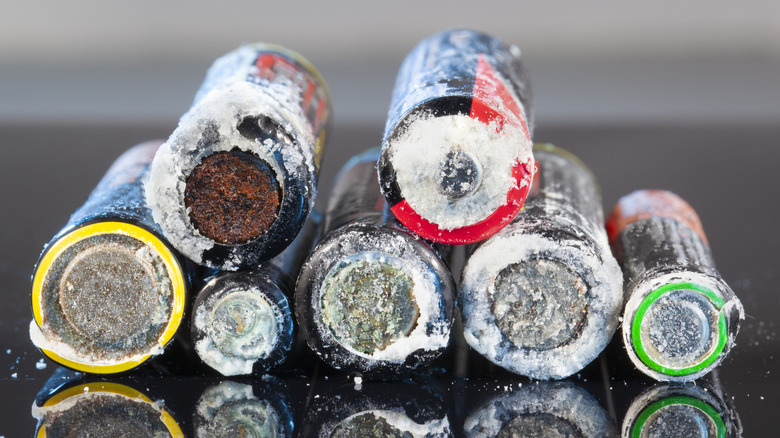
A healthy lithium-ion battery shouldn't give off any particular smell. If anything, it might have a plastic-y or "clean" smell if you inspect it closely. But if you detect a sweet, pungent, fruit-like smell coming from an electronic device, it might be coming from a rechargeable battery that's no longer safe to use. This is the chemical odor of electrolytes leaking from the battery casing. It's often compared to the solvent scent of acetone in nail polish remover.
Other odors to be aware of include smoky or burning smells that might indicate that internal components are being affected by heat damage. And in fact, heat damage is more likely if there is a leak in the battery because it means that chemical stability has been compromised and flammable gases might also be escaping. If you notice the smell of overheating electronics accompanied by the acetone-like smell of battery acid, then stop using the device immediately.
The battery-powered device isn't working properly

If your battery-powered device has a light that's flickering, a motor that's stuttering, or any function that's not working as consistently as it should, it could be a battery problem. A malfunctioning battery might be outputting inconsistent voltage, which is unsafe because voltage fluctuations can harm the device or cause dangerous overheating. This could also be a sign that the battery is degrading, which can of course lead to chemical leaks.
As a rule of thumb, there are certain devices you should never put rechargeable batteries in. These include devices that you use infrequently or ones that you only use in very short bursts, like a TV remote. This is because rechargeable batteries constantly discharge energy even when not in use, and may eventually reach a "deep discharge" state that will make it difficult for the battery to power any device properly. In the worst case, the steady discharge of energy may eventually result in a corrosive chemical leak from the battery.