

5 Absolutely Illogical Things Star Trek's Vulcans Have Done
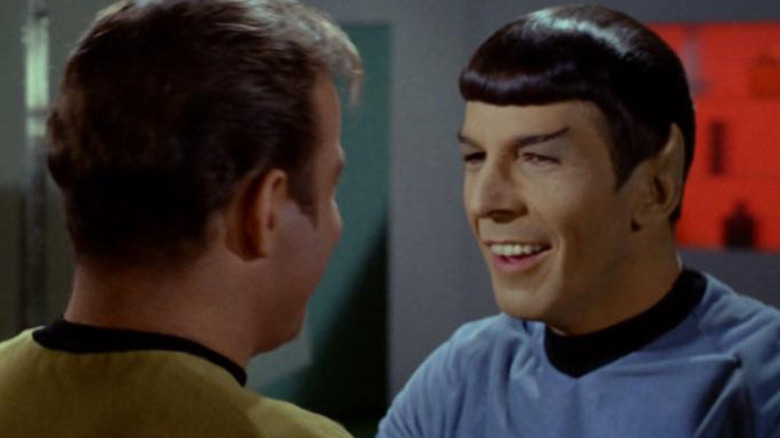
"Star Trek's" Vulcans are one of the franchise's best creations. At their core, Vulcans are a race of beings that live by cold logic, in a universe dominated by emotion. Spock, Tuvok, and T'Pol have all been central to many storylines along with the crews of their ships in "The Original Series," "Voyager," and "Enterprise," respectively.
While Vulcans are often depicted as "Star Trek's" party poopers, that sets them up for some fascinating stories, particularly when one of them does something completely illogical. It's not often, but it's a weird moment when you see through the Vulcan veneer and into their real heart. That, or it's something so bizarre that our primitive human minds can't begin to comprehend how the pointy-eared people managed to get to where they are. Admittedly, sometimes it's also just bad writing.
So what are the most illogical moments in the Vulcans' storied on-screen history? We've got exile, dementia, and even Pon Farr to talk about.
Breaking down into a violent beatdown

The villain of the 2013 Kelvin timeline sequel, "Star Trek Into Darkness," was physically powerful, while also being cold and calculating. That makes Spock's choice at one point to beam down and duke it out with his fists that much more unusual. Outside of the supposed emotional devastation that Spock endures through the climax of the movie (immediately solved by curing Kirk's death), Spock barely took a breather before attempting to pummel his enemy to death. Instead of using his brain, Spock chases Khan through the streets, rather than using any of the sci-fi gadgets that we all know the crew carries with them.
There's not much logic in the fight, outside of Spock trying the Vulcan Nerve Pinch to dispatch Khan quickly. Instead, Spock fumbles about and becomes your generic action hero. How cool would it have been if Spock showed up and actually did something Vulcan-ish, either logically or smart? Maybe J.J Abrams should have more than one big regret over this film.
Sarek denies that he is seriously ill
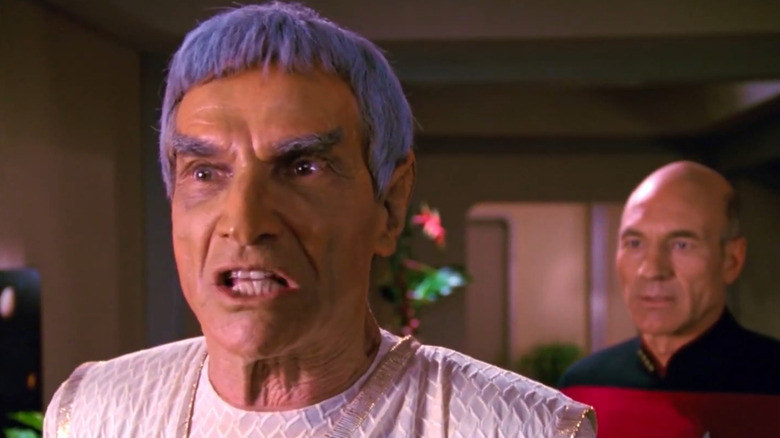
In one of the first major call-backs to "The Original Series," "The Next Generation" episode, "Sarek," features Spock's father, Sarek, joining the Jean-Luc Picard-era Enterprise crew on the way to a conference. Through the episode, Sarek is seen acting strange and un-Vulcan-like, including when he cries during an onboard music performance. Picard notices this, and with a mind-altering issue affecting the crew, stemming from Sarek's telepathy, confronts the aging Vulcan. Sarek breaks down, as he realizes that he cannot proceed in his current state, but refuses to back down.
It's a difficult moment to dismiss as merely "illogical," as Sarek is effectively suffering from a sci-fi equivalent of dementia. When Picard confronts Sarek, the Vulcan is angry, and eventually despondent over his state. Sarek believes that he's the only one qualified to see through this mission. However, he's buried his head in the sand, as Picard points out that Sarek's crew are keeping him isolated.
As Sarek screams "illogical," we see how even our strongest members of society are weak to the whims of nature. Sarek should have backed down and allowed another to take his stead, but couldn't face the music that he might now be too ill to continue on his path.
Fighting to the death for arranged marriages
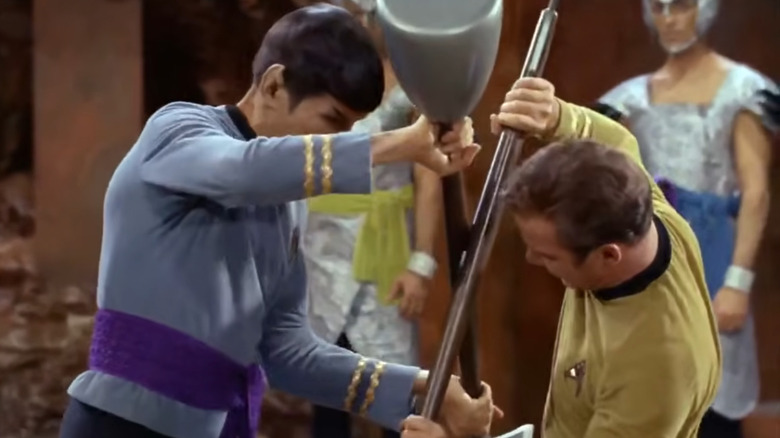
Vulcans are aliens, and their likeness to humans, bar the ears, often obscures the fact that they are still different. Despite being a logic-based people, in "The Original Series," we actually see Spock engage in a fight to the death for his wife-to-be. This is spurred on by pon farr, the biological clock where Vulcans get steamy and violent. It's not the biological side that's weird; it's the fact that this logic-based society still practices ancient traditions like arranged marriages.
To be fair, within the story of "Star Trek," a Vulcan arranged marriage supposedly isn't the same as on Earth, with Spock explaining that there's no word for what it is in the episode. However, the entire concept seems to fly in the face of what we know about Vulcan society. Much of the dissonance comes from Spock's time on screen at that moment, where he shares that these marriages are set in childhood.
The episode that deals with this in "TOS" is when Spock faces off to the death after his betrothed, T'Pring, refuses Spock's hand in marriage as she doesn't want to be a trophy wife. If you haven't heard of T'Pring, you're not alone. She's been a largely forgotten "Star Trek" character until "Strange New Worlds" brought her back to the small screen in 2022. In the "TOS" episode, T'Pring chooses Kirk, and a silly fight ensues, with Kirk faking his death to get out of it. Spock comes to his senses, and it's all happy families from there. It's just an incredibly strange element of Vulcan culture.
Spock tries to purge all emotion
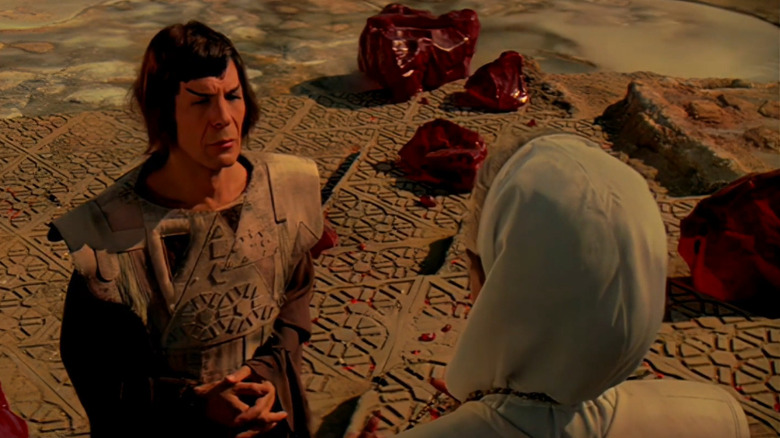
In "The Motion Picture," Spock returns to the Enterprise as a shell of the man we once knew. Stripped back to an almost emotionless state, Spock was undergoing the Kolinahr ritual as part of a Vulcan's journey to pure logic. He's interrupted by the movie's antagonist, but had it continued, the ritual would have not only purged him of emotions, but also his relationships. He wouldn't have cared about anything that came before, or after.
It's entirely illogical of Spock to do this from the outside looking in. From Spock's point of view, it was to better himself. However, it flies in the face of everything that he has learnt up to that point. During his five-year mission with Kirk and the Enterprise, Spock regularly learned the value of emotions — or illogical feelings — even in the face of danger.
Spock's Kolinahr isn't meaningfully touched on again in the movies, as he begins to slip into his role as science officer and friend to the crew over the duration of the movie. He cries over V'Ger, stating that it too is empty, like it was when he came back aboard.
Exiling or hiding the V'tosh Ka'tur
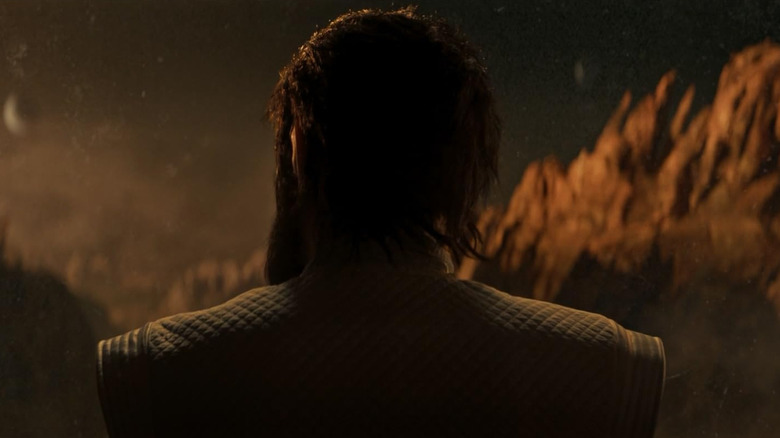
Vulcan, the planet, has a deep history, which we don't get to see much of in the movies or TV shows. One of the primary stories of the planet's history is how its civilization split into what we now know as Vulcan and Romulus. The war-like Romulans embraced their emotions, a shift from their peace-loving kin, the Vulcans. That created friction that's lasted for generations. That difference is even more pronounced when you consider the Vulcan practice of V'tosh ka'tur, which is effectively to be exiled or labeled an outcast for failing to suppress their feelings, or act illogically.
As the idea is explored in the shows "Enterprise" and more recent "Strange New Worlds," you'd think that maybe a Vulcan would at some point consider consulting with Romulans about how to handle a more emotional existence, without logic. Instead, Vulcans choose to completely shun and do away with others, simply because they don't think the same way as everyone else. Again, this seems illogical when you consider the wider Vulcan society. People with diverse perspectives can unlock new understandings to medicine, science, and art. History is filled with different-seeming people who changed the world when given a chance.
But Vulcans don't see it that way, and instead prefer to cling to otherwise outdated traditions. Even Spock's half-brother is confined to a rehabilitation center for displaying signs of V'tosh ka'tur, hidden to seemingly protect his father's reputation.