

How To Remove A Cracked Screen Protector Without Damaging Your Phone
We may receive a commission on purchases made from links.
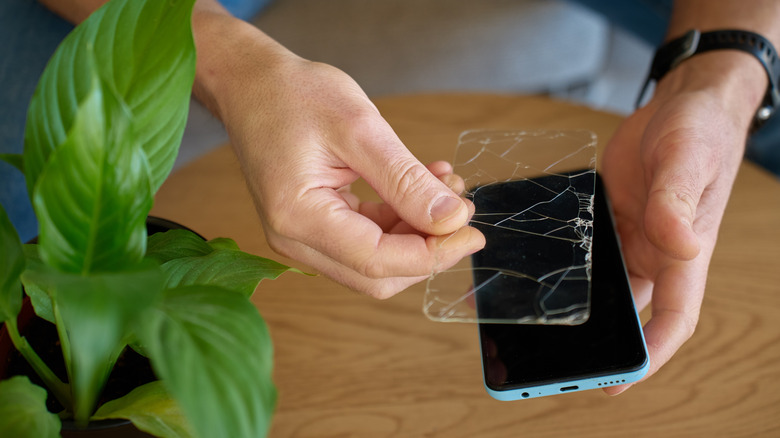
Even if you buy an expensive screen protector, it's bound to crack if you drop it hard enough. Plastic screen protectors generally do not crack, as they're made from polyethylene terephthalate (PET), which is thin and flexible but doesn't provide the same level of protection as tempered glass. When plastic screen protectors get damaged, removing them is as easy as gently peeling them off — you might need a credit card to lift the corners. Since the material is weak, if you do it incorrectly, one of the worst things that can happen is that you rip the protector. Cracked glass screen protectors, on the other hand, are tougher to remove, and you can damage your screen if you don't do it properly.
With the way a glass screen protector bonds firmly to the display screen of your phone, you might feel the need to use a metal object to pry it off. That's one almost surefire way that you can scratch or chip the phone's display, though. If the screen protector is bent, you might try to pry it off with force, which can also crack the display since the force is concentrated on a tiny area of the screen. So, if you want to remove a cracked screen protector, you need to ensure that you have the right tools and use the proper technique. You also need to know how to prepare the screen for a new screen protector.
The right way to remove a broken glass screen protector
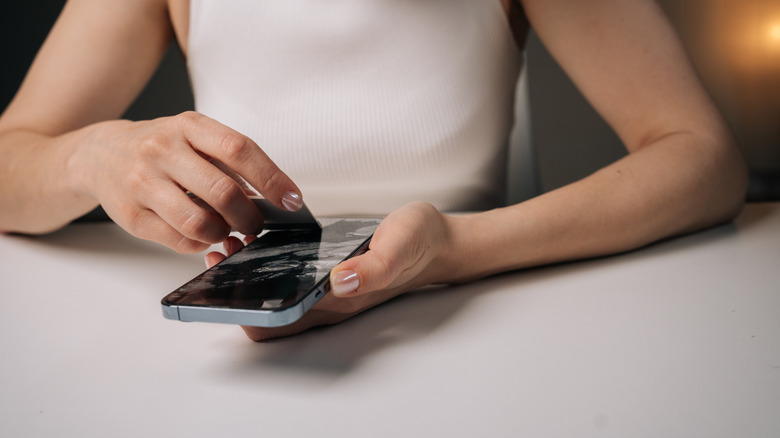
To remove the cracked screen protector, you're going to need something thin enough that you can slide it between the display and screen protector to lift the corner and then gently peel off the adhesive. What works best here is a business or credit card. You're also going to need invisible tape to hold the cracked parts together so you can peel off the screen protector as a whole. You don't want it to crack and break further, which can also damage your phone. One good option is this six-pack of Invisible Tape for Gift Wrapping, available on Amazon for $6.29. You will also need a hair dryer to loosen the adhesive so that stubborn stuck parts don't crack the screen protector even further.
With those items at hand, follow the steps below:
-
Turn off your phone to prevent the screen from coming on, which can make it harder to see what you're doing.
-
Place pieces of tape over the cracked parts.
-
Hold the hair dryer six inches away from the screen protector.
-
Use it on the lowest setting for 15 seconds to loosen the adhesive.
-
Gently lift one of the corners of the screen protector using the business or credit card.
-
Now, gently peel off the screen protector, taking care not to force it at any point along the way.
How to prepare your phone for a new screen protector
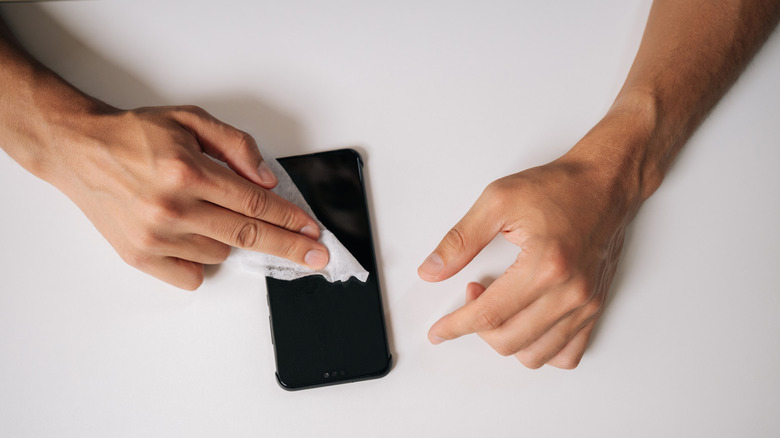
With the cracked screen protector off, you might notice that the screen has some adhesive left, making the phone feel sticky when you swipe. If you want to apply a new screen protector right away, you first need to clean the display. If you have bought a replacement screen protector already, it will likely come with what you need, which includes isopropyl alcohol wipes. Isopropyl alcohol can easily dissolve adhesives and is relatively inexpensive, which is why it's usually recommended for these types of jobs. If the new protector doesn't come with wipes, you can buy something like the Med Pride Sterile Alcohol Prep Pads, which lists at $6.99 for 200 isopropyl alcohol pads on Amazon.
When buying the wipes yourself, ensure they're 70% isopropyl alcohol. Anything more than that can potentially damage your phone's screen by removing the coating. Once you have your alcohol (if you're not using wipes that came with the new screen protector), dab some on a microfiber cloth and gently wipe the screen to remove any leftover adhesive or fingerprint smudges. Just like that, your phone is ready for a new screen protector. Just remember, though, that if you're using a modern flagship phone, it might not need a screen protector at all.