

How To Quickly Spot Fake Bose Products
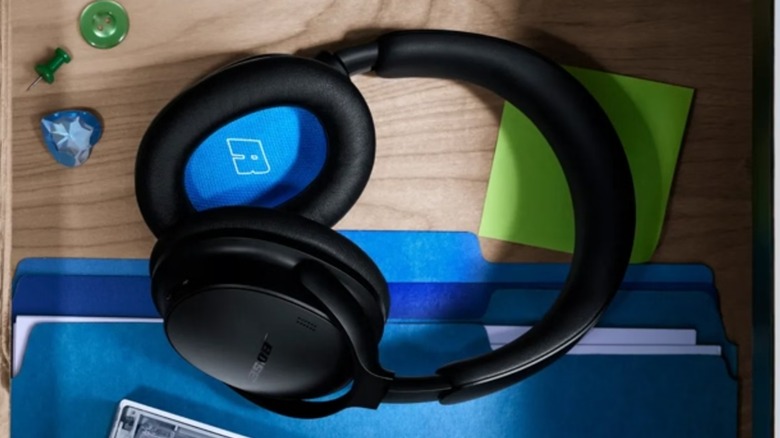
Bose is a popular audio brand. Audiophiles don't exactly like Bose, since you can find better options for less if you know where to look, but for the average customer, Bose products offer excellent audio quality. While counterfeiters try to take advantage of this knowledge and trick people into buying knockoffs, like a Scarlet King Snake trying to pass itself off as a Coral Snake, there are telltale signs, and we don't just mean lower-than-usual sales prices.
Usually, you can discern genuine Bose products from fake ones — the same is usually true for other brands — just by looking at the logo. If the product is supposed to have the name "Bose" printed on the case, the genuine article will have it printed clearly, whereas a fake product's logo will be faded, missing, or otherwise off (e.g., the font is too thick). Alternatively, if the device uses an embossed or debossed logo, a phony will opt for a printed logo. Another telltale sign is the lack of an LED indicator light — real Bose products have them, fakes do not.
Product irregularities don't end with just the logo and LED status light, but the precise differences vary from item to item. For instance, headphones might lack adjusters and holes in the outsides of the cups, or the charging port on a case might be in the wrong spot. Sometimes the buttons of certain products are out of order, or they have some but not all of the advertised LED lights. Depending on the product, you might need to make a side-by-side comparison between what you bought and what you tried to buy.
Some signs are more than skin deep
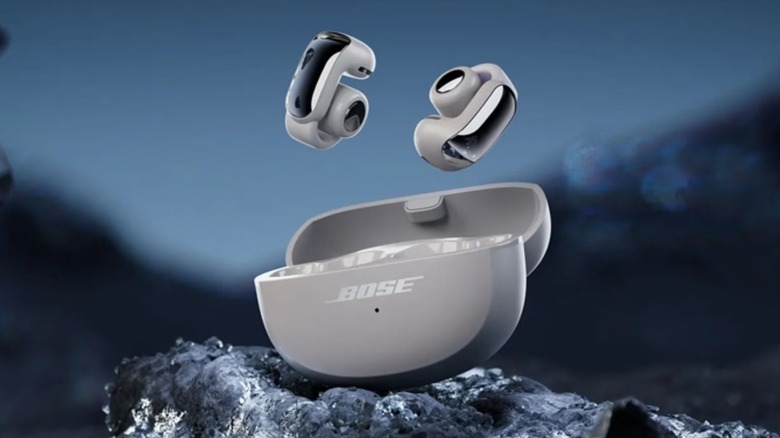
More often than not, you can identify a fake Bose product by sight alone. Counterfeiters always cut corners, often to the point that the devices essentially advertise their phony natures. But even if these items pass a visual inspection, they usually don't hold up to closer scrutiny.
If you ever get a Bose product in hand, odds are it will just feel cheap. Maybe the headphone headband comes off far too easily, or perhaps the buttons on the device feel spongy. Certain items, such as earbuds or headphones, might not fit properly even after adjusting them. While Bose speakers tend to last around a decade, which is a decent lifespan, fake products fail within a few scant months (if even that) due to their comparatively shoddy construction.
Let's say a Bose device passes physical inspections. You will know if the gadget is a fraud almost immediately after you start using it because counterfeiters almost always skimp on the internals. Audio quality is always poor and never consistent: sound might be distorted, or one speaker might be louder than the other. But if all else fails, try to connect the suspected sham to the Bose app or updater. If it can't, you've more than likely got a counterfeit, and on the off chance it is a genuine product, you should return it anyway because it's defective.
How to avoid fake Bose products
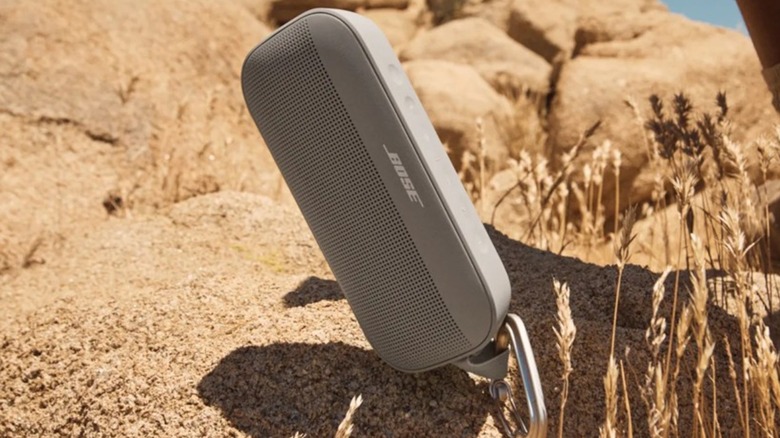
Counterfeiters are getting better at passing off their products as genuine articles. If you find what looks like a Bose product box at a thrift store or flea market, you probably won't know whether the container houses a knockoff until it's too late. However, you can lower the odds of buying a phony if you know where to shop.
Your best bet is to purchase Bose items from reputable retailers. The company has its own dedicated section in stores such as Amazon, Target, and Best Buy, but always make sure you're buying directly from these stores, not from a third party selling their wares through these websites. On the opposite end of the probability spectrum, avoid buying Bose products off sites such as Temu and AliExpress. While you can buy plenty of genuine items off these sites (mostly products that are difficult to obtain outside of Asia), if you buy some "Bose headphones" from Temu, they are almost guaranteed to be replicas.
To be perfectly blunt, the only way to guarantee you won't receive a bogus Bose is to order directly off the Bose webstore. You will probably end up spending more money, if only because Amazon won't tack on shipping fees if you have an Amazon Prime subscription. But it's the only way to be sure.