

Wildfires Are Costing The World Billions Of Dollars In Lost Solar Power
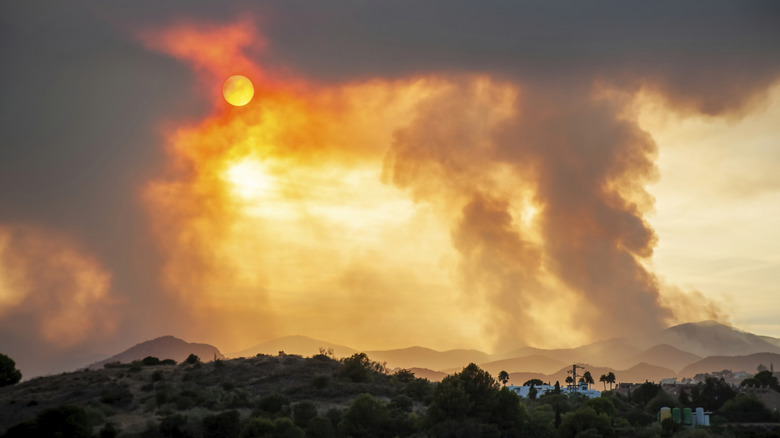
The most serious wildfires can cause widespread destruction and force thousands to flee their homes. They can also claim lives. In recent years, drier summers and arid conditions have contributed to increasingly dangerous wildfires in many regions around the world, with seemingly endless news reports detailing the resulting damage. A less obvious consequence of these catastrophic events, but one that's gaining attention, is the impact that the fires' thick smoke can have on solar power generation, whether the panels are part of a large solar farm, on a commercial building, or on the roof of your home.
A study published in Nature in July 2026, for example, estimated that smoke from record-breaking wildfires in Canada in 2023 had the effect of reducing solar power production. The researchers found that smoke and airborne particles blocked or scattered some of the sunlight that in regular conditions would've reached solar panels, and as a result they produced less electricity. The researchers' model estimated that the atmospheric effects of emissions from the Canadian fires across five months caused a total loss of around 6.38 terawatt-hours (TWh) of solar power generation across North America and Europe.
The reduction represents around 2.8% of all solar electricity generated in those regions during those five months, and was estimated to have resulted in an economic deficit of around $1.9 billion, not to mention some 2.1 megatons of associated CO2 emissions. However, the researchers note that there's considerable uncertainty around their estimates. Smoke that billows from wildfires isn't the only issue facing solar power. Let's look at other challenges affecting the efficiency of solar panels, and the best ways to tackle them going forward.
Other challenges facing solar power
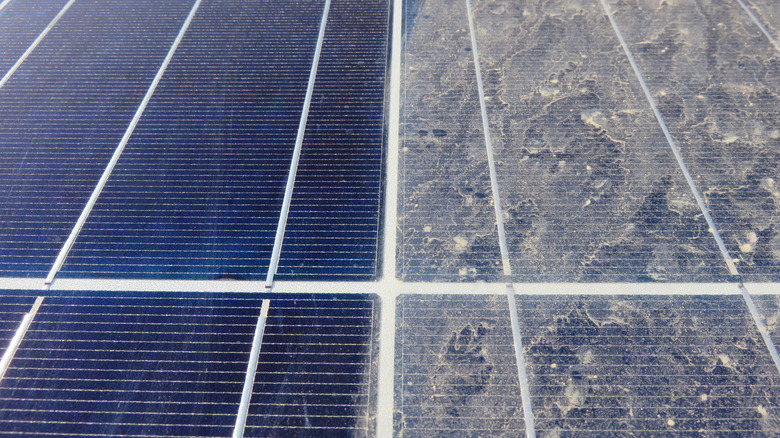
Wildfire smoke is clearly having an impact on solar generation, but it's not the only factor that can reduce solar panel performance. Emissions from vehicles and coal-fired power plants, for example, can also have a marked effect on the amount of sunlight reaching a panel, while dust from activities like construction and mining can accumulate directly on a panel's surface, reducing its output. With such challenges likely to continue, and governments looking to increase their use of solar power as they pivot away from fossil fuels, what can be done to minimize their impact on electricity generation?
Until a way is found to realistically tackle the huge challenge of reducing wildfires, the next best thing is to work on improving solar-power forecasts so they become better at allowing for the effects of smoke. This would enable grid operators to better anticipate falls in solar generation and arrange alternative sources of electricity in advance, helping to prevent potential shortfalls in supply while also keeping costs down. In fact, there's evidence that improved forecasts will make a real difference. A 2025 study at Cornell University developed a machine-learning model to predict solar generation during severe smoke events. The researchers found that their model significantly outperformed the existing forecasts used by New York's grid operator, suggesting that more accurate forecasts could indeed help grid operators better match electricity supply with demand when smoke reduces solar output.
When it comes to vehicle and industrial pollution, the most obvious solution is to reduce particulate emissions at the source by using cleaner technologies and stricter pollution controls. For dust from construction and mining, better dust-management practices can reduce how much reaches the panels, while more effective and regular cleaning can help restore output when dust accumulates.
The threat to solar panels isn't only from the air
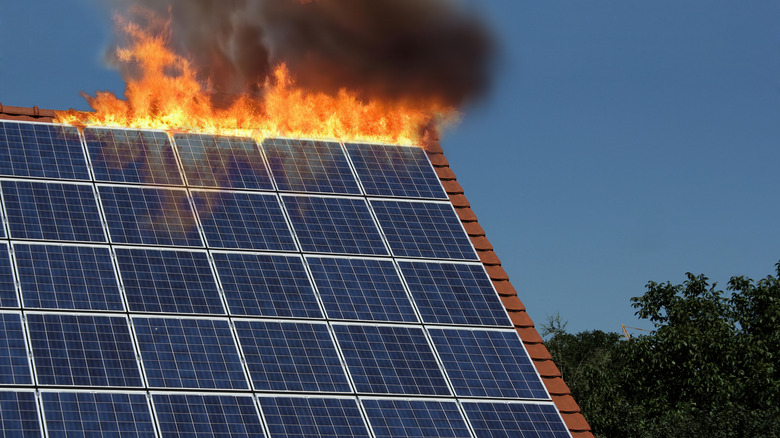
While wildfire smoke is clearly a serious challenge for the solar industry, another major threat is the fires themselves causing physical damage to solar farms. Indeed, the U.S. Department of Energy (DOE) has already identified wildfire damage as a danger, saying it could set solar panel systems alight or melt components that help to run them. In fact, it's already happened. In July 2026, a solar farm operated by French firm Luxel was caught in the path of a wildfire in southern France.
Around 100 of its 43,500 panels were damaged, along with several cables, although its transformers and inverters survived and remained operational. The relatively limited damage appeared to be mostly down to effective management of nearby vegetation, which can provide fuel for an approaching wildfire. It demonstrates how such a measure can help make solar farms more resilient. Luxel said that regular clearing work on the site, including a 50-meter perimeter area around the fences, helped prevent the flames from reaching most of the facility.
Such forward planning is also recommended by DOE. It advises solar operators at locations at risk of wildfires to maintain a defensible space around installations by regularly managing vegetation, and also by paving areas around important equipment. It also suggests placing vital electrical equipment inside fire-resistant containers, ensuring that firefighters can access parts of the site quickly and easily, and creating and update a wildfire emergency-response plan. As the use of solar power continues to grow, the challenge won't only be to improve the technology so that it can generate more electricity, but also to ensure that the systems behind the solar farms are able to withstand the myriad of environmental threats that could disrupt their operations.