

4 Common Problems Owners Have With Portable Solar Panels
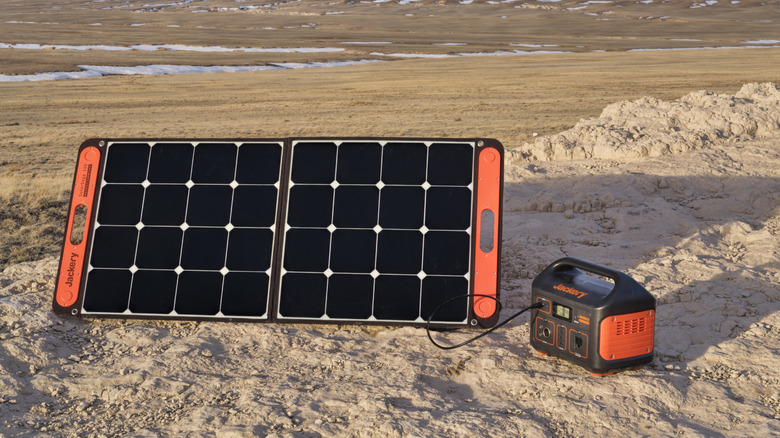
Portable solar panels are a smaller version of their much-larger, residentially and commercially installed counterparts; they do the same exact thing, as well — generate energy from sunlight and convert it into electricity for use with various devices. Of course, the portable aspect makes them useful for a wider variety of applications than conventional panels.
For example, you can use them to power lights and radios, or even to charge your devices, like cameras and phones, while camping. You could also bring them with you to the park, the beach, or use them in your backyard. There's really no shortage of devices you can power with portable solar panels, like portable projectors, satellite routers, mini refrigerators, and beyond. For the most part, their modern designs make them easy to use. If they have an integrated USB port, you can plug your devices directly into the panel to charge.
Generally, you'd want to connect the panels to a large battery or a portable power station, as the panel charges the station and you can draw energy from that. But solar panels can also be notoriously finicky depending on what's going on. If it's cloudy, the panels are dirty, or the cables are loose, it can create some issues, particularly with low power delivery that doesn't charge much, and that's just the start. Luckily, there are usually ways to deal with most issues portable solar panels have.
Insufficient or low energy generation
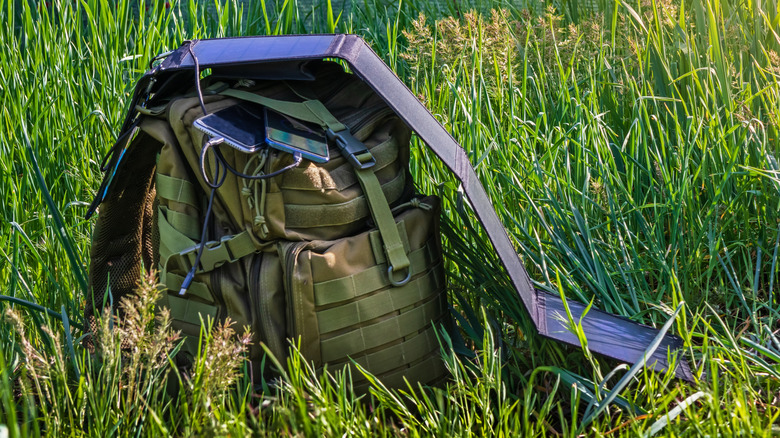
Several factors can inhibit the efficiency or total energy generation of a solar panel, though not all issues are necessarily fixable. A dirty panel, for instance, is easy enough to clean, but problems with a built-in inverter or charge controller might require you to replace the panel altogether. The same is true of physical damage. Those lines on solar panels aren't just for decoration; they have a purpose. If they're impacted or interrupted in any way, it can alter the panel's energy production.
Clean the panel regularly. Rinse them off if they have water-resistant housing, or use a damp sponge or soft brush to clean residue. Try finding a more suitable placement or adjusting the angle of the panel to see if energy generation improves. It could also be that you're trying to charge your gear during off-peak hours when the sunlight isn't as strong. Moreover, try plugging different devices into the panel, if that's possible with your model, and determine if there's a difference in the energy supplied. If you connect a phone and it seems to be getting more power than a power station, the station might be the issue, not the panel.
You should also double-check the panel you're using is compatible with your power station or battery. Power stations often have a solar input limit, which regulates the maximum input even if the panel is stronger. There's also the point that solar panels don't always generate their maximum power. A 200-watt solar panel may not hit that peak consistently. You may see less depending on panel placement, cleanliness, weather conditions, and even the equipment's age.
Panels that are overheating
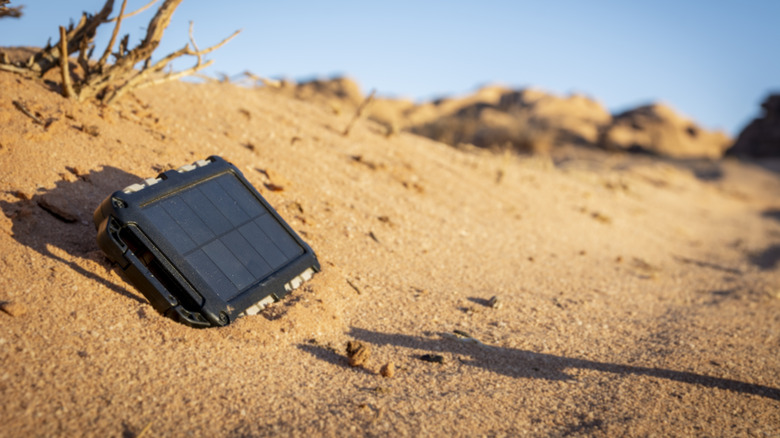
Believe it or not, solar panels work best at lower temperatures, which seems contradictory considering you need to place them in direct sunlight and effectively the sun's heat. It's because extreme or hot temperatures affect the components inside the panels, primarily the semiconductor bits. Those extreme temperatures can also cause damage to the photovoltaic cells and other critical modules. This is precisely why solar panels don't work well during a heatwave, which so much of the world is experiencing, as of August 2026.
On a smaller scale, when you're using portable solar panels, you have to consider proper ventilation for the panels and internal components. Always leave enough room for airflow, constantly check heat buildup around connections, like where the panels plug into batteries or stations — check those stations, too — and adjust where the panels are placed to reduce heat exposure after long periods of use. Keeping the surface of the panels clean is also important, as dust and debris gathering on top can reduce naturally designed heat-dissipation capabilities. Ultimately, the optimal placement of your panels, big or small, is a huge element of using them not just for maximum efficiency but also to improve active performance and long-term reliability.
No power supplied to batteries, stations, or devices
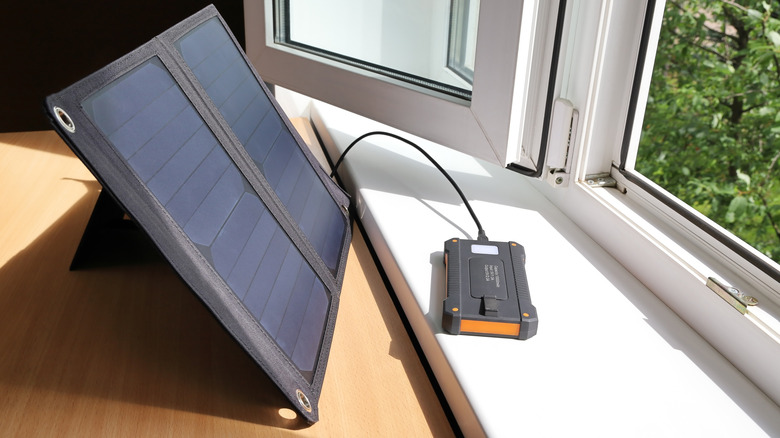
There's also the possibility that your panels are supplying no power whatsoever, meaning they won't charge your batteries, power stations, or smaller devices. This occurs because of a technical error that could be due to a faulty panel and its components or the devices you're using, like an unreliable power station. Problems can manifest in the charge controller, inverter, or other hardware components related to the panel's connections; damaged diodes or broken connectors can also cause power supply issues.
To figure out the culprit, inspect the status lights on the charge controller. It may show an error. If not, use a multimeter to test panel voltages and check the inverter's activity. Also test your external battery or power station to rule out those being the source of the problem. Moreover, inspect all terminals, ports, and connectors, and look for corrosion, debris like lint or dust, or buildup. You may need to clean out the connectors to ensure the metal contacts are working properly.
I have a power station that came with a portable panel; it folds up and tucks inside neatly. Every once in a while, when I unpack the panel and plug it in, it appears as though nothing happens. The contacts inside the cable's connector aren't properly matching up with those inside the station's port. A quick reseat — taking the plug out and putting it back in — usually solves the problem.
Decreased efficiency over the long-term
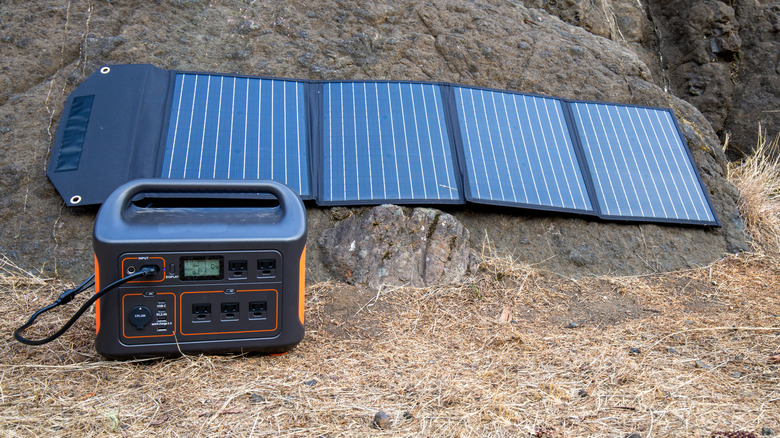
All panels degrade over time, meaning they lose efficiency the longer they're out in the wild. In short, they age. Most panels inevitably lose around 0.5% to 1% of their efficiency per year, on average, but the rate also depends on the type of panel or technology in question and other factors, including regional location, temperature, and climate. Portable solar panels are no exception, especially if you consider that they'll be constantly moved around, exposed to varying temperature and humidity conditions, packed and folded, exposed to dirt, dust, and other contaminants; it's entirely possible they could degrade faster.
However, if you notice your solar panel degrading faster than usual, something else could be happening. The manufacturer will usually supply this information in product descriptions, user manuals, and official documentation so you can compare rates. Due to the nature of panels and so many of the internal components, the problem could be anything from faulty wiring and manufacturing defects to hardware and module failures and beyond.
It may be easiest, and less troublesome, to assess the rate of degradation and replace the panel when the time is right, versus trying to track down what's wrong with the panel, unless there's a steep decline or a sudden drop. You could also try to contact the manufacturer and request a panel replacement or RMA if those options are available.