

Europe Is Trying To Fix Wind Turbine Bird Collisions - Here's How
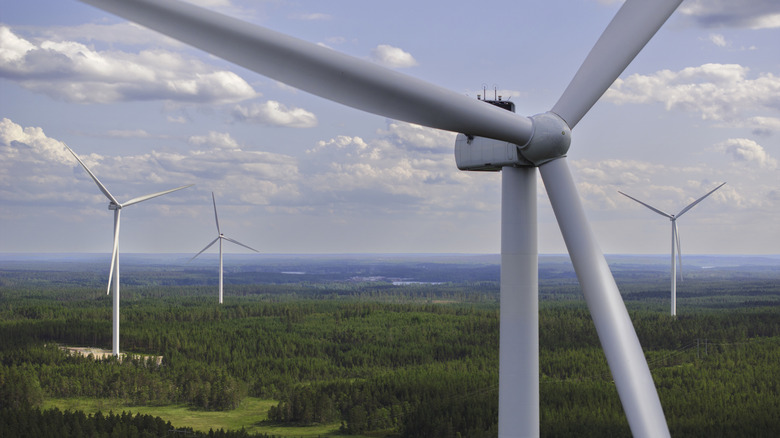
The American Bird Conservancy estimates that 700,00 to over a million birds die per year from collisions with wind turbines. In the grand scheme, those numbers are likely lower than incidents related to cats, buildings, and cars, which are attributed to far more bird deaths. But it's also a nuanced situation, as rare birds have been affected, like the thousands of golden eagles killed by turbines in the Altamont Wind Resource area. Spurred by such developments, many have called for action to find ways to reduce those numbers, if only to preserve endangered species.
The good news is that a lot of related research is already underway. For example, Norwegian researchers painted wind turbine blades black so they contrast more with the surrounding environment, which was shown to reduce collisions. In addition, eagles kept dying at Wyoming wind farms until researchers installed automated cameras, also equipped with AI monitoring, to stop turbines when birds flew too close. Europe is now experimenting with a remarkably similar approach using a collision avoidance system called SKARV. Like the Wyoming eagle setup, SKARV utilizes cameras to detect approaching birds and then employs AI to predict their flight trajectories. The system then adjusts the pitch and speed of turbine blades to reduce the likelihood of a collision.
The flight paths of incoming birds are first recognized using a land-based radar. If they continue to approach the facility, another turbine-mounted camera will feed the AI updated details, informing the slowdown or stoppage. This precise system can help minimize shutdowns, optimizing power production, while also benefiting the birds.
Why do birds collide with wind turbines?
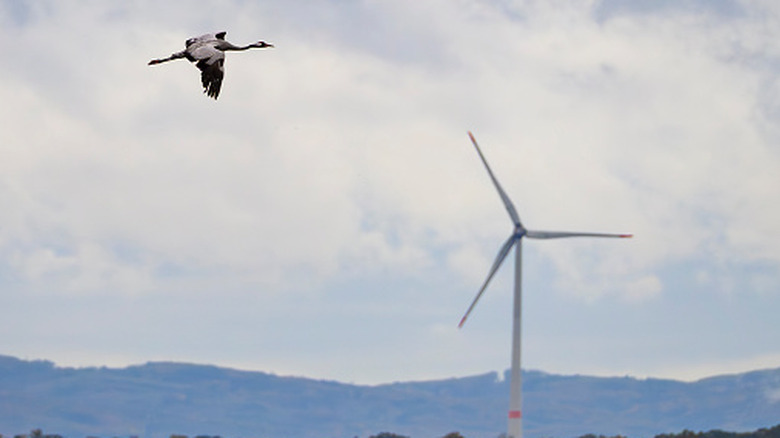
Researchers believe birds collide with the massive structures because the moving or rotating blades appear as a blur, so when they're meters ahead, the birds can barely perceive them. As the birds fly closer, the blur of the rotating blades retains a visual effect called a motion smear. To make matters worse, many birds aren't looking straight ahead while flying: They're actually looking downwards, for prey or mates, or watching laterally for threats.
The black paint that many avoidance systems use essentially makes the wind turbines more visible to birds, rather than just appearing as a large motion smear or blur. But more sophisticated systems like SKARV actually slow the blades down, allowing the birds to better see the object while also giving them more time to fly through the rotor area without a collision.
SKARV is currently in the knowledge-building phase, which means researchers and the development team are still learning more about the technique and its impact. The project duration is scheduled to run from 2024 until some time in 2027. We will soon learn if it had a major impact and helped overall. Meanwhile, another unique alternative, being developed elsewhere, is the possibility of new bladeless wind turbines, which could be a real game changer.