

This Ohio Solar Farm Houses An Unexpectedly Massive Bee Colony
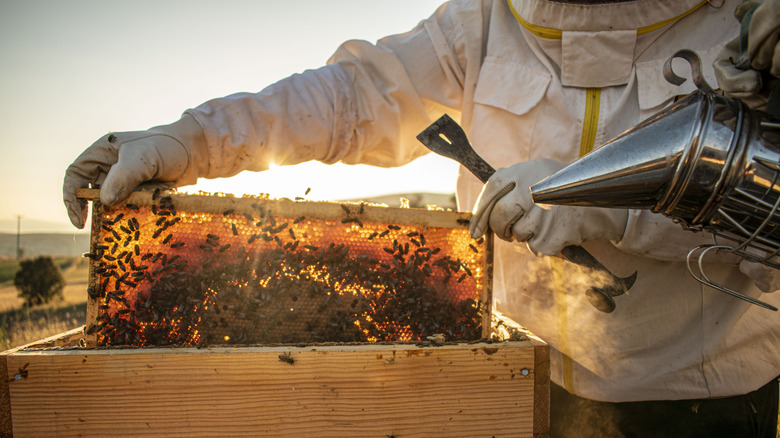
It's astounding how little we know about the positive effects solar panels can have on local environments. For example, Minnesota solar farms are having an unexpected effect on local insect populations. Elsewhere in the world, solar farms in Tibet are helping local residents by creating a prime "solar grazing" environment for livestock. But one of the biggest solar-panel surprises was in Ohio, where a solar farm became a remarkably suitable home for a massive bee colony.
The Big Plain Solar facility in Madison County, Ohio is a 1,500-acre solar farm owned by Leeward Renewable Energy (LRE). With so much land unused beneath those solar panels, LRE decided to collaborate with Frontline Hives and Wind & Sky Apiaries to establish more than 50 beehives at the Big Plain Solar facility. That may seem like a relatively small number of hives for so much land, but together they house a grand total of around 3 million bees.
How eco-friendly initiatives affect solar farm workers
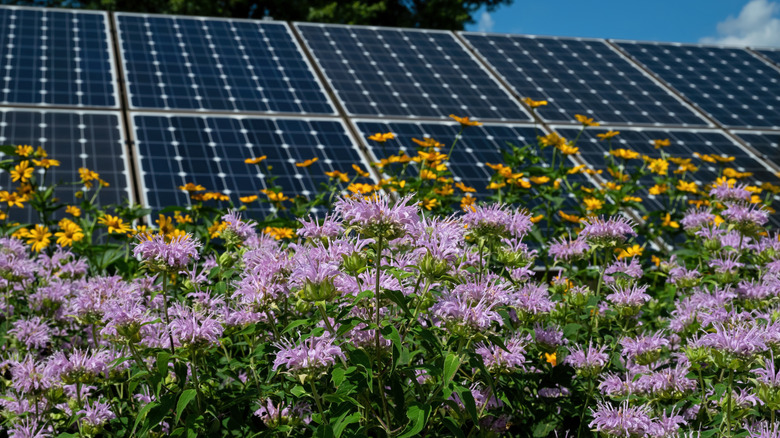
There's no doubt that the massive bee colony at Big Plain Solar is a boon for the environment. After all, bees are facing a population decline despite being crucial pollinators for flowering plants and food crops. The collaboration between LRE and Frontline Hives ensures a healthy population of honeybees in Madison County, and the plants pollinated by those bees provide clean air and prevent soil erosion.
But what does this mean for solar-panel technicians who are required to venture out into a field teeming with bees? Those technicians most likely aren't interacting with any swarms or hives. LRE maintains its sponsorship of Frontline Hives, which contracts veterans and first responders trained to care for the beehives on LRE property. If anything, employees at the Big Plain Solar farm simply get to enjoy the benefit of working in a beautiful, bountiful environment.
This isn't the only time when working at a solar farm was a gratifying experience. Solar panels over crops are providing a benefit for Arizona farmworkers in the form of essential shade that helps prevent heat stroke. The dual-purpose use of solar farmland has proven to be advantageous for crops, livestock, and even wildlife, and more innovations are sure to come.