

Star Trek's 5 Best Captains (Not Counting Kirk), Ranked
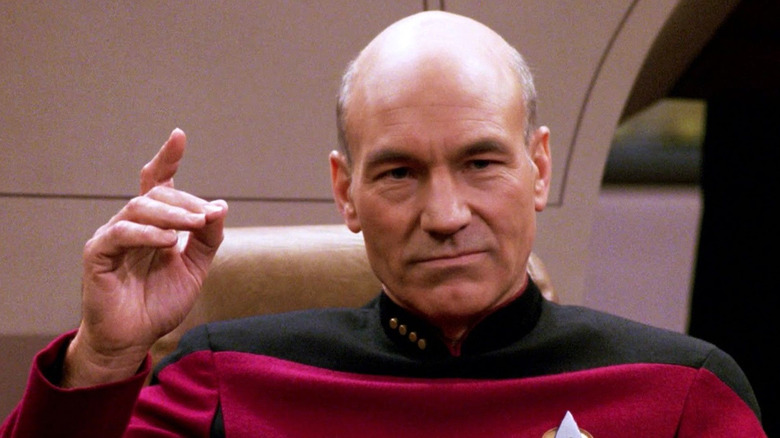
"Star Trek" is full of various captains taking command of various starships. While we could sit here and highlight Captain Kirk on yet another list, why bother? We've got so many variations of Kirk; we've even ranked all the Kirks. From Saru in "Discovery" and even a one-time Captain of the Enterprise in "The Next Generation," these are the best captains that don't include the iconic James T. Kirk.
Of course, "Star Trek" has only had a handful of onscreen lead captains. We'll be focusing on that, rather than temporary captains or commanders of different stories. We often don't get to peer further than the story permits, even if they lead to some excellent moments.
You'll also notice that there's no Michael Burnham ("Discovery") or Captain Pike ("Strange New Worlds"), which, when they get written into good television shows, we'll talk about. Maybe one day we'll rank all the non-Starfleet captains, pitting Klingon against Cardassian.
5. Captain Jellico
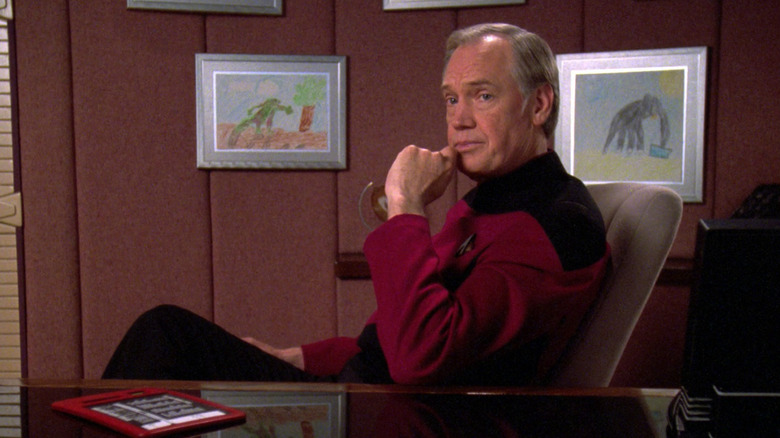
When Picard, Worf, and Dr. Crusher are sent on a mission to destroy a Cardassian weapons base, Captain Jellico takes over command of the Enterprise in "The Next Generation" two-parter, "Chain of Command." Jellico is vastly different from Picard in that he's not as lax as our favorite bald-headed captain. Initially seen as a potential bad guy for the crew to deal with while also trying to save Picard from torture, every decision made by Jellico proves why he's so good.
For instance, he refuses to admit that Picard was sent on a mission so that he can become a prisoner of war instead of a terrorist, but does so for completely logical and strategically relevant reasons. He asks Deanna Troi to change into a regular uniform, something that then became a permanent change through the rest of the show. His style is that of business first, luxury later. In fact, his "catchphrase," rather than a polite ask from Kirk or "Make it so," from Picard, is "Get it done." He even dresses down Riker, as he disagrees with his command style.
Jellico's leadership ensures that Picard manages to survive and escape Cardassian imprisonment. That said, it's great to see the differences between Picard and Jellico. In the background of the ready room, you can see children's drawings; unlike Picard, who has very little reflection of who he truly is on the job.
4. Saru
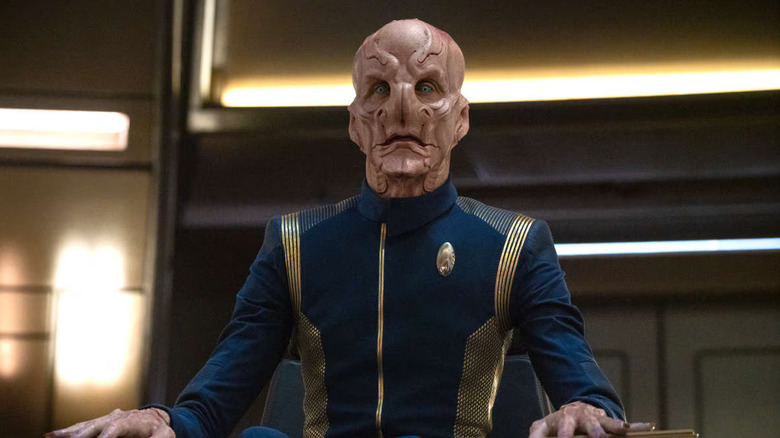
Only briefly captain in the latter half of Season 3 of "Star Trek: Discovery," Saru remains one of the more interesting choices simply due to him being completely alien. Sure, "Discovery" might suffer in the writing department, but it's still a cool decision and not one we see from the Federation side of things often. It's a highlight of the show as a whole, regardless of the overall quality.
Saru's time as captain remains a little light to talk about, as it lasts until the start of Season 4, from Episode 5 of Season 3. That said, it'd be nice to see any future "Star Trek" projects, even if it appears the series is about to enter a state of dormancy, take on the alien Starfleet captain.
Saru even makes the tough decision that despite Commander Burnham's success on a rogue mission, to demote her. It's a shame that "Discovery" never made it permanent, as an early Federation having to contend with alien ideals would've been some excellent sci-fi.
3. Captain Janeway
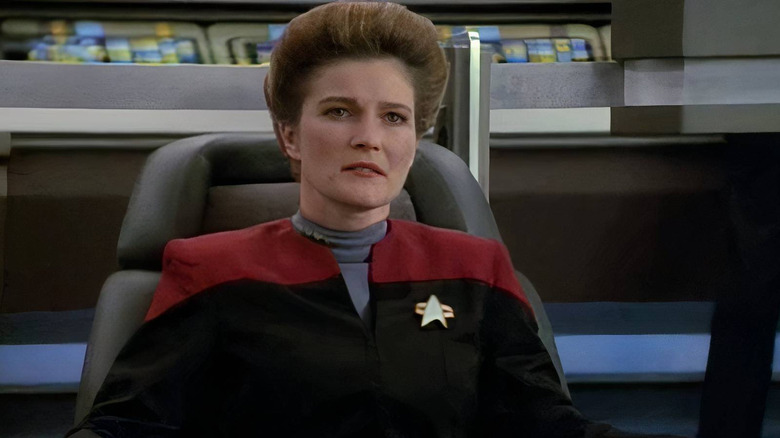
Trapped in the Delta Quadrant on the other side of the Milky Way, Captain Kathryn Janeway tries to manage both the survival of those stuck aboard the Voyager and the ever-mysterious threats that lurk in the unknown. Closer to Captain Kirk than her other contemporaries, Picard and Sisko, she deals with every problem thrown her way head-on, while still trying to maintain Federation standards.
Janeway might not have as many iconic moments as Picard, but overall through "Voyager," Mulgrew establishes Janeway as her own woman. Daring and cunning, her methods can sometimes look irrational, but ultimately have the continued survival of the crew at heart, even if that means incorporating the rebel Maquis into the ship's staff.
Eventually successful at returning home, Janeway still makes the hard decisions throughout the series that inevitably lead to more time trapped. However, as discussed during her discovery of Vulcan crewmate Tuvok's degenerative illness, her decisions are vindicated after he tells her that "millions of lives" would be saved. Empathy will always be her greatest asset. Trapped and with no support, there's the hard way, the easy way, and then the Janeway.
2. Captain Picard
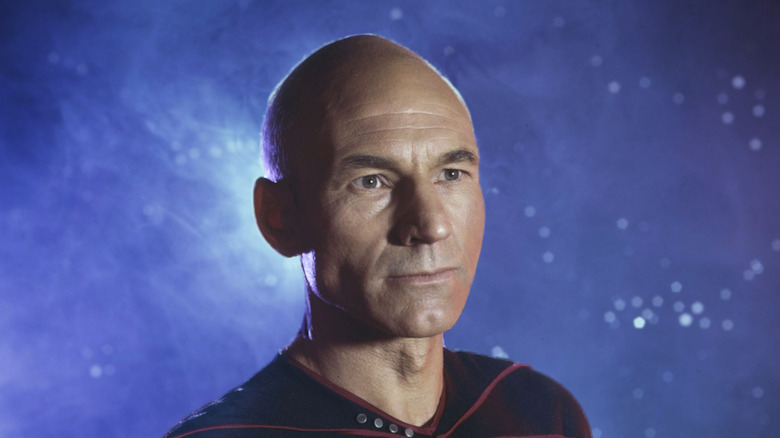
Jean-Luc Picard, the captain of the Enterprise-D, is maybe, after Kirk, "Star Trek's" most recognisable captain. Impossibly level-headed, a stern but fair leader, and incredibly astute, Picard's time onscreen in "The Next Generation" is rife with classic moments of problem-solving (as well some hated episodes).
While most will know that he's excellent in an argument, some of Picard's greatest feats in the show also illustrate just how he got to be captain of the flagship. Dealing with and building a relationship with the unprecitable Q, or surviving on a planet in "Darmok," slowly understanding how the alien captain talks to better their chances, rather than forcing the alien to learn English. Every solution is to build and fortify the good name of the Federation, and complete its mission of discovery.
That includes some key moments with his crew. One of the best examples of Picard's heroics is when Commander Data, his Android Second Officer, is threatened to be taken away as the scientist involved sees him as property, not as a being. Picard, the ever level-headed hand of justice aboard the Enterprise, proves without a doubt, using the most average of items Data owns, including a hologram of the deceased Tasha Yar (who never got enough time onscreen), that he isn't just property, but a meaningful, important part of the crew. Despite his reservations about Commander Data at times, he sees him as anyone else. The way Picard carries himself with everyone makes you wish you could too.
1. Captain Sisko
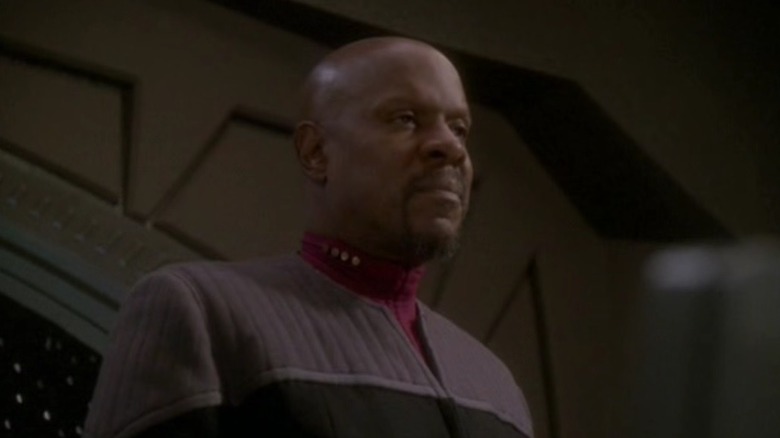
There are very few characters in classic "Star Trek" runs that truly embody that "grey area" like Benjamin Sisko. Taking charge of the far grittier and nastier Deep Space Nine, the show depicts Sisko as a fully hands-on captain, offering a more raw approach to command. "Deep Space Nine" deals with heavier themes compared to both "The Next Generation" and "Voyager." When filtered through the lens of Sisko, it brings a far more relatable character when compared to the stoic Picard and empathetic Janeway.
"DS9" sees Sisko go through the grief of losing his wife, eventually becoming a central point of the Dominion War, which was the overall focus of the later seasons of the show. Here, we see a Federation captain not back down or bluff their way through tough encounters, instead opting to embrace that grey area. The episode "In the Pale Moonlight" sees Sisko wrestle with the fact that he's essentially condoned an assassination to get his way, smacking Cardassian Garak about it when he discovers the deception.
It's always great to see actor Avery Brooks play the role, whether for the first time or as part of your umpteenth "DS9" rewatch. Sisko is a scary individual, going through with poisoning a planet when fighting the Maquis, a renegade group, or slowly getting angrier and angrier as he unravels problems and conspiracies, sometimes even with the Federation itself. However, he's often justified in getting riled up. Sisko punched Q, whom Q astutely discerns is "much easier to provoke" than Picard.