

Your OLED TV Screen Was Probably Made By LG — Here's Why
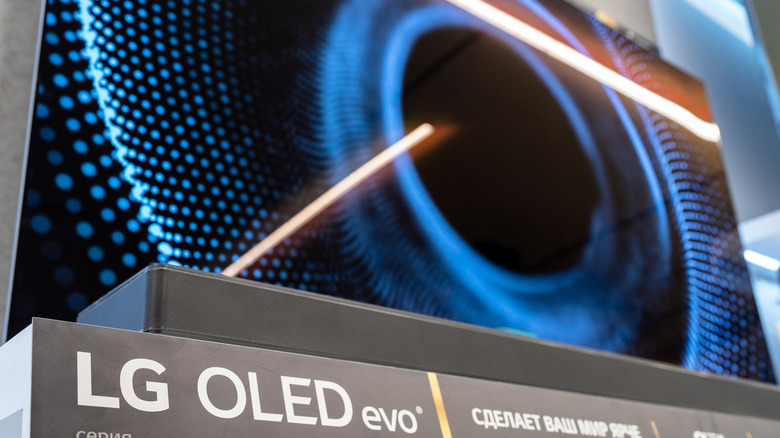
Sometimes it's easy to get bogged down in all the available choices when purchasing practically anything. After all, there are too many manufacturers, big and small, which is more than enough for analysis paralysis to strike full force. Say you're looking for the brightest OLED display money can buy. You've got LG, Samsung, Gigabyte, Asus, and many others to choose from. But do you, though? Seems like a lot on paper, until you consider that only two companies are producing most of the panels themselves.
LG and Samsung are the largest OLED panel manufacturers in the world, which means OLED displays from other brands are likely produced by either of them. Gigabyte MO27Q28G seems sweet? Well, it's using an LG WOLED. Plan on snagging ROG Swift OLED as your next monitor? Psych: that one uses Samsung's Tandem QD OLED. Breach into the realm of the best-selling OLED TVs on Amazon and the picture is nearly identical (pun absolutely intended), with LG and Samsung once again holding a duopoly of sorts. Obviously, the OLED market is competitive with a capital "C." The entire market is projected to grow from $65 billion in 2026 to a whopping $107 billion by 2031, and LG and Samsung remain leaders. In the subset of large-format TVs, LG's panels are the most widespread, so much so that even its main competitor Samsung is using its WOLED tech for some models.
How did LG take over the large OLED space?
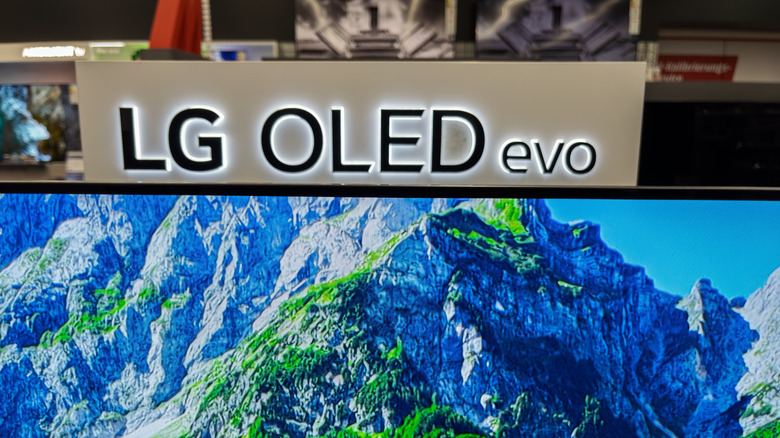
Companies outsourcing production or getting major components from others isn't that uncommon. That's why many wonder who makes the OLED panels for LG. In reality, its TVs and displays are produced in-house, in LG Electronics facilities around the globe. A juggernaut in the true sense of the word, LG remains a prime producer of OLED televisions at the moment. Considering its overall domination in the market, you'd assume LG was the pioneer in OLED televisions during the tech's inception. However, LG won out because it was persistent during the time when other companies pulled out.
The story is particularly interesting because LG was technically late to the game. In 2004, Sony introduced its first OLED TV, and other manufacturers (Panasonic being one) also experimented with the tech. While it wasn't until 2010 that LG made its debut in this particular industry, the company made it count by producing the first-ever 55-inch OLED panel. So, how did it take over things? Simple: just a year later, both Panasonic and Sony stopped making OLEDs, because at the time, they simply weren't viable. LG, on the other hand, doubled down on the tech, and the rest is, as they say, history.
Of course, Samsung eventually debuted its own line of OLEDs, but by that time, LG was the de facto leader on the front. It got so big and productive that other manufacturers used its panels. Panasonic, Philips, you name it: chances are, if it was OLED, LG Electronics provided the sauce.
Can anyone shake up the LG/Samsung duopoly?
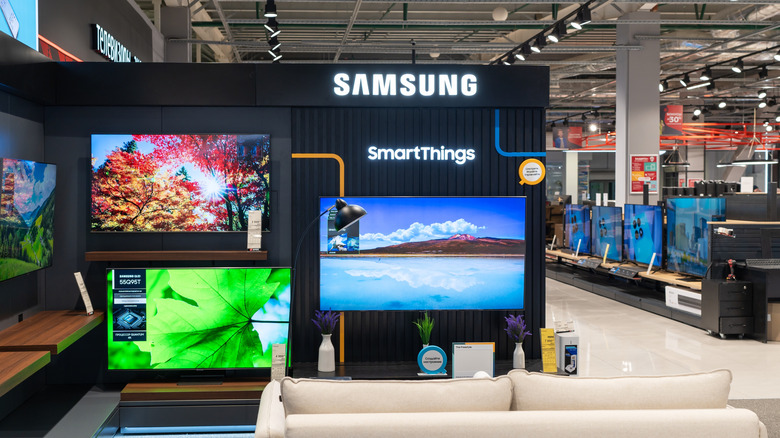
The two giants are leading the charge, but they're not the only players with chips in the game. Samsung, in particular, is facing heavy competition from another manufacturer in China: BOE Technology. This company holds about 13% of the global market. Though it's slowly breaching into the TV segment, BOE is already delivering flexible and rigid screens for smartphones. In fact, it's producing panels for the likes of Honor, Oppo, and Huawei.
Zoom out further and other manufacturers (also China-based), like Visionox and CSOT (along with the aforementioned BOE), accounted for more than half of OLED revenue in 2025. This is limited to IT users and smartphones rather than TVs, but still, it's an impressive feat nonetheless. There's also heavy indication that the growing prevalence of Chinese manufacturers in the market shook up both LG and Samsung. These Chinese manufacturers have two things going for them: low prices and high volume. It seems that the current market leaders are increasingly targeting the higher-end of the OLED market instead of dabbling in the lower-end
Regardless, OLED TV shipments are getting larger and larger (sales saw a 20% increase in Q2 2026), and LG Display remains the biggest force in the biz. It may take years until its competitors dethrone it, and until then, you'll likely continue enjoying your LG panel — even if the TV itself doesn't say "LG" on it.