

5 Of The Brightest OLED Displays You Can Buy
We may receive a commission on purchases made from links.
When it comes to bright-room performance, LED displays are typically the best screens for combating glare and amplifying HDR details. That said, the best OLED TVs, monitors, and phones have gotten a lot brighter over the past few years. Revered brands like LG continue experimenting with cutting-edge panel tech to deliver the brightest picture possible, and the results are pretty impressive. Classically, OLED panels perform best in a darker space, and that's still true for the most part. The big difference today, though, is that many OLED screens are equipped with brightness-enhancing features. Don't get us wrong: We love celebrating the pros of a great Mini LED TV or monitor over an OLED whenever possible, but we already expect these screens to look bright and colorful in a room filled with ambient lighting. Now, you can count on several OLEDs to do the same.
While not every OLED screen is going to deliver exceptional brightness, there are a handful of TVs, monitors, and phones that push illumination to the next level. In this article, we'll be highlighting the top performers in each category based on their brightness performance, in no specific order. It's worth noting that there's often a difference between HDR and SDR brightness, with the former offering enhanced brightness specifically for specular highlights — quick flashes of light localized to a single area of the screen. It's also worth mentioning that TVs often achieve much higher brightness ratings than desktop monitors, because the latter are optimized for viewing static content up close.
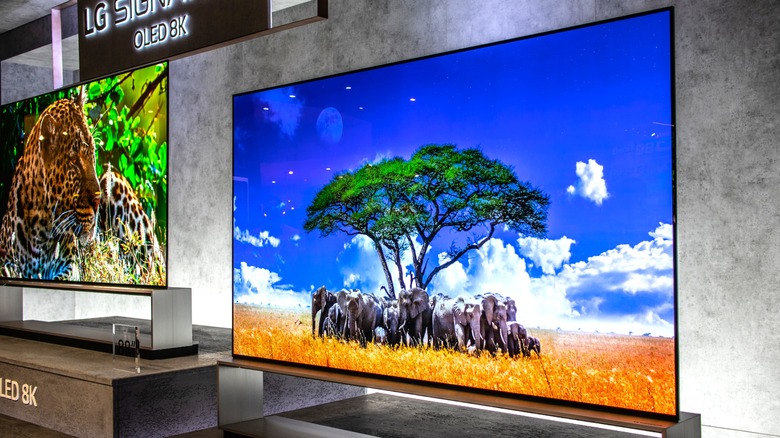
LG G6

Not only is the LG G6 Series the brightest OLED TV that LG has ever produced, but it's also one of the highest-rated OLED TVs on the market. When watching an HDR movie or show, the LG G6 can deliver around 3,100 nits for specular highlights, and over 700 nits for an image that takes up 50% of the screen in independent tests by FlatPanelsHD. For SDR brightness, the TV pushes over 1,100 nits when set to its Vivid preset. That's incredibly bright for an OLED TV, and ratings that many cheaper LED TVs struggle to hit.
LG's Hyper Radiant Technology — a combination of hardware and software optimizations — helps to enhance both peak and color brightness even further. Additionally, the G6 excels at reducing glare from light sources, such as windows and lamps, thanks to its glossy panel. Other features include HDMI 2.1 on all four inputs, a 165Hz supported refresh rate for PC gaming, and Dolby Vision support. There isn't much missing from this flagship TV, save for HDR10+ and DTS support. If you want one of the best OLED TVs money can buy, the LG G6 is quite the contender. The TV is available in numerous dimensions, from the smallest 55-inch version to the gargantuan 97-inch model.
Samsung S95H
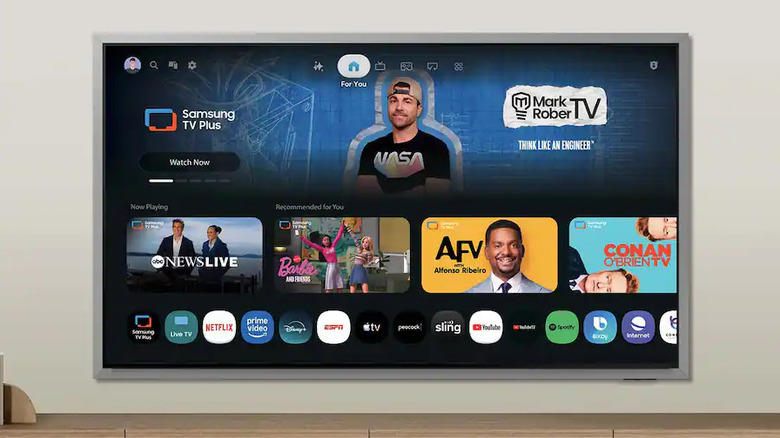
No impressively bright OLED TV discussion would be complete without mention of the Samsung S95H. This is the company's 2026 OLED flagship, which actually uses a QD-OLED panel. Historically, these types of displays are renowned for vibrant, rich colors and strong, bright-room performance. The S95H is no exception, as the TV pushes up to 2,700 nits in HDR, and just over 800 nits for a 50% sustained window, as confirmed by FlatPanelsHD.
Spec for spec, the LG G6 wins the brightness battle, but when you set the Samsung S95H's HDR Tone Mapping to "Active," overall brightness gets a big boost. The S95H delivers solid SDR brightness, too, and the matte coating all but eliminates glare and reflections. Samsung TVs swap Dolby Vision support for HDR10+, and just like the LG G6, the S95H also doesn't support DTS. If you own a large Blu-ray collection, this could pose an issue if you plan on connecting your player directly to the TV. The S95H also delivers a native 165Hz refresh rate, has four HDMI 2.1 inputs, and rocks the 2026 version of Samsung's Tizen-powered One UI for all things user interface and smart TV. It's one of the brightest OLEDs on the market, and perhaps the best OLED Samsung has ever made.
Gigabyte M027Q28G
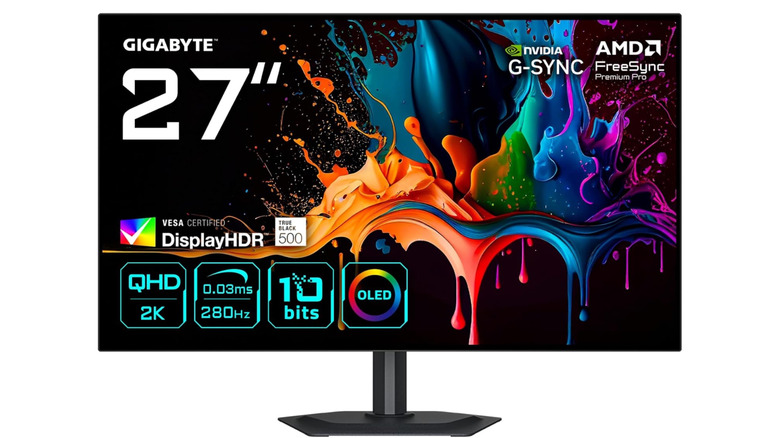
The Gigabyte M027Q28G is a great example of an OLED gaming monitor that punches above its weight class, especially when it comes to HDR visuals. The M027 uses an RGB Tandem panel, which helps the monitor to amplify specular details. Gigabyte advertises 1,500 nits, but in lab tests by PC Mag, the M027 delivers just over 1,300 nits for a sustained 2% window when gaming in HDR and when using the HDR Peak 1500 preset. In a world where most gaming monitors struggle to hit 1000 nits, this is still ridiculously impressive.
The M027 supports HDMI 2.1 on its two inputs (capped at 24Gbps), and features a DisplayPort 1.4 connection, in addition to a small USB hub and built-in speakers. While resolution is limited to 1440p on this model, the monitor boasts a native 280Hz refresh rate with a lightning-quick 0.03ms response time and exceptionally low input lag. The Gigabyte M027Q28G perhaps isn't going to be the first 27-inch OLED gaming monitor most folks will look for, but truth be told, you get what you pay for in the world of gaming-optimized screens, and Gigabyte has a solid track record when it comes to wowing both discerning experts and everyday users.
Asus ROG Swift PG32UCDM3
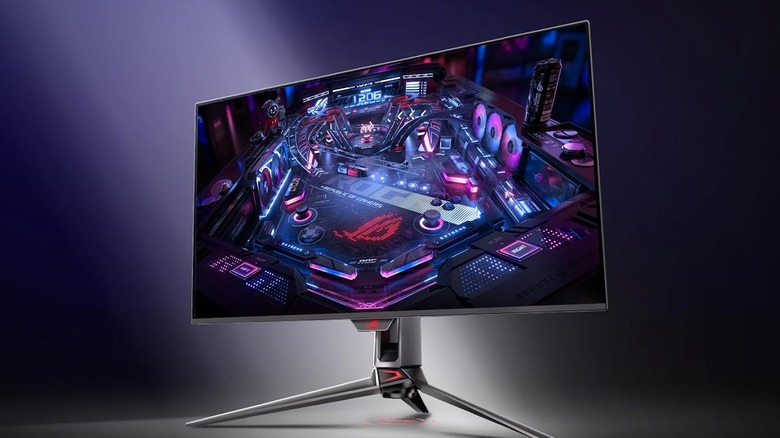
Next up is an OLED gaming monitor from one of the more recognizable names in the desktop display world: Asus. The Asus ROG Swift PG32UCDM3 supports up to 4K/240Hz, and is able to hit over 1,000 nits when gaming in HDR (via TFT Central). Similar to the aforementioned Gigabyte screen, the ROG Swift rocks a Tandem panel for enhanced brightness along with quantum dots. That means you can expect a wide color gamut and vibrant, rich hues with minimal banding.
The ROG Swift has a glossy screen that does a solid job at handling glare and reflections. That said, there is a fair amount of black level rise when the monitor is exposed to a lot of ambient lighting. As far as inputs go, there's a DisplayPort 2.1 connection and two HDMI 2.1 ports, both rated up to 48Gbps. There's also a decent USB hub with Type-A, Type-B, and Type-C ports, the latter of which can even be configured for DisplayPort Alt Mode, which charges a laptop while sending video to the monitor. If you're planning on using the ROG Swift for things like basic word processing, text clarity can be a bit of an issue. It's because of the QD-OLED panel subpixel layout, and it's a common drawback you'll come across on many QD-OLED screens.
Google Pixel 10 Pro
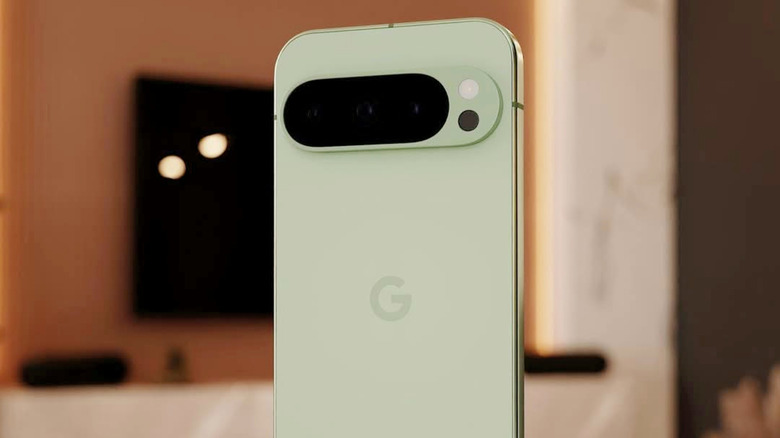
OLED displays have been used on smartphones for quite some time, and these are the types of devices that need a bright screen. Fortunately, the Google Pixel 10 Pro is pretty capable when it comes to overall illumination. This Android phone has a Super Actua LTPO OLED officially rated at a whopping 3,300 nits of peak brightness and 2,200 nits of HDR brightness. The Pixel 10 Pro also supports up to 2,856 x 1,280 pixel resolutions and offers a 120Hz refresh rate, making it a solid phone for gaming.
Several publications have put the Pixel 10 Pro through its paces, including your pals here at BGR. In our hands-on review, the Pixel 10 Pro impressed in multiple categories, especially when it came to software. Google claims you'll get up to seven years of OS updates, so you'll be able to stay on top of security patches and performance enhancements. It's also worth mentioning that the base Pixel 10 is a decent alternative if you want to save a few bucks, but it's a little less bright and is missing some of the Pixel 10 Pro's more advanced features. The Pixel 10 Pro's camera system is a force to be reckoned with, too. With four lenses, incredible zoom capabilities, and a medley of AI photo tools, you'll be floored by the image quality this Google phone delivers.
How we chose these bright OLED displays
At first glance, the phrase "bright OLED display" may read a bit like an oxymoron. Traditionally, these are the types of screens that fare best in a darker room, which still holds for the five products we featured in this roundup. But it's not an oxymoron anymore; OLED panels are able to achieve significant brightness levels, and in this article, we focused on picking TVs, monitors, and phones that pushed OLED illumination as far as it could go.
We stuck to tried-and-true manufacturers with long-standing track records. To compare the displays' brightness ratings, we leaned on official manufacturer ratings while also consulting credible hands-on reviews and user feedback to help guide our featured pros and cons. We also referenced lab-test findings from two FlatPanelsHD TV reviews (the LG G6 and Samsung S95H).