

5 Of The Best OLED TVs You Can Buy In 2026 (So Far)
We may receive a commission on purchases made from links.
We're all about giving consumer tech advice here at BGR, and one nugget of wisdom we enjoy imparting is just how fantastic OLED TVs are. The "cutting-edge" picture tech for many 2026 sets is RGB Mini LED, but even the best local dimming can't replicate the perfect black levels you'll get with an OLED screen. Not to mention that, when it comes to overall brightness, many OLED TVs nowadays can go toe-to-toe with leading LED models.
Three of the biggest TV companies on the market are LG, Samsung, and Sony, and they all make exceptional OLED sets. But when shopping for a new TV, we know how difficult it can be to distinguish this year's flagships from last year's midrange options. That's where we come in, and our roundup of the five best OLED TVs you can buy in 2026 contains a mix of 2025 and 2026 releases.
As you may have guessed, older TVs that are still sold brand-new can cost quite a bit less than a brand's latest and greatest. That said, there's plenty to spotlight and discuss, and we're going to get started by looking at our top pick for 2026 thus far: the LG G6 Series.
LG G6 Series
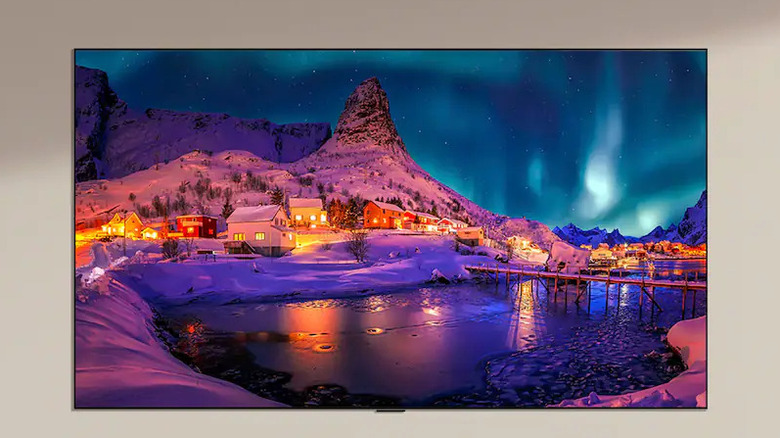
LG has been a prolific OLED manufacturer for many years, and the picture tech just keeps getting better. As far as flagship screens go, the $3,400 LG 65-inch G6 Series is a tough set to beat, and one of the best OLEDs that LG has ever made. Arresting black levels and rich colors are on tap with this set, and LG's Alpha 11 Gen 3 AI Processor does a phenomenal job at optimizing picture quality in real time. And thanks to its Primary RGB Tandem Panel 2.0 and LG's Hyper Radiant Technology, the G6 Series delivers chart-topping brightness, too.
Our friends at What Hi-Fi did a side-by-side comparison of the LG G6 and last year's LG G5 flagship, and the former came out on top for overall brightness. But the publication also dinged the G6 for occasional overbrightening and over-saturation, and felt the G5 delivered a more natural image before calibration. That's okay, though, because the G6 is an absolute powerhouse for console and PC gaming. With its native 165Hz refresh rate, built-in Game Optimizer, and HDMI 2.1 across all four ports, you'll experience little in the way of lag and screen tearing.
The LG G6 runs webOS 26 for its operating system and user interface, and the manufacturer claims you'll get up to five years of OS updates. At the time of writing, the 65-inch G6 was marked down to $3,000 at Best Buy and a handful of other retailers.
Samsung S95H
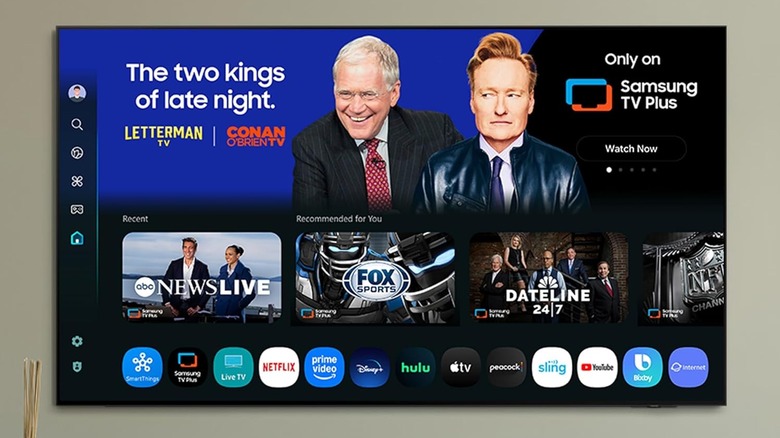
Not only is Samsung one of the world's leading TV manufacturers, but it's also one of the best companies to buy an OLED set from. The $2,200 Samsung 65-inch S95H is the 2026 flagship, using a QD-OLED panel to push brightness and color to new levels. The TV also uses Samsung's NQ4 AI Gen 3 processor, which does an exceptional job of optimizing picture quality in real time, and its wide viewing angle prevents the loss of picture details when not seated directly in front of the screen.
On Amazon, the 65-inch S95H scored 4.3 out of 5 stars, based on over 230 reviews. Most folks love the TV's picture quality and other features, but we did read feedback from multiple users that mentioned a failing One Connect Box. Fortunately, the One Connect is a separate purchase, as the TV chassis already has four HDMI 2.1 ports that push up to 4K/165Hz. It's also worth mentioning that the black levels can appear raised when there's too much ambient light in your viewing space.
PCMag praised the S95H for its "vibrant, lifelike picture with a wide color range," and "ultra-low input lag." Often going toe-to-toe with LG, it can be difficult to choose between a premium Samsung OLED and a competitive LG model. But as far as premium TVs go, the S95H has more than earned its place at the top of the Samsung ladder.
LG C5 Series
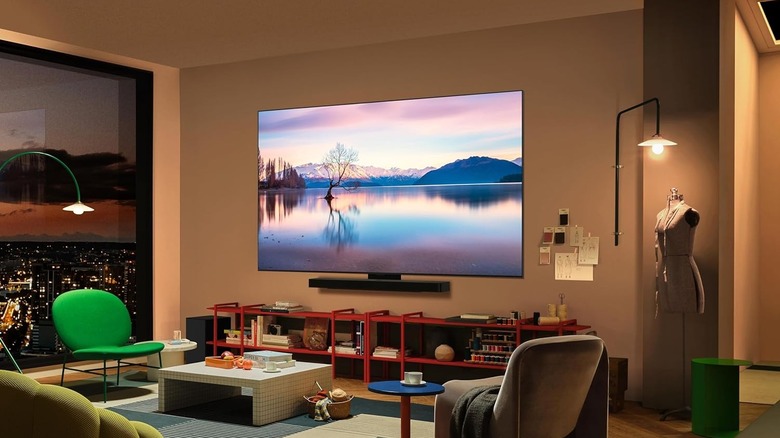
Compared to the LG G6, the $1,400 LG 65-inch C5 Series is a very appealing OLED option, especially if you're looking to save a few bucks. At the time of writing, the TV was discounted to $1,200, and because it's a 2025 release, we expect this LG to continue getting the markdown treatment until it's no longer available. The LG C5 is no slouch when it comes to picture performance; the TV supports HDMI 2.1 on all four inputs, along with VRR and ALLM for console and PC gaming. The C5 also has a native 144Hz refresh rate and supports every HDR format except HDR10+ (the TV doesn't support DTS passthrough either).
The LG C5 earned a perfect 5/5 score from TechRadar, but we definitely stand behind the "sound could be better" detractor that the publication noted. The thinner the TV chassis, the smaller the built-in speakers, and the LG C5 definitely struggles to fill a room with immersive audio. This is par for the course with most TVs, though, which is why LG and other AV manufacturers make home theater soundbars. Amazon users gave the 65-inch C5 a 4.5-star rating out of 5, based on over 1,320 reviews, and even the most discerning review blurbs included compliments on picture quality.
One user mentioned that you may not notice a huge difference if you're upgrading from an LG C4 to the C5, but iterative changes from one generation to the next are rather normal. Last but not least, the C5 is also equipped with the 2025 version of webOS, and LG provides up to four years of updates, as well as a new version of the OS once per year.
Samsung S90F
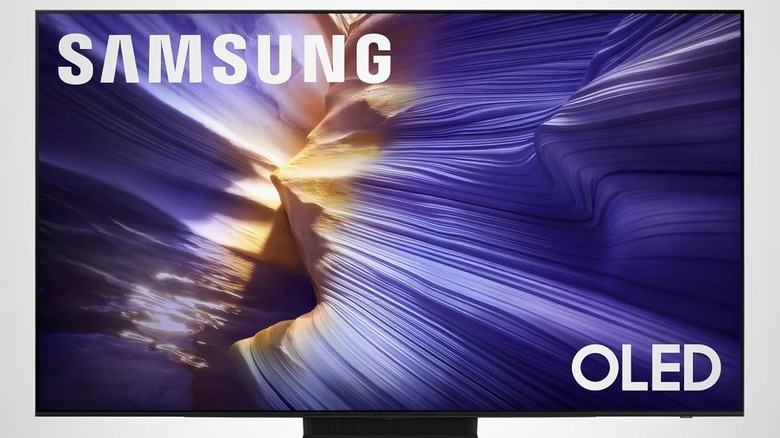
Similar to the LG C5 Series, the $1,700 Samsung 65-inch S90F is one rung below the brand's top 2025 OLED, the S95F. While the latter is brighter and boasts a higher refresh rate (165Hz, compared to 120Hz), the S90F is far less expensive and rocks many of the same core features, including Samsung's NQ4 AI Gen 3 Processor and a QD-OLED screen for the 55, 65, and 77-inch sizes; the 42, 48, and 83-inch sizes use a WOLED panel.
Out of the box, the S90F delivers incredible picture quality, and its strong HDR performance puts it in competition with some of the best midrange LEDs on the market. While the TV does a great job at tackling glare and reflections, black levels do appear raised in a bright room, so you may want to invest in a few pairs of blackout curtains. And because it's a Samsung TV, this OLED doesn't support Dolby Vision or DTS passthrough, but there really aren't any other drawbacks we can think of.
Other noteworthy features include HDMI 2.1 across all four inputs, VRR and ALLM support, and Samsung's version of the Tizen OS for the user interface and smart TV features. It's also a bit hard to recommend the 2026 Samsung S90H, mainly because it's super close to the S90F in specs but costs an extra $1,000.
Sony Bravia 8 II
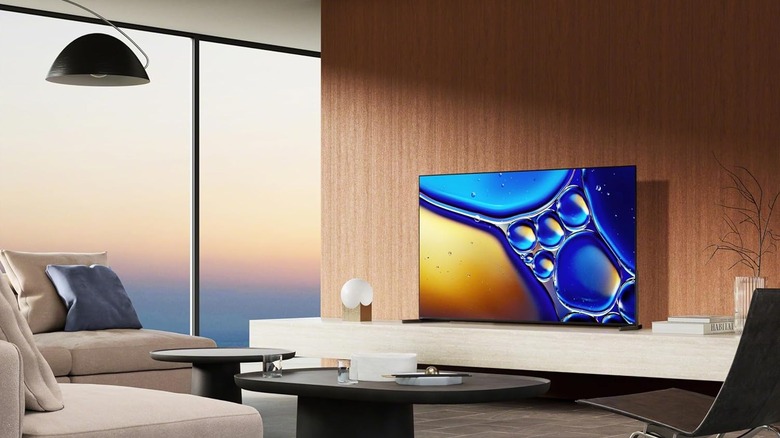
Sony's OLED TV lineup isn't as extensive as Samsung's or LG's, but what the brand lacks in available models it more than makes up for with picture tech. The set we're spotlighting is the $3,300 Sony Bravia 8 II, and it uses the same QD-OLED panel as the flagship Samsung S95F (2025). Combined with Sony's XR Processor, the Bravia 8 II is engineered to deliver bright, rich colors that automatically adjust in real time based on what's onscreen. It also does a great job at standing up to glare and reflections in a brightly lit room. That said, the TV doesn't do the greatest job at displaying deep blacks when there's a lot of ambient light.
Traditionally, OLED TVs look best in a dark room, though, and unlike the Bravia 9 Mini LED, you won't have any issues with blooming during dark scenes. The Bravia 8 II has a wide viewing angle, too, so even the farthest seat from the screen center is still a good one. As far as gaming TVs go, this Sony has a native 120Hz refresh rate, HDMI 2.1 on ports 3 and 4, and VRR and ALLM support. The input lag on the Bravia 8 II is a bit more pronounced than it is on competitive sets, but not to the point where we'd advise against this Sony TV for gaming.
Available in 55 and 65-inch sizes, the Sony Bravia 8 II might be one of the last Sony OLED TVs we ever see, as it seems like the company is going all-in on RGB Mini LED technology. And that $3,300 figure is just the suggested list price; at the time of writing, the 65-inch size was marked down to $2,610.
How we chose these OLED TVs
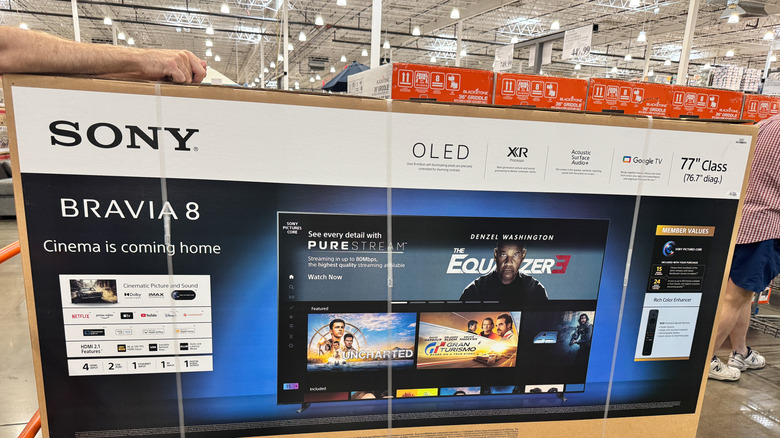
Buying an OLED TV should be exciting, but we know that there are tons of models and sizes on the market in 2026. When selecting the sets that made it on this list, we took a close look at picture criteria, including brightness, colors, motion handling, and gaming performance. We also stuck to LG, Samsung, and Sony, as older Panasonic OLEDs are getting harder to come by, and the one set that Philips makes (exclusive to Sam's Club) is nowhere near as good as the competition. We did our best to highlight deals and discounts, too, and tried to include a mix of brand-new 2026 releases and some 2025 holdovers.