

10 Best Selling OLED TVs On Amazon Worth Buying
We may receive a commission on purchases made from links.
An OLED TV can enhance your viewing experience in many ways. The screen is inherently brighter than a regular LED TV because it uses self-illuminating pixels, which also eliminates the need for a backlight. This helps you enjoy richer colors and deeper black levels, which is perfect for new-age image formats and technology, such as HDR and Dolby Vision. They're definitely a bit more on the expensive side, and it doesn't help that OLED TVs come with their fair share of disadvantages — preventing pixel burn-in and water damage is of the utmost importance — but people who maintain their device properly can enjoy a state-of-the-art viewing experience for the years to come.
In case you're stumped when it comes to choosing the best OLED TV you can get your hands on, the top devices in this category on Amazon should make the decision process easier for you, even if these models are a year old at the very least. LG, Samsung, and Sony dominate this list with their televisions, all of which boast the highest quality and will help breathe new life into the visuals of the movies, TV shows, and video games that you'll enjoy on your brand-new OLED TV.
LG C5
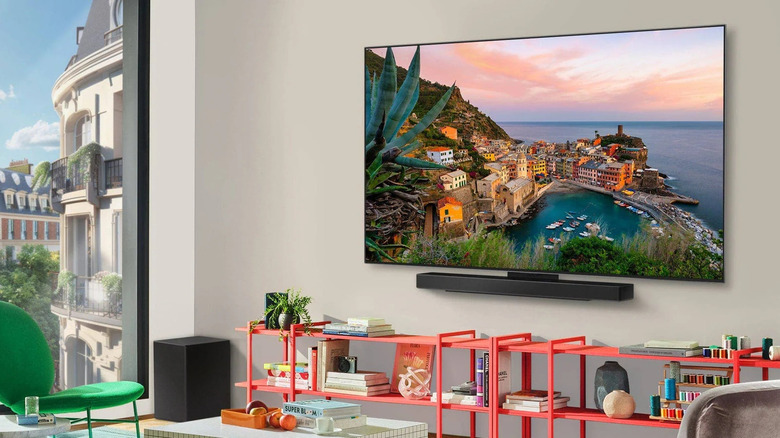
The LG C5 doesn't change a whole lot from its previous model, mainly because it didn't need to. After all, LG's winning formula has helped it become one of the best OLED TV brands in 2026. Support for HDR formats up to HDR10, along with HLG (Hybrid-Log Gamma) and Dolby Vision, will make your favorite films and shows look better than ever. The only bummer is a lack of HDR10+, but this isn't a dealbreaker. It helps that a peak brightness of over 1,400 nits and high-contrast imagery means that you can enjoy this TV even in brighter rooms. Though you shouldn't place the C5 right next to a very bright light source or a massive east-facing open window.
Gamers will love this feature-rich TV. Four 48 Gbps HDMI 2.1 ports let you connect all your consoles and any other gaming systems to this TV at once. This TV's 4K resolution is the bare minimum you'd expect for a gaming-friendly device, but where the C5 goes over and above is the 144Hz refresh rate that can be enabled at this resolution, something that only high-end gaming PCs can reach right now. Further improving your game's visuals are additional settings like HGiG (HDR Gaming Interest Group) and Dolby Vision game mode, both of which aim to let you enjoy accurate HDR visuals with improved color depth. Finally, for people into competitive multiplayer gaming who don't want to chuck their controller at their brand-new TV after yet another loss, VRR (Variable Refresh Rate) and ALLM (Auto Low-Latency Mode) aim to reduce any input lag as much as possible.
Samsung S90F
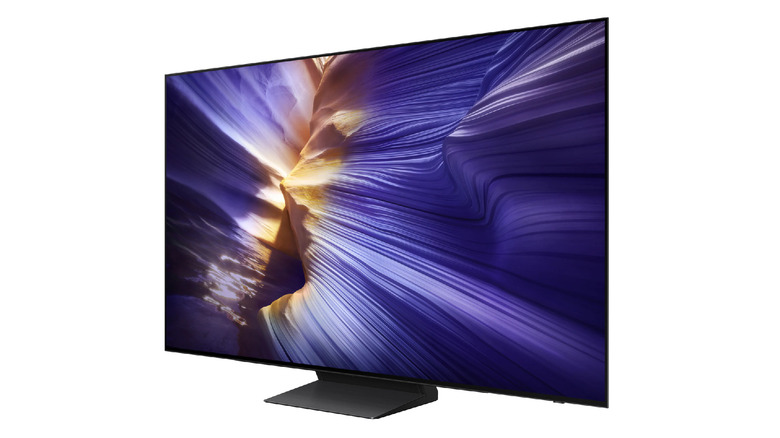
A lot of 2025's TVs still dominate the best-selling OLED TV lineup on Amazon, and the Samsung S90F is one such television that people love for being one of the best midrange devices on the market. If you don't want to splurge too much on the S95F — or its successor, the S95H — then the S90F is more than capable of letting you enjoy stellar picture quality. The NQ4 AI Gen3 processor helps this television achieve amazing visuals, and the Tizen Smart TV OS has definitely shown some improvements, even if the overall UI design may seem a bit cheap-looking to some. With support for HDR10+, contrast-enhancing tech, AI upscaling, and a peak brightness of over 1,400 nits, everything from shadow quality to color depth looks brilliant.
On the audio side of things, the S90F goes above and beyond. Dolby Atmos is the bare minimum they can integrate for better surround sound ... and that's not all. If you have a music system that sports Q-Symphony, you should definitely connect it to the S90F to help every compatible audio device — including the speakers on your TV — work harmoniously and enable a rich, surround sound feel.
Sony Bravia 8
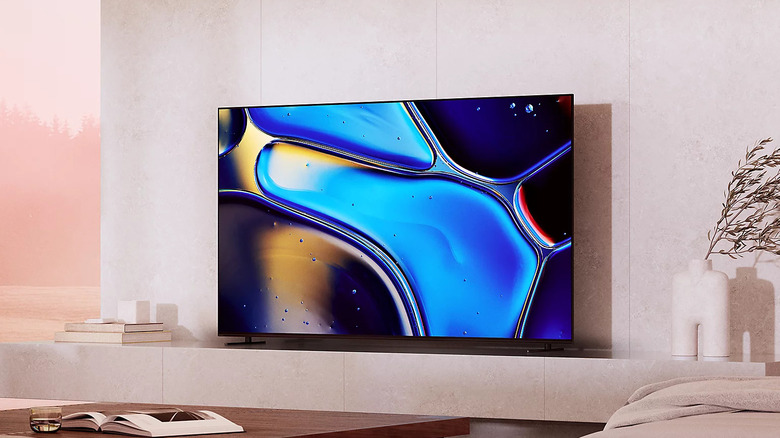
The Bravia lineup consists of some truly amazing TVs, and the Sony Bravia 8 is no exception. Dolby Vision, HLG, and HDR10 are all much welcome, although the lack of HDR10+ may not sit well with hardcore cinephiles. Thankfully, that doesn't stop the Bravia 8's picture quality from being sublime, with the only two issues stemming from low brightness and mediocre image upscaling.
The audio side of things is where the Bravia 8 shines. Even if you don't have an external audio system to connect your TV to, the ingrained features of this device should be more than enough to let you enjoy a quality surround sound experience. It's compatible with Dolby Atmos and IMAX-level DTS, with the latter covering DTS:X, DTS Express, DTS-HD High Resolution, and DTS-HD Master Audio.
With a maximum refresh rate of 120Hz at 4K resolutions, compatibility with both AMD Freesync Premium and Nvidia G-Sync, and the ability to reduce input lag courtesy of both VRR and ALLM, your gaming experiences on this TV will be great enough to rival actual gaming monitors. The only annoyance in this department will be the inclusion of just two 48 Gbps HDMI 2.1 ports, but that's quite manageable.
Samsung S85F
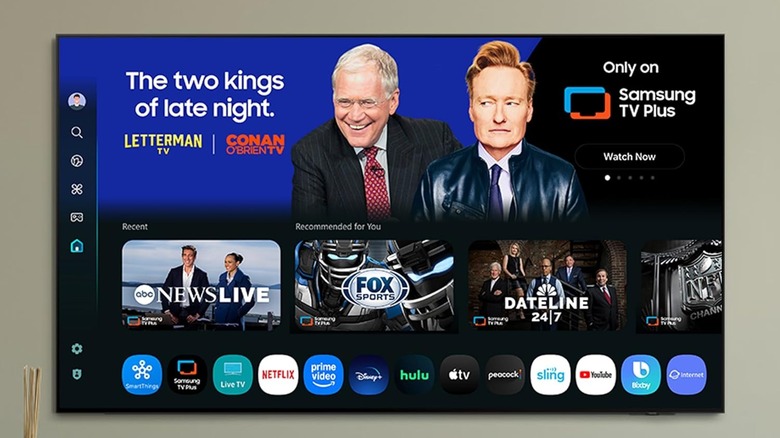
You don't need to burn a hole in your wallet to get a state-of-the-art OLED TV. An entry-level, budget-friendly OLED TV most users swear by is more than acceptable, especially if it boasts the same level of quality as the Samsung S85F. Picture quality is surprisingly great at its reasonable price point, undoubtedly helped by this TV's support for HDR10+ and HLG. The lack of Dolby Vision is disappointing — especially given how high-quality modern media relies on this image format quite a bit — but it's something that most people can live without. The wide array of picture modes is also worth highlighting — Standard and Eco modes are pretty self-explanatory and present across most TVs, Filmmaker mode is perfect to watch movies as the creators intended, and AI mode is fun to experiment with as the S85F uses the magic of artificial intelligence to automatically adjust picture and audio settings.
There's also a Game mode, which is especially useful for reducing input lag. It also lets you experiment with other features, such as aim assist reticles and even the ability to alter aspect ratios, if you desire. It can achieve a 120Hz refresh rate at 4K resolutions, reduces input lag via a combination of VRR and ALLM, uses HGiG for accurate HDR tone mapping, and boasts four 48 Gbps HDMI 2.1 ports to let you connect all your gaming systems with ease.
That being said, one area where this cuts some major corners is sound. The two-channel speaker system tops out at 20 watts and provides a middling output that sounds rather flat. As a result, the soundstage feels pretty limited, although the inclusion of an Amplify mode is much appreciated if you're struggling to hear dialogue on this TV.
LG C4
With the LG C6 already out on the market, the idea of buying a model two years older may not seem all that appealing. However, you can snag a good deal on the LG C4 if you search around a bit, with the TV justifying these savings once you see just how feature-rich it is. The α9 Gen7 AI processor pulls its weight to display beautiful images, further bolstered by HDR10, HLG, and Dolby Vision compatibility. The amazing image quality and vibrant colors are so striking that most people won't even notice the absence of HDR10+ support. The peak brightness of over 1,200 nits and excellent contrast helps produce a bright, satisfying image that won't be a struggle to appreciate in brighter environments. In fact, the only major complaint about the TV's projected image is how shadow quality is somewhat muted for SDR content, which is pretty hyper-specific and nowhere near a dealbreaker.
One thing to highlight about this TV is its satisfying user interface, bolstered by the swift performance of webOS 24. The LG Magic Remote is intuitive, with the Wii-mote-esque motion control navigation making it easier than ever to navigate the C4's UI.
For gamers, this TV is perfect to make their favorite titles look even more breathtaking. 4K resolution at a max refresh rate of 144Hz is perfect for people with high-end gaming systems who want a large display to do justice to their powerful — and ridiculously expensive — hardware. Both Nvidia G-Sync and AMD FreeSync help eliminate screen tearing, choppiness, and stuttering. Dolby Vision for Gaming and HGiG mode improve color richness, and both VRR and ALLM play their part in reducing response time to under 0.1 milliseconds, which is very impressive.
Samsung S95F
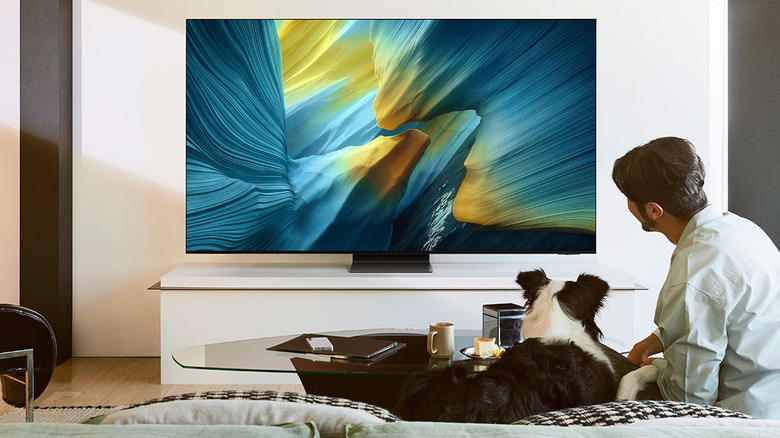
The Samsung S95 is their flagship OLED TV from last year and one of the best TVs to buy on Amazon, according to experts. The screen itself is one of its biggest perks, with the gorgeous matte finish and arguably the best anti-glare technology on the market helping diffuse both direct and indirect light to make your viewing experience more sublime than ever. HLG and HDR10+ help out quite a bit in this regard, although — like every other Samsung TV — there's no Dolby Vision, which is somewhat disheartening but a compromise most people are willing to make. Brightness is largely a non-issue, courtesy of the aforementioned anti-glare coating and a peak brightness rating of more than 2,200 nits.
One thing to highlight about this TV is how it puts in the work to look like an aesthetic extension of your living room. The metal frame feels premium, and a thickness of just over 0.4 inches makes this one of the slimmest OLED TVs on the market. Samsung has achieved this thin form factor by outsourcing the power unit, connectors, and processor to a separate One Connect Box. Don't assume that this is cheating. If anything, this Connect Box is a far more convenient way to plug in your TV. It can attach to the wall and hide any wires connecting to your TV, making your living room look less messy.
LG G5
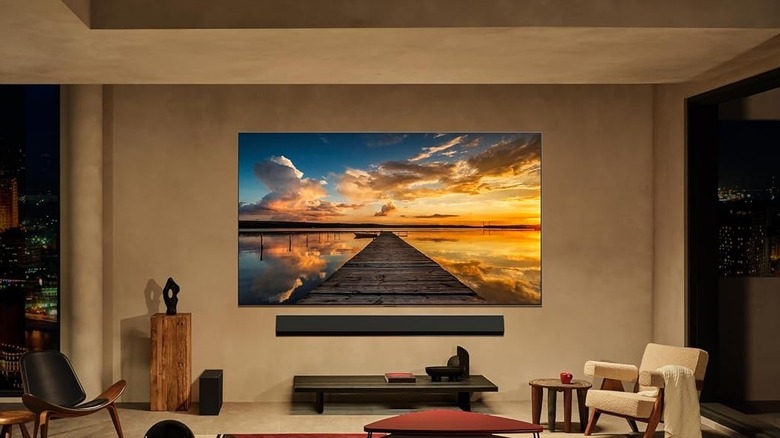
While the C5 is a great mid-range OLED TV, people who want to get their hands on the company's flagship 2025 product should check out the LG G5. The first thing that'll strike you about this TV is how bright it is, with its peak brightness rating exceeding 2,800 nits when displaying HDR content. Contrast levels are another area where the G5 shines. Suffice it to say, you don't have to worry about having to deal with a washed-out image when watching this TV during the day. Color accuracy is also excellent, so much so that the G5 may arguably boast the most accurate color output out of any other TV released in 2025.
This TV is a perfect display device for gamers. It's got everything you'd expect — four 48 Gbps HDMI 2.1 ports, quality 4K resolutions, a refresh rate that reaches 165Hz with VRR turned on, the inclusion of ALLM to minimize input latency, an HGiG mode and Dolby Vision for Gaming for better HDR color accuracy, and compatibility with both Nvidia G-Sync and AMD FreeSync.
Unfortunately, there is one area where the G5 has taken a step back from its previous generation — the UI and remote. The banner ads on the home screen can be intrusive, and webOS 25 takes a long time to load before you can do what you want. The AI integration is also a bit too much, to the point where the remote lacks an input switch button since that has been replaced with a dedicated AI button. You have to long-press the Home button to switch inputs instead, which is quite intuitive.
Samsung S90D
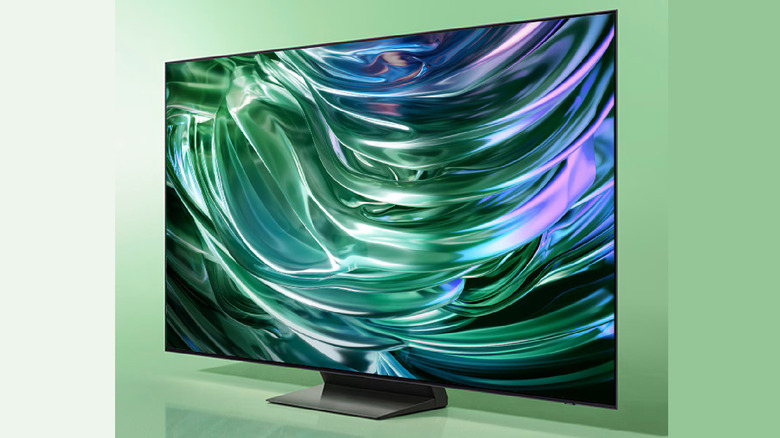
The Samsung S90D might be two years old at this point, but don't let that stop you from pouncing on a good deal if you get this great OLED TV for a reasonable price. The NQ4 AI Gen2 processor uses the power of artificial intelligence to upscale the television's image, while HDR10+ and HLG help modern shows and movies look breathtaking. Perceptional Color-Mapping technology does justice to the wide gamut of colors this TV can display, while Real Depth Enhancer improves how contrast is handled on this device. All of this combines for a level of picture quality so striking that Samsung's decision to not integrate Dolby Vision seems downright justified. A competent anti-reflective screen bolsters this TV's display, preventing it from being a pain to watch in well-lit environments.
Onboard sound is also pretty great. It's got all the Samsung-patented audio tech we've mentioned before — OTS Lite for recreating spatial audio, the ability to map the soundscape to a room's acoustics courtesy of Adaptive Sound Pro technology, and compatibility with other Samsung audio devices courtesy of Q-Symphony for a richer soundscape. The TV can make the most of Dolby Atmos but doesn't support DTS, which isn't the worst thing in the world given how rare the latter is.
Sony Bravia 8 II
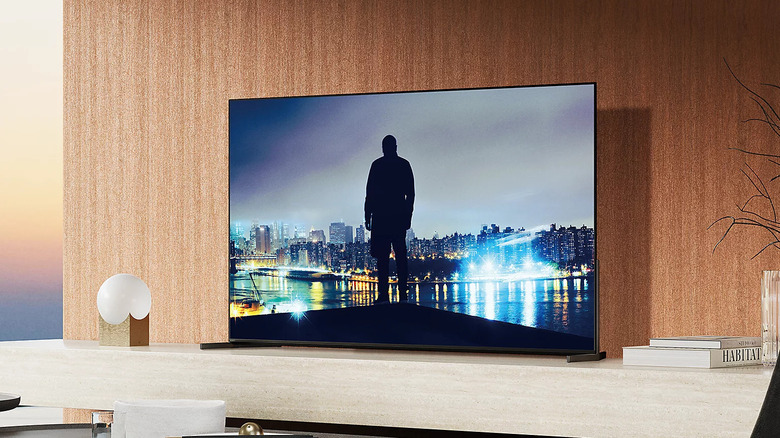
While the Sony Bravia 8 II is certainly expensive, the company has done everything in its power to justify this price point. Their efforts have been largely fruitful, with the dazzling picture quality of the Bravia 8 II speaking for itself. Despite the absence of HDR10+ support, Dolby Vision, HLG, and HDR10 do enough of the heavy lifting to make the visuals of this TV absolutely breathtaking. It even comes with an IMAX Enhanced mode if you want to check out any movies shot specifically for IMAX, filling out the entire display instead of forcing you to deal with the much-dreaded letterboxing that usually accompanies these movies. That being said, brightness is one area where the Bravia 8 II lags behind its competition. The peak brightness rating barely reaches 1,800 nits, which is disappointing when compared to other high-end OLED TVs. The anti-reflective screen used by Sony also comes with problems of its own — black levels suffer a lot because of it, looking especially light in darker rooms.
Still, picture quality is pretty solid overall on the Sony Bravia 8 II, and props should be given to this TV for going above and beyond on the audio side of things. Dolby Atmos and all formats of DTS are supported by this device, and the four-channel, 50-watt speaker setup is pretty neat. However, the true champ here is Acoustic Surface Audio+. This patented tech hides two actuators behind the display, vibrating the screen and spatially mapping audio for a more immersive effect. While this does lead to the TV being slightly chunkier, it's a worthy compromise to do justice to mid-range frequencies and overall treble output.
LG B4
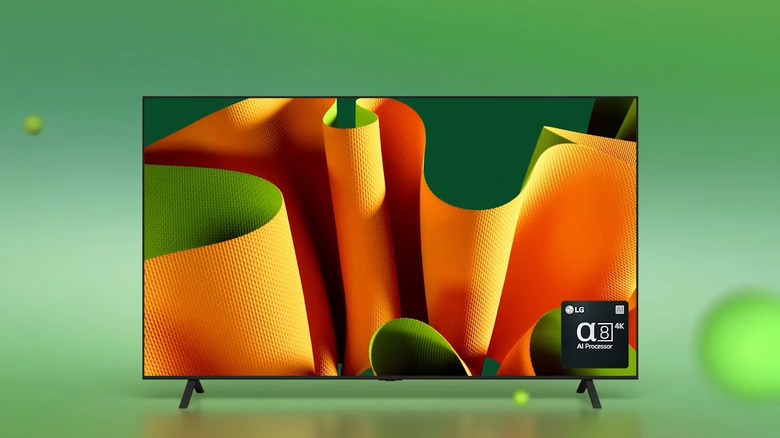
If you get the LG B4 on a good deal, then there's no reason why you shouldn't opt for this television. It may be two years old, but the performance of this TV will still feel top-notch. Dolby Vision, HDR10, and HLG make most modern shows and movies look great on this device, although you'll have to deal with two negatives here. Firstly, HDR10+ compatibility is lacking on this device. Secondly, peak brightness rating barely crosses the 650 mark, technically making it the dimmest OLED TV on this list by a significant margin.
If you're a gamer, then the LG B4 will genuinely — and pleasantly — surprise you with its suite of gaming-friendly features. Four HDMI 2.1 ports with a bandwidth of 48 Gbps, VRR and ALLM to reduce input latency, a refresh rate of 120Hz, the inclusion of both Dolby Vision Game Mode and HGiG, and support for Nvidia G-Sync and AMD FreeSync all make gaming on this TV look and feel better than ever. Just keep in mind that the two-channel speaker system with a middling 20-watt output leads to very flat-sounding audio, with the bass suffering as well. Do yourself a favor and connect this TV to a soundbar or any other speaker system to make up for an area where LG cut corners the most for this budget TV.
Methodology

All TVs on this list are part of the top 20 best-selling OLEDs on Amazon, with user ratings of 4 or higher out of 5 across hundreds — if not thousands — of reviews. Along with this, these TVs also have high review scores — the bare minimum being a 4 out of 5 or an 8 out of 10 — from three or more reputable publications. These review outlets include Tom's Guide, Wired, TechRadar, Choose.TV, Trusted Reviews, AVForums, CNET, Expert Reviews, Stuff, Android Authority, IGN, What Hi-Fi?, and Empire.