

3 Of The Slimmest OLED TVs On The Market In 2026
We may receive a commission on purchases made from links.
OLED TVs are highly desirable for their excellent image quality, color accuracy, and beautiful contrast. Manufacturers are constantly improving the tech within OLED TVs to create an even better picture and faster response times, but that's not all they're doing; they're also innovating the form factor of OLEDs year after year. These days, you can get an ultra-slim OLED TV that's almost as thin as a smartphone. These are great TVs for minimalists or anyone else who values lightweight tech and practicality.
We took a close look at some of the slimmest OLED TVs on the market in 2026 and made a list of ones that are worth buying. These are all zero-gap models designed to be mounted flush against the wall, giving you maximum living space and a modern aesthetic in your home. We only included one TV per brand, so you can choose based on preferences — or you can refer to which smart TV brands rank best in customer satisfaction. But rest assured, each TV listed below ranks highly in terms of user reviews and professional recommendations.
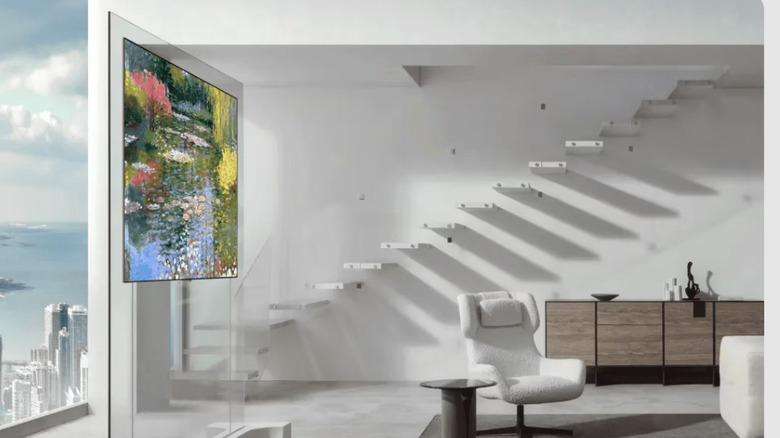
LG OLED evo W6

LG pioneered the concept of a "wallpaper TV" that's so thin, it blends in as a piece of home decor rather than a bulky piece of tech. The LG OLED evo W6 is the latest in the company's wallpaper TV lineup, and it measures just 0.4 inches thick. It's a true wireless panel that uses the included Zero Connect Box to beam 4K 165Hz video and audio to the TV, making for a truly sleek presentation with fewer messy cables to go around.
When the expert reviewers at PCMag went hands-on with the LG OLED evo W6, they noted that it used the same OLED panel as the LG G6, the company's current flagship standard OLED, but they managed to fit it in a TV that's less than half as thick. The PCMag team also praised the picture on the W6 and commented on its super high peak brightness. It's very colorful, too, but not quite as colorful as TVs with newer Micro RGB technology, which is one of the big smart TV trends in 2026.
Samsung S95H
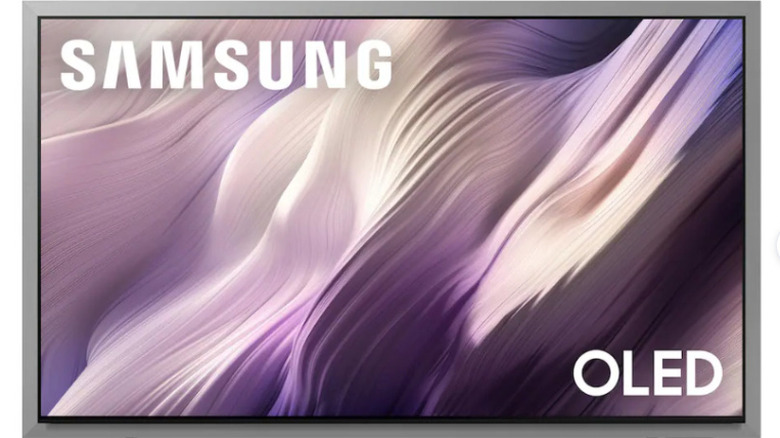
The Samsung S95H is a one-inch-thick OLED TV that's marketed as a display for artwork as much as it is for movies and gaming. It comes with a conventional TV stand, but it's also possible to mount it completely flush against the wall. It uses Samsung's proprietary "FloatLayer Design," along with a picture-frame-like bezel, to make the screen appear like it's floating away from the surface it's placed against. And with Samsung's Pixel Shift and Pixel Refresh features, you actually can leave a static image on the screen, similar to a hung painting, without worrying as much about the burn-in problem that modern OLED screens still suffer from.
When CNET reviewed the Samsung S95H OLED TV, they praised the screen for its brightness and the anti-glare coating that "lets almost nothing through." This makes it an appealing display to buy for a room that has an abundance of natural lighting, or any other light source that often reflects in other TV screens in a distracting way. However, CNET naturally compared the S95H against Samsung's other ultra-thin OLED, the Frame QLED TV. The difference between OLED and QLED is that OLED typically delivers a superior picture, while QLED tends to achieve higher brightness. Both work well for artwork display, but the S95H is the more premium and visually striking choice.
Sony Bravia 8 II
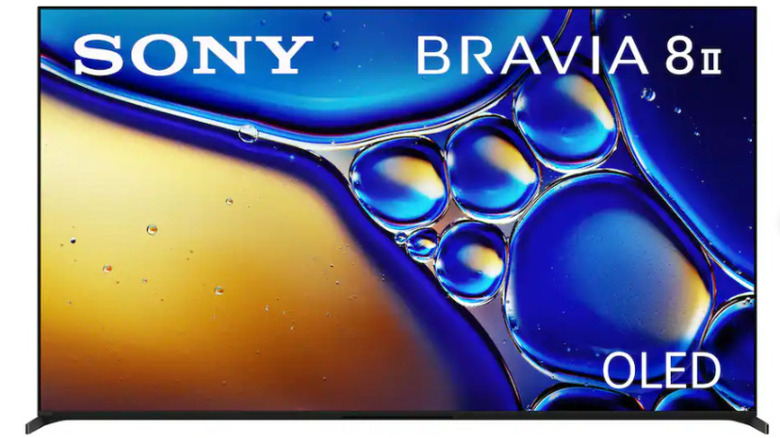
The Sony Bravia 8 II is a QD-OLED display with a thickness of 1.37 inches. The difference with a QD-OLED is that it includes a layer of quantum dots on top of the standard OLED technology, which helps with color generation and expands the range of colors an OLED can typically display. Sony markets the Bravia 8 II as a TV for home cinema, but they also assert that it's a good choice for gaming at 4K at up to 120 frames per second.
The hardware testers at RTINGS put the Sony Bravia 8 II through its paces and determined that it is well-suited for a home theater indeed. Using it in a dark room makes the colors pop, and the perfect black levels make for outstanding contrast and a vibrant image overall. The Bravia 8 II is fine for a well-lit room as well, but the screen isn't quite bright enough to overcome the glare from direct sunlight. Even so, the QD-OLED panel still showcases its vibrancy when there's an abundance of artificial light in the room.
How we selected these ultra-slim OLED TVs
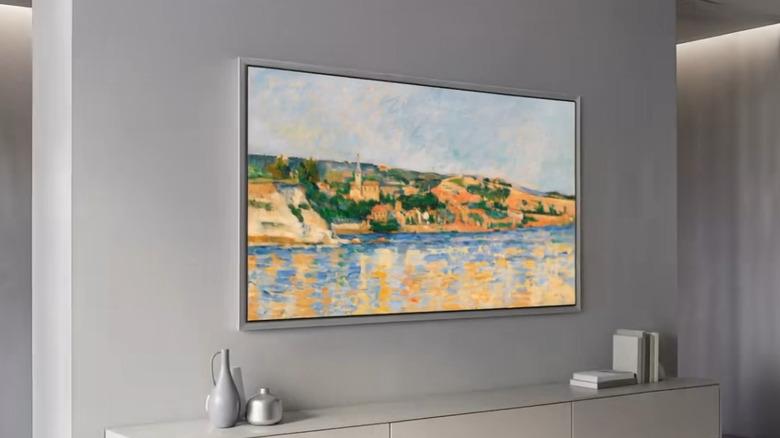
For this list, we set out to find user-approved OLED TVs that measure way below average in terms of panel thickness. The average thickness for a 50-inch TV in 2026 is about 3.2 inches, and that number only goes up for larger screen sizes. To emphasize only the slimmest OLEDs on the current market, though, we only included TVs that were far below that average at less than 1.5 inches thick.
Each OLED TV we chose received recommendations from trusted review outlets, with an overwhelming majority of 5/5 star ratings from actual customers. We scoured user reviews to make sure there were no frequently reported defects with any of the TVs we selected. Each entry comes from a respectable brand that has manufactured an ultra-slim OLED TV model as recently as 2025, and that is still available on the market as of the time of writing.