

Glass Vs. Gel Screen Protectors: Which Is Better For Your Phone?
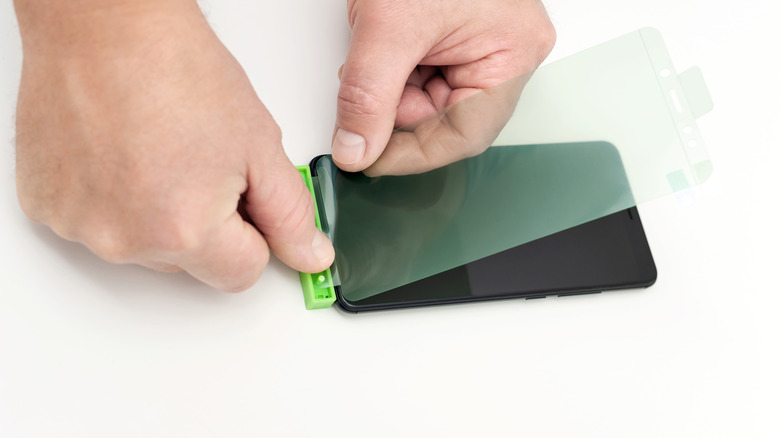
Phone screens these days are quite durable. Yet, no screen, even the best Gorilla Glass in the biz, is bulletproof. Just a single, unfortunate drop could leave you with a screen repair bill of a few hundred dollars (over $300 if you're an Apple user). Thus, an expensive screen protector is worth it when you consider just how costly a screen repair is. Which one you'll ultimately choose depends on the type of damage you want to protect the phone from. Generally, tempered glass is better than a plastic screen protector because it offers extra protection against fall damage. That leaves a gel screen protector as a viable contender.
Is a hydrogel screen protector better than UV tempered glass? In short, it depends. Tempered glass is superior if fall damage is your primary concern and you want to keep the screen as "glassy" and smooth as possible. In contrast, hydrogel screen protectors can self-heal and fix micro-scratches. As such, they work best for more gradual damage, like scratches from keys in your pocket or tiny bumps. Nonetheless, a hydrogel screen protector has a major drawback: it's notoriously weak against harder hits, meaning that it may not protect your phone if you drop it from, say, hip-height.
That doesn't make gel screen protectors useless. Owners of foldable phones complain about weaker displays (makes sense, since a screen needs to fold), and even if it isn't perfect, a gel screen protector is ideal for foldable phones and curved displays. Sure, you'll have to grip your phone a bit harder when you're out and about, but it's better to have a gel screen protector than to drop the phone "bare" on the ground, no matter how you slice it.
How much damage can tempered glass and hydrogel take?
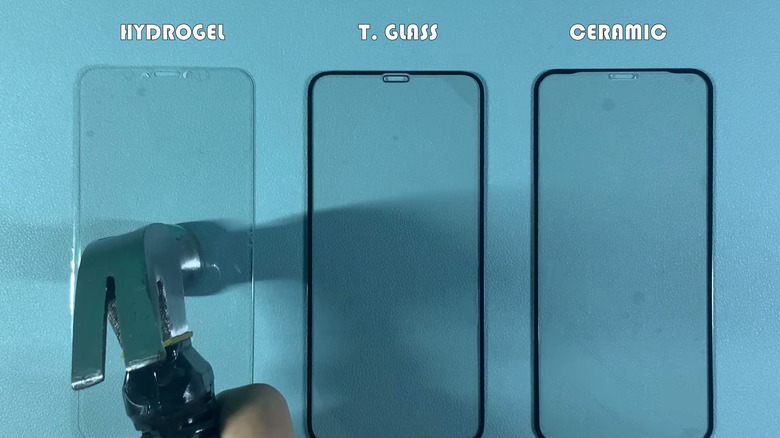
You don't need to look far to find tests that compare various types of screen protectors. Though the methods are anything but scientific (one part of the test includes literally hitting protectors with a hammer), a video by URTechz gives a rough idea of the abuse hydrogel, tempered glass, and ceramic protectors can take. All three were effective against light scuffs made with a plastic tool, but only tempered glass and hydrogel protected the screen from damage made by keys. Surprisingly, tempered glass also resisted a knife, which both hydrogel and ceramic failed to do.
The most interesting part of the test was the hammer smashing. All three materials survived a light hammer tap, but they buckled and failed to protect the screen when more force was applied. Naturally, a drop doesn't involve as much force as a hammer strike, and the video notes that many factors matter in real life, including the hardness of the surface and the area where the phone lands.
If you're looking for clear figures, there are indications that tempered glass can protect the display from 1.5-meter drops onto hard concrete. It may crack, but it won't transfer as much force onto the screen. Hydrogel itself can survive 1.2 meters. The catch? It transfers over 65% of the energy directly to the display, which will more than likely crack like an egg during nasty falls. This makes it a subpar option for clumsy users, but it's still amazing for daily scuffs. So, for the time being, it's the best screen protector for curved display phones, aka those leaning on the unorthodox side.