

Does NASA Still Use Lenovo ThinkPads?
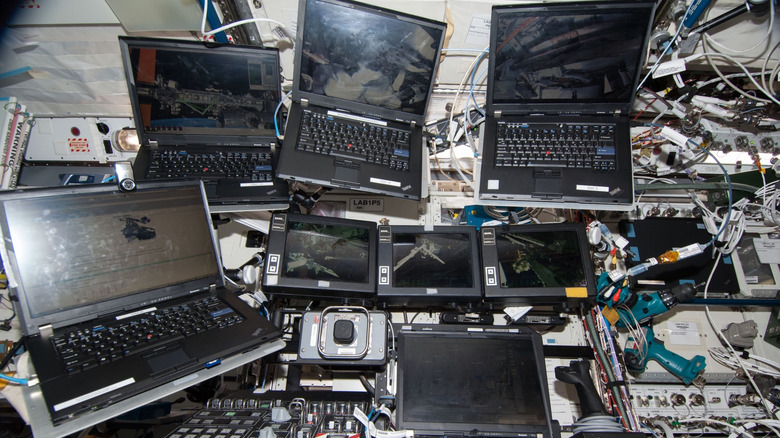
For those not in the know, the ThinkPad is a famously rugged business laptop with the cool distinction of becoming the first such machine to serve astronauts in space. Built by IBM — a company no stranger to trailblazing — and featuring that recognizable red TrackPoint nub in the middle of the keyboard, the first ThinkPad reached orbit in 1993 aboard the Space Shuttle Endeavour. The first laptop in orbit was the ThinkPad 750C, introduced by IBM in 1993 for around $4,699. It had a 10.4-inch color TFT display, a 486 processor, and was positioned as a premium business laptop. After that, Lenovo's newer ThinkPad T61p later became the standard hardware for ISS astronauts. But big changes were on the way.
In 2005, Lenovo acquired IBM's PC business, including the ThinkPad brand. This deal meant that the Chinese tech giant inherited a ThinkPad line that was already an established piece of NASA's space-based operations. In April 2016, NASA began a three-year process transitioning the station's laptop fleet from ThinkPads to the HP ZBook mobile workstations. The change means that NASA no longer uses ThinkPads as the ISS's primary computers, although the ThinkPad T61p continued to serve specialized roles in space as recently as 2023. NASA has yet to confirm that all remaining T61p laptops have been retired, so some may still be in use today.
The big switch from Lenovo to HP
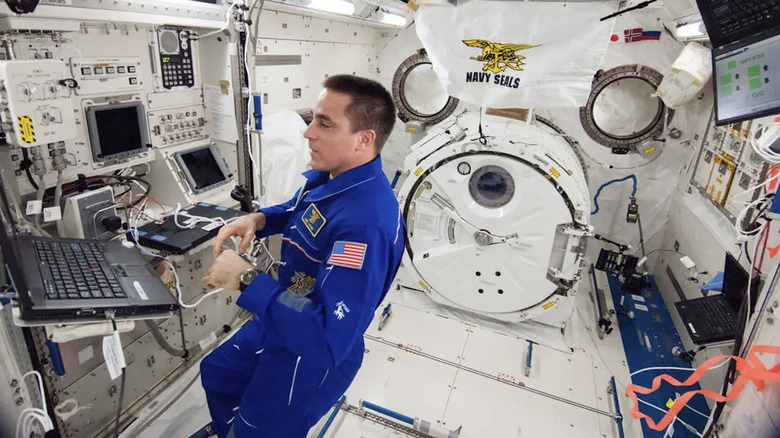
So, why did the ThinkPad lose out to the ZBook? Well, by 2016, NASA's ThinkPad T61p fleet was more than six years old, and a scheduled hardware refresh gave the agency a chance to move to a newer workstation platform. The agency decided HP's ZBook offered a more modern, powerful platform, with newer processors and more storage and memory capabilities, while also bringing the ruggedness and reliability needed for a computer to stay in good working order high above Earth. The switch was made, and astronauts aboard the ISS continue to use the ZBook as their primary laptop.
In 2016, NASA decided to transition from the long-serving ThinkPad to HP ZBook workstations. It started by sending five ZBooks to the space station in April of that year, and, today, 100 HP laptops are being used aboard the ISS. NASA's relationship with HP didn't begin with the ZBook. For decades before, dating back to the early days of the Space Race, HP had been supplying technology and expertise for NASA programs. This included instruments on the first U.S. satellite (Explorer I) and components — both on the ground and in space — during the Apollo 11 moon landing.