

Why Do Screen Protectors Crack So Easily?
We may receive a commission on purchases made from links.
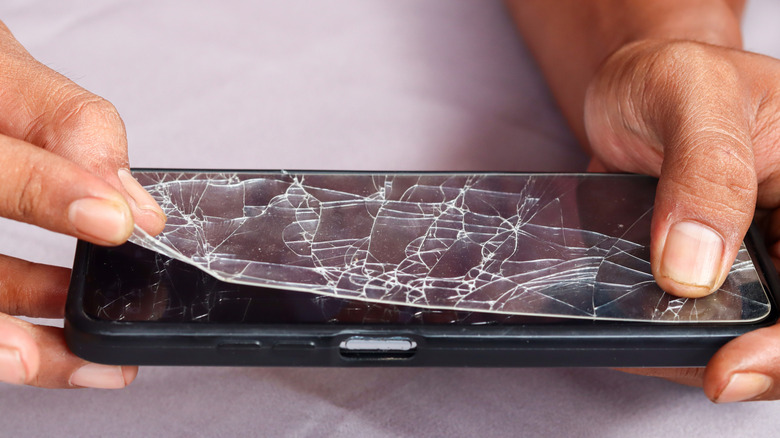
Some believe there isn't much need for screen protectors anymore, arguing that screens in modern phones are much better than they were in the past. There is some truth to this. When you stack up, say, Ceramic Shield against Gorilla Glass, both types of screens can withstand drops from around six feet and offer significant resistance against scratches (goodbye scuffs from keys in your pocket). In contrast, a screen protector may crack if you sneeze next to it. Of course, this is a joke, but it does illustrate just how fast these crack.
However, ask yourself: should a protector be unbreakable at all? Well, no. You don't want your screen protector to be bulletproof because its entire point is to absorb and disperse the energy from drops. If your phone collides with the ground, the thin film takes the brunt of the impact, spreading the energy across the phone's entire surface. Without it, the energy would likely remain concentrated at a single point on the screen, strong enough to crack even the hardest Gorilla Glass screen. You can think of a screen protector as a crumple zone in a vehicle, an area designed to absorb the full energy of the impact instead of letting the full force transfer to the passengers.
Granted, if your screen protector cracks randomly, consider if it was properly installed. For example, if the person installing the film doesn't apply equal pressure on all surfaces of the protector, it could leave air bubbles, which could expedite any cracks. There's also a possibility the protector is sized wrong — something that could also make it crack like an egg.
What's the best screen protector?
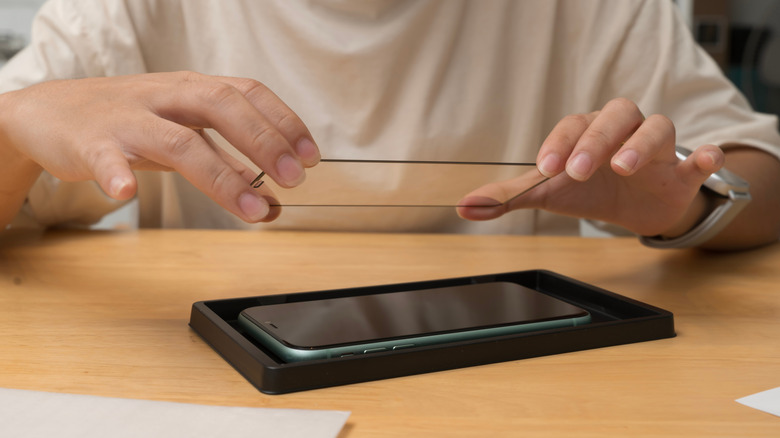
Is there a screen protector that won't crack so easily? Yes, though that doesn't make it the best, because cracking is preferable. A plastic/PET/TPU screen protector may be flexible and inexpensive, but its main purpose is keeping scratches at bay. Its bendable nature, unfortunately, means its impact protection is nearly non-existent. It won't shatter if you drop your phone, yet all that force could go directly to the screen. As such, it's smarter to choose a tempered glass screen protector over plastic.
Of course, the slightly higher price tag may discourage you from going for tempered glass. A premium protector may cost around $26 per pop on Amazon, which could be a lot if you put it against a $13 pack of plastic protectors, though it's nothing compared to fixing the entire screen. If you're an iPhone user, for instance, Apple will charge over $300 for repairs.
Other, more niche materials also exist. Manufacturers like Belkin produce UltraGlass, which is advertised as being twice as strong as regular tempered glass, due to being chemically improved through double-ion exchange. Either way you slice it, a screen protector (especially glass that will crack) is something you should consider if you want to keep your phone's screen intact. Even if you're a careful user who also uses a case, Murphy's law is a real thing, and a single drop can take $300 straight out of your wallet. And in that moment, a $30 tempered glass protector becopmes priceless, even when it shatters.