

Here's How Much Solar Power Europe Lost During The Eclipse
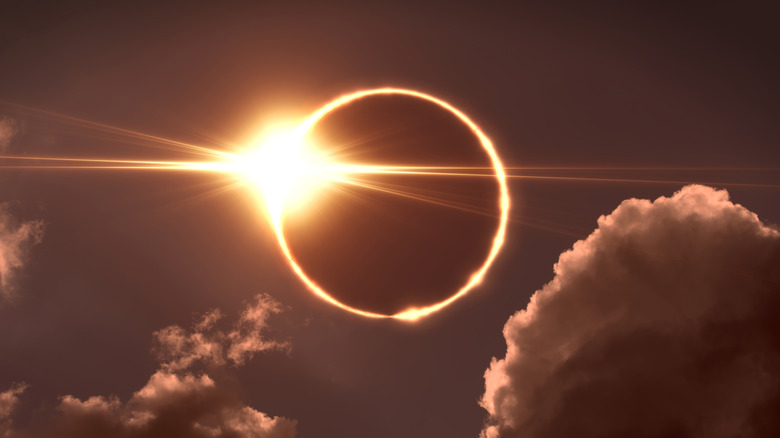
Much of the northern hemisphere collectively looked up on August 12, 2026 to witness the latest solar eclipse. Depending on where you were in the world, it took between two and three hours for the moon to cross the sun. Observers in Spain, Iceland, and certain other parts of Europe even got the chance to behold a rare total eclipse for around two minutes. But let's keep in mind that Europe is increasingly utilizing solar power to fuel its clean energy initiatives. How much does three hours of diminished sunlight affect a solar-powered society?
According to Spanish grid operator Red Eléctrica (via Energy Digital), the expected loss of solar power was around 5 GW, which is "equivalent to roughly 13% of demand for a typical Wednesday this month." Great Britain anticipated a smaller loss, estimated at around 700 MW to 1.3 GW. Octopus Energy, the U.K.'s largest energy supplier, offered one hour of free electricity to its customers in exchange for reducing consumption during the eclipse period.
Overall, Europe did not lose a catastrophic amount of solar power from the eclipse, but it was significant enough for energy producers to acknowledge the issue and request consumer cooperation. Europe's solar panels have created negative energy prices in the past because solar power is generally so abundant. A few hours of extra downtime won't ruin the energy economy, but there is still a need for a battery solution that can store solar energy ahead of time to better prepare for such events.
Do clouds affect solar power as much as an eclipse?
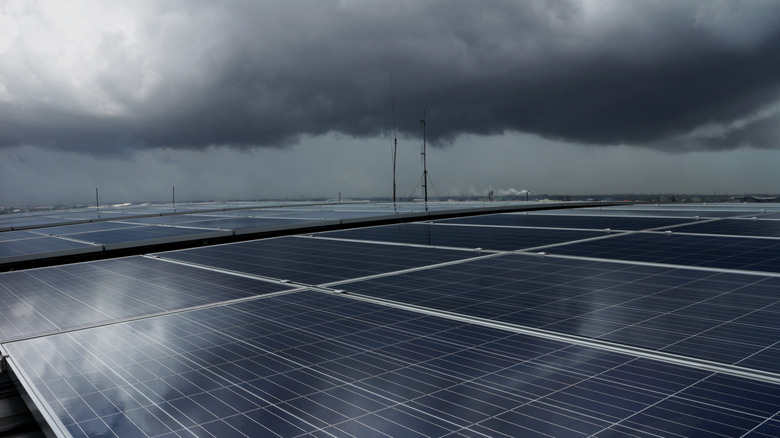
On a normal day, clouds may block the sun for hours and hours on end. How is that any different from an eclipse? Do clouds make solar-reliant countries lose 5 GW of energy in a day, as the August 2026 solar eclipse did?
The answer is no, because solar panels only require daylight, not necessarily direct sunlight. Solar panels can still operate at up to 20% efficiency even on a dim, rainy day. On a heavily overcast day, sunlight is still making its way to Earth and connecting with our solar panels. During a solar eclipse, though, the moon prevents much of that sunlight from reaching us at all.
We're lucky that clouds don't stop solar panels from working. England's 43,000-panel solar farm is vital to a climate emergency action plan in Europe, and in the U.S., some states generated more electricity from solar than coal or natural gas for the first time this year. These are huge steps forward, and fortunately, most years only have two solar eclipses — and even then, they only affect a fraction of the world when they happen. There's practically no risk of cosmic phenomena interfering with our solar-powered future.