

5 Perks Of Switching To An OLED Tablet

If you're looking to purchase a new tablet, one of the display specs for a tablet that is worth paying extra for is OLED display technology. An OLED (or organic light emitting diode) display doesn't need a backlight, as each pixel consists of organic material that emits light when electricity passes through it. Not needing a backlight makes this display technology ideal for small portable devices, like smartphones and tablets, although it's also found in high-quality TVs. OLED technology creates deep blacks and impressive contrast ratios, resulting in displays that offer maximum image quality.
OLEDs give you outstanding performance, but they typically make a tablet more expensive than other display technologies. Fortunately, having an OLED screen on a tablet provides several benefits that can justify the extra cost. For starters, having this display will give you a more immersive experience while watching movies and TV shows. People who use their tablets for gaming will appreciate the almost immediate response times of OLED pixels, which leads to smoother gaming results. Manufacturers can create thinner screens with OLED technology because they don't need a backlight. You can clearly view the OLED tablet from almost any angle, allowing for simple screen sharing and collaboration. This type of technology should also help with eyestrain, as it emits less blue light than traditional tablet displays.
1. OLED tablets are ideal for watching movies and TV

With an OLED tablet, you receive deep black colors, excellent screen contrast, and bright and accurate colors, all of which are important for viewing movies and television shows. The small screen on a tablet might make it tougher to focus on a movie than you can with a big television or movie screen, meaning having a high quality display screen can help you maintain your focus on the cinematic experience.
Most OLED screens offer support for HDR (high dynamic range) video content, which creates realistic images by maintaining important details within each scene. Even if the lighting isn't consistent across the scene, HDR protects the details. Because the OLED technology built into the tablet's display can manage each pixel individually, it can support the deep black colors and contrast that make HDR a desirable image format. Not all OLED tablets and smartphones support HDR, so you'll need to make sure any tablet you purchase supports the format.
2. OLED allows for smoother gaming sessions

If you or your children enjoy gaming on a tablet, an OLED display will make the experience more enjoyable. Because the individual pixels can quickly change colors and brightness levels, you should notice smoother gaming graphics. OLEDs are also known to reduce motion blur and have better response time. The response time for an OLED tablet screen can be as fast as 0.1 milliseconds, providing excellent gaming performance compared to IPS displays that can have response times of around 5 to 8 milliseconds.
Some OLED features that make them good for viewing movies and TV shows also help with gaming. The bright colors and outstanding contrast in the display create more vivid images, especially when viewing the tablet in a darkened room. Additionally, OLED screens offer a wide viewing angle, making it easier for everyone to clearly see if multiple people are playing on a tablet.
That said, you also need a tablet that has a strong refresh rate and high-end hardware to experience the smoothest gaming performance. In other words, having an OLED-enabled tablet alone won't deliver the perfect gaming experience.
3. OLED tablets are thinner because backlights aren't needed
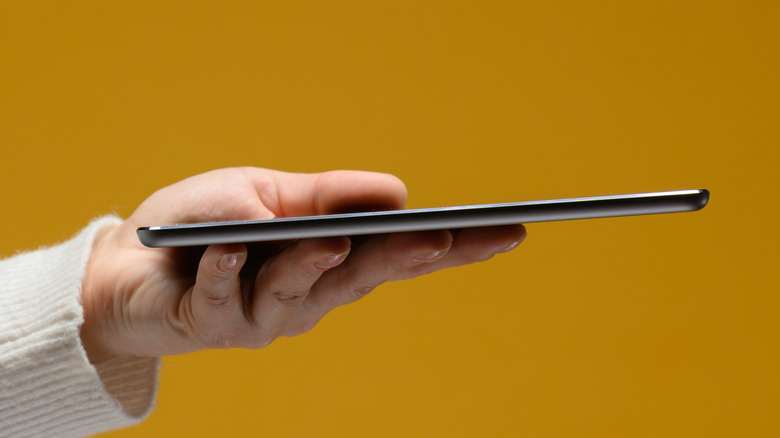
Because they don't need backlights, devices using OLED screens can be extremely thin. The ultra-slim OLED TVs are a perfect example. The same advantage allows manufacturers to make OLED tablets thinner than LCD tablets. Honor announced in early 2026 that its MagicPad 4 Android tablet measured only 4.8 mm (0.189 inches) in thickness, making it the thinnest model ever offered at the time. In mid-2026, Huawei announced plans for a 4.7-mm (0.185-inch) tablet, the MatePad Pro Max. Among LCD tablets, one of the thinnest models available is the 5.8 mm (0.228 inches) Xiaomi Pad 7S Pro.
In addition to not needing a backlight, OLED screens use organic materials that can be thinner than the layers that make up LCD screens. Additionally, the thinner design allows OLED screens to potentially flex. They could be used to create curved, rolled, or foldable screens for certain products. LCDs typically require rigid glass layers in the construction, which limits their ability to flex or be as thin as OLEDs. Some LCD writing tablets may use a polycarbonate plastic layer instead of glass, but OLEDs are by and large much more flexible.
4. Collaborating with colleagues is easier with OLED tablets

If you frequently use a tablet to show other people videos or documents, having an OLED tablet is a significant advantage because of its clear view from almost any angle. The screen maintains its desirable color consistency, strong lighting, and contrast, even when viewed from the side. Some OLED displays are able to maintain consistent image quality when viewed from up to 178 degrees horizontally. Tablets with OLED screens maintain their excellent image quality when viewed at vertical angles away from the center, too.
Because every OLED pixel generates its own light, instead of relying on a backlight, the lighting is consistent across the screen. This feature means that people viewing the screen from the side are less likely to be distracted by a loss of color accuracy or a dark spot that can detract from your message. If the kids are sharing a tablet at home, OLED may even minimize fights over who gets to hold the device and look at the middle of the screen.
5. Reduce eyestrain with OLED's lack of blue light
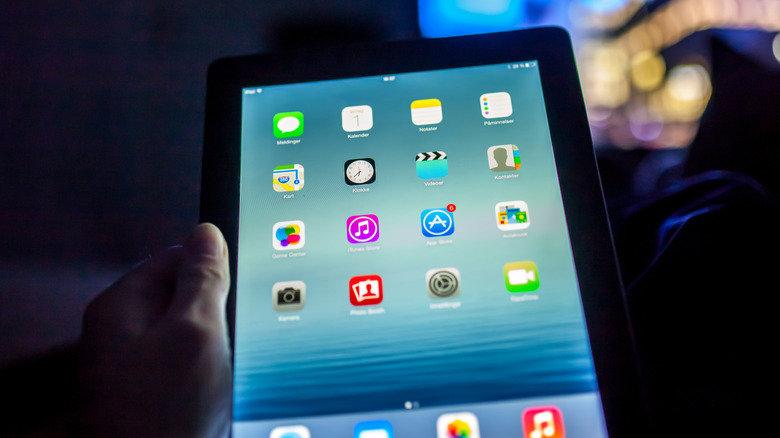
You've probably heard warnings that tablets and smartphones emit blue light that may ruin your sleep. Blue light wavelengths mimic the natural lighting of sunrise, and when your display screens emit these wavelengths at night, your brain may resist sleep because it still feels like daytime. Blue light may cause increased eye strain while decreasing the effectiveness of melatonin, which is a hormone that helps you achieve sleep.
Even though some researchers don't believe exposure to blue light actually affects your ability to sleep that much, you might not want to take any chances. Tests show that OLED displays emit about three times less blue light than an LCD screen. The LED backlight used in an LCD screen increases your blue light exposure, and because the OLED pixels generate their own illumination, they minimize this problem.
OLED tablets work great in dark rooms so you can watch some videos or read an e-book before bedtime. Because OLEDs don't generate as much blue light as other options, you might not have to worry as much about the screen disrupting your sleep.